

Seeing the check engine light glow on your dashboard can feel like your car is trying to send a secret warning in Morse code. Most drivers immediately wonder whether disconnecting the battery will magically erase the problem and turn that annoying light off. The truth is a little more complicated. Disconnecting a vehicle battery can sometimes clear diagnostic trouble codes, but it depends heavily on the vehicle’s age, computer system, and the type of fault involved. Some codes vanish after a short power interruption, while others stay stored deep inside the vehicle’s memory like stubborn stains on a white shirt.
Modern vehicles rely on complex computers called the ECU (Engine Control Unit) or ECM (Engine Control Module). These systems constantly monitor sensors, emissions equipment, ignition timing, fuel delivery, and even transmission behavior. When something goes wrong, the system records a diagnostic trouble code and often illuminates the check engine light. According to recent automotive diagnostic guidance, many older vehicles can reset temporary codes after the battery is disconnected for around 10–15 minutes, while newer vehicles may retain codes even after a prolonged disconnect.
The process sounds simple, but there are consequences many drivers never think about. Disconnecting the battery can wipe adaptive memory, reset readiness monitors, erase infotainment settings, and even create temporary drivability issues while the car relearns operating conditions. It is a little like rebooting your smartphone after an app crash; it might temporarily solve the symptom, but it does not always eliminate the underlying problem.
Understanding Why Vehicles Store Diagnostic Codes
What Happens When the Check Engine Light Turns On
Modern cars are packed with sensors that constantly feed information to the ECU. Oxygen sensors monitor emissions, throttle position sensors track acceleration input, and mass airflow sensors measure incoming air. The moment one of these systems behaves outside normal parameters, the ECU records a fault code. Think of it as your vehicle writing itself a digital sticky note saying, “Something isn’t right here.”
The check engine light is not always a sign of catastrophic damage. Sometimes it can be triggered by something as simple as a loose gas cap or a temporary voltage fluctuation. Other times, it signals serious problems such as ignition misfires, catalytic converter failure, or transmission faults. Automotive diagnostic experts note that codes typically fall into three categories: pending, active, and permanent. Pending codes may disappear if the issue never repeats, while permanent codes remain stored until the system verifies a successful repair through repeated drive cycles.
Many drivers mistakenly believe that if the check engine light disappears after disconnecting the battery, the vehicle is fixed. That assumption is dangerous. The fault may still exist physically, but the ECU simply has not detected it again yet. In many cases, the warning light returns within one to three drive cycles once the system reruns its diagnostics.
The Difference Between Temporary and Permanent Codes
Not all trouble codes behave the same way. Temporary codes are often caused by short-lived glitches such as weak battery voltage, sensor hiccups, or intermittent electrical issues. Disconnecting the battery may clear these codes because they are stored in volatile memory. Volatile memory disappears once electrical power is removed, much like unsaved work vanishing when a computer suddenly shuts off.
Permanent codes are another story entirely. Regulations require many emissions-related codes to survive battery disconnection so drivers cannot simply erase evidence of emissions problems before inspection testing. Recent automotive repair sources explain that many vehicles manufactured after 2010 use non-volatile memory systems that preserve certain fault histories regardless of power loss.
Airbag and safety system codes are especially resistant to battery resets. These systems are designed to store crash-related data permanently for safety investigations and future diagnostics. Even disconnecting the battery overnight may not erase them. That is why mechanics often use specialized scan tools to clear or reprogram these systems after repairs are completed.
Why Disconnecting the Battery Can Clear Certain Codes
How the ECU and ECM Store Memory
The ECU functions like the brain of your vehicle. It collects data, makes adjustments, and remembers driving patterns over time. Fuel trims, idle speed settings, throttle adaptations, and transmission shift patterns are all stored inside its memory. Some of this memory requires constant electrical power to remain intact. When the battery is disconnected, that memory can disappear.
Recent diagnostic guides explain that disconnecting battery power essentially wipes the ECU’s volatile memory. This process resets adaptive settings and can erase some stored trouble codes. The result is similar to restarting a frozen computer. The vehicle returns to default operating parameters and begins relearning from scratch.
This explains why some vehicles run rough immediately after reconnecting the battery. The ECU no longer remembers optimized fuel trim adjustments or learned idle behavior. Drivers may notice inconsistent idle speed, sluggish throttle response, or slightly harsh transmission shifts until the system relearns conditions through normal driving. Automotive technicians report that relearning may take anywhere from several miles to a few days of mixed driving conditions.
Why Power Loss Resets Some Vehicle Systems
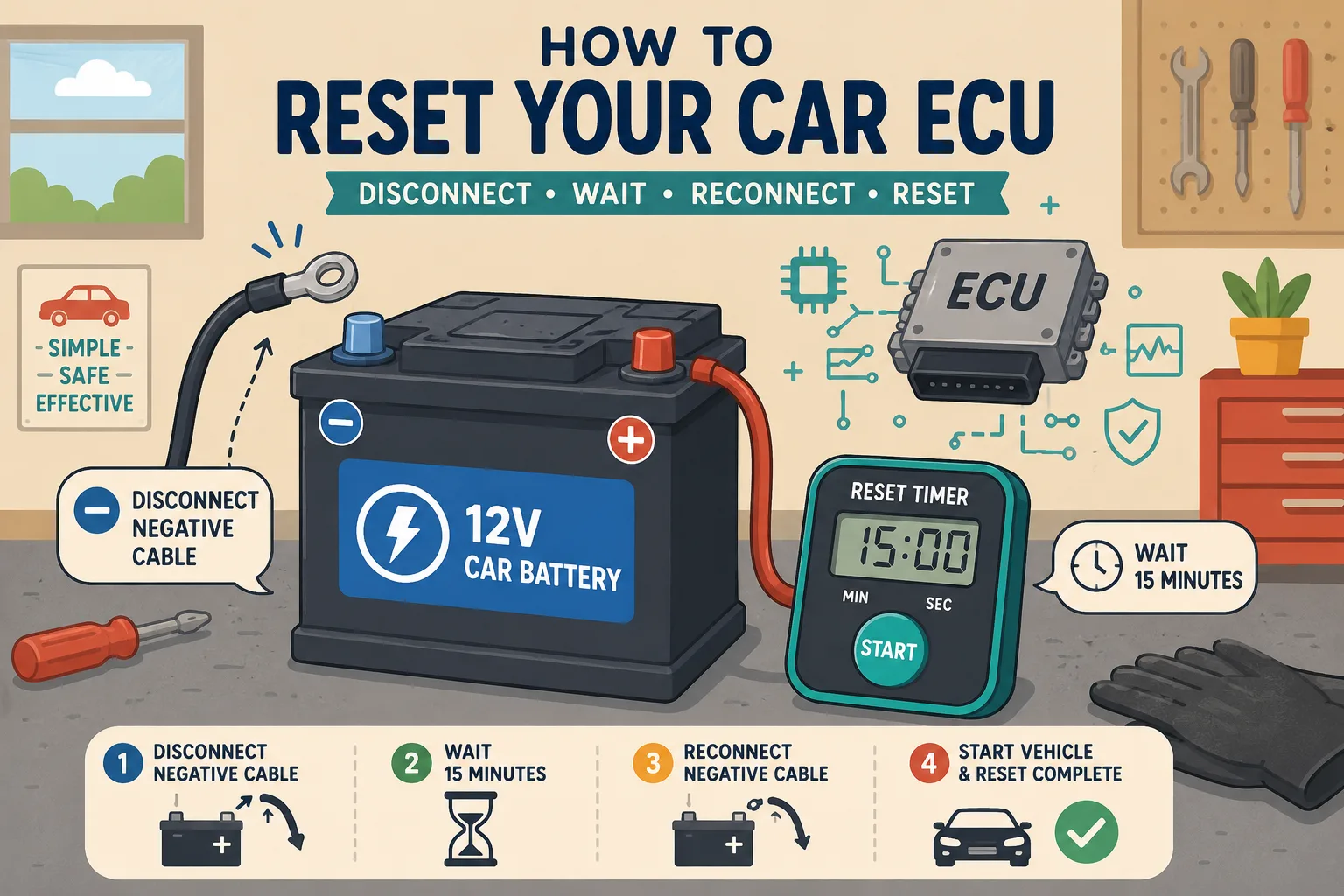
When power disappears completely, capacitors inside the ECU slowly discharge. These capacitors temporarily hold electrical energy even after the battery cable is removed. That is why simply disconnecting the battery for a few seconds often does nothing. Most experts recommend waiting at least 10–15 minutes so residual electricity drains fully from the system.
Some mechanics use a clever shortcut called the brake pedal discharge trick. After disconnecting the battery, pressing the brake pedal drains remaining electrical energy through the lighting circuits, helping clear memory faster. This method is widely recommended in automotive repair communities because it accelerates capacitor discharge.
Still, newer vehicles increasingly rely on memory systems designed specifically to resist power interruptions. Luxury vehicles, hybrids, and advanced driver-assistance systems often preserve critical data regardless of battery removal. That means disconnecting the battery is becoming less effective as automotive technology evolves.
How Long Most Vehicles Need Before Memory Resets
Standard Waiting Time for Older Vehicles
For many older vehicles, disconnecting the battery for around 10 to 15 minutes is usually enough to clear volatile ECU memory. This timeframe allows internal capacitors to discharge fully and forces the computer to reboot from its factory defaults. Automotive repair sources consistently cite this range as the most effective waiting period for traditional resets.
Some drivers wait only a minute or two and wonder why the check engine light remains on. That is like unplugging a desktop computer for half a second and expecting every stored process to disappear. Electronic systems need enough time to fully power down. Mechanics often recommend erring on the safe side by waiting closer to 15 minutes.
Older cars built before advanced non-volatile memory became common are generally more responsive to battery resets. Vehicles from the late 1990s and early 2000s frequently clear temporary engine codes with little resistance. In those cases, disconnecting the negative battery terminal alone is often sufficient.
Why Modern Cars May Require More Than 15 Minutes
Modern vehicles behave differently. Some store critical diagnostic information in flash memory or EEPROM chips that survive complete power loss. That means even a 30-minute disconnect may not erase certain codes. Recent repair articles note that many 2010-and-newer vehicles retain emissions and system fault history regardless of battery disconnection.
Luxury brands such as BMW and Mercedes-Benz often require specialized diagnostic equipment for proper resets. Hybrid and electric vehicles are even more complex because multiple control modules communicate continuously. Disconnecting the wrong power source or reconnecting improperly can create additional warning lights or calibration issues.
Some drivers attempt overnight battery disconnects hoping for a miracle reset. In reality, if the code is stored in non-volatile memory or the fault remains active, the warning light usually returns immediately after startup. This is why professional technicians increasingly rely on scan tools rather than battery disconnect methods.
The Brake Pedal Discharge Trick Explained
The brake pedal discharge trick is one of the most commonly recommended DIY reset techniques. After disconnecting the battery, the driver presses and holds the brake pedal for roughly 30 seconds. This action activates electrical circuits that help drain remaining charge trapped inside capacitors and modules.
Think of it like opening a pressure-release valve. Without draining residual power, some electronics continue holding memory temporarily. By discharging leftover electricity, the ECU loses power completely and resets more effectively.
This method does not guarantee success on every vehicle, but many DIY mechanics find it improves reset reliability. It is especially helpful on vehicles where quick disconnects fail to clear codes.
Systems That May Keep Codes Stored Anyway
Non-Volatile Memory in Newer Vehicles
Modern automotive computers are smarter and more stubborn than older systems. Engineers intentionally designed newer ECUs to preserve certain data even when power disappears. This protects emissions records, safety information, and diagnostic history.
Recent automotive guidance explains that many newer vehicles use non-volatile memory systems similar to smartphone storage. Even with the battery disconnected, these systems continue preserving permanent codes and learned information.
This is particularly important during emissions inspections. Regulators want to prevent drivers from simply clearing emissions faults minutes before testing. As a result, permanent emissions-related trouble codes often remain stored until the vehicle completes enough successful drive cycles proving the issue has been fixed.
Permanent Emissions and Airbag Codes
Airbag systems are another major exception. Crash data and deployment history are intentionally protected against power loss. According to recent discussions referencing safety guidance, disconnecting the battery will not erase airbag crash records because those systems store information in non-volatile memory.
Permanent emissions codes behave similarly. These codes often remain until the ECU verifies successful repairs over time. Even if the check engine light disappears temporarily, the underlying permanent code may still exist in system memory.
That is why some vehicles fail emissions tests despite having no illuminated warning light. The inspection equipment reads readiness monitors and permanent diagnostic history directly from the ECU.
What Settings and Features Could Be Lost After Resetting
Radio Presets, Clocks, and Seat Memory
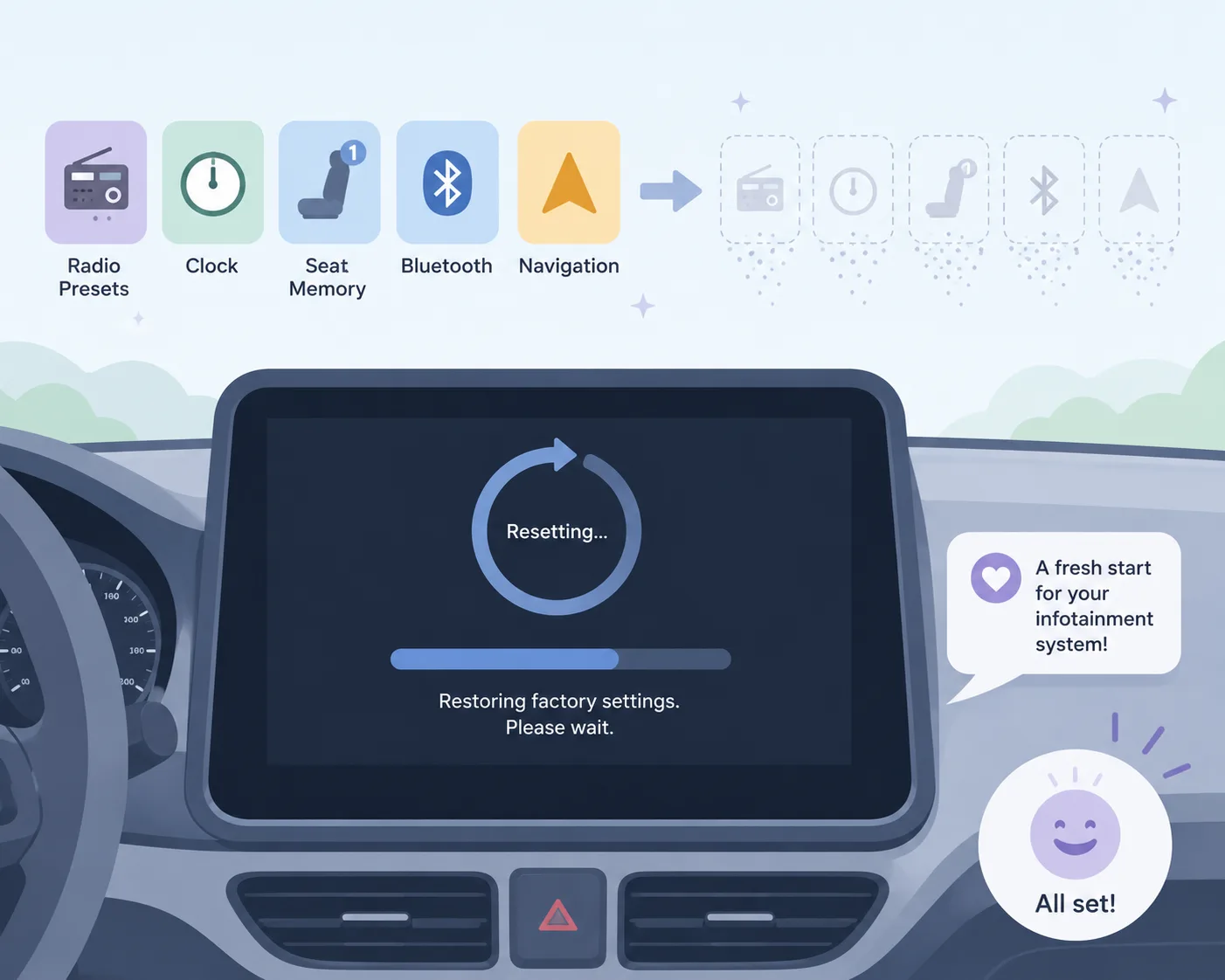
Disconnecting the battery does more than clear codes. It can erase numerous convenience settings drivers take for granted. Common losses include:
| Feature | Possible Effect After Reset |
|---|---|
| Radio presets | Saved stations erased |
| Clock settings | Time resets to default |
| Seat memory | Personalized positions lost |
| Window calibration | Auto-up/down may stop working temporarily |
| Navigation data | Recent destinations removed |
| Infotainment settings | Bluetooth pairings may disappear |
Many drivers forget how dependent modern vehicles are on continuous electrical memory. Losing these settings can be frustrating, especially in luxury vehicles with advanced personalization systems.
Some vehicles also require anti-theft radio codes after battery loss. Without the correct code, the stereo may remain locked. That catches many drivers off guard during DIY resets.
Fuel Trim and Transmission Relearning
One overlooked side effect of battery resets is relearning behavior. ECUs constantly adapt fuel delivery, throttle response, and transmission timing based on driving conditions. Disconnecting the battery wipes those learned adjustments.
Recent repair sources explain that long-term fuel trims and transmission adaptations may take dozens of miles to relearn. During this period, the car may idle unevenly, shift harshly, or feel sluggish.
It is a bit like forcing an experienced athlete to relearn muscle memory from scratch. The vehicle eventually adapts again, but there can be an awkward transition period. Drivers sometimes mistake this temporary behavior for new mechanical problems.
Situations Where a Battery Reset Will Not Fix the Problem
Mechanical Failures and Sensor Damage
Disconnecting the battery does not repair broken parts. If an oxygen sensor has failed, a catalytic converter is clogged, or an ignition coil is misfiring, the problem still exists physically. The ECU may clear the warning temporarily, but the code returns once diagnostics rerun.
Recent automotive diagnostic articles stress that battery resets only erase stored information; they do not repair underlying faults. This distinction is critical because many drivers mistakenly believe the absence of a warning light means the problem is gone.
Mechanical problems require real repairs. Clearing the code without fixing the issue is like covering a leaking pipe with paint instead of replacing the damaged section. The leak eventually returns.
When the Check Engine Light Returns Immediately
If the check engine light comes back immediately after startup, the ECU is detecting an active fault in real time. That usually indicates a serious or continuously monitored issue. Examples include:
- Failed sensors
- Major vacuum leaks
- Misfires
- Electrical short circuits
- Transmission control faults
In these situations, disconnecting the battery repeatedly accomplishes very little. Professional diagnosis becomes necessary because the ECU instantly recognizes the unresolved problem.
Online mechanic communities frequently point out that recurring codes after resets almost always indicate unresolved underlying issues rather than computer glitches.
Safe Steps Before Disconnecting the Battery
Tools and Safety Equipment You Should Use
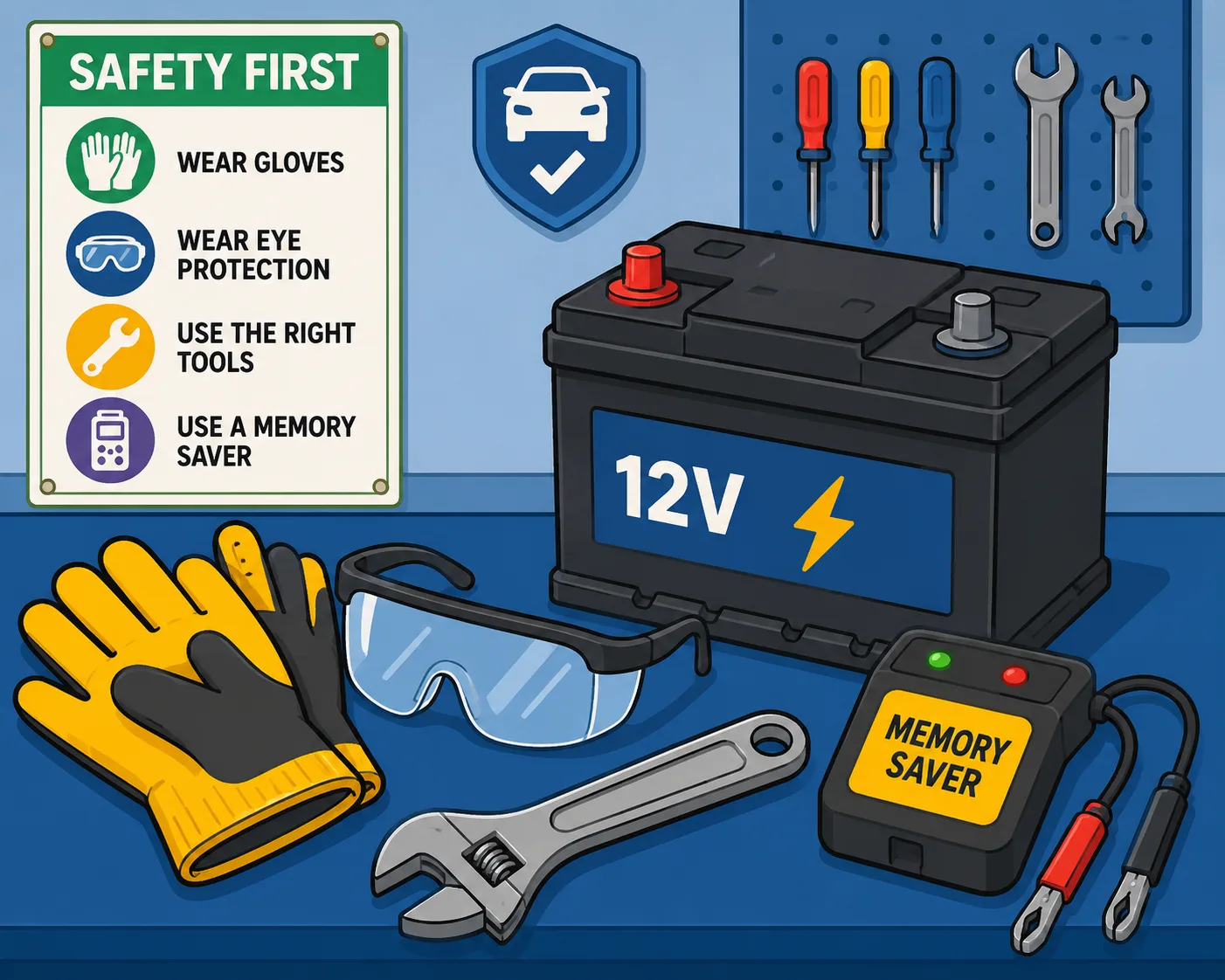
Before disconnecting the battery, preparation matters. Vehicles contain sensitive electronics, and careless handling can cause expensive damage. At minimum, drivers should use:
- Safety gloves
- Eye protection
- A properly sized wrench
- A memory saver device if available
Always turn the ignition fully off and remove the key before disconnecting cables. Many experts recommend disconnecting the negative terminal first because it reduces the risk of accidental short circuits if the wrench contacts metal surfaces.
It is also wise to avoid touching both battery terminals simultaneously with metal tools. Sparks around batteries are dangerous because hydrogen gas can ignite unexpectedly.
Protecting Sensitive Electronics
Modern cars contain dozens of interconnected control modules. Sudden voltage spikes or improper reconnection can confuse systems or even damage electronics. This is particularly important for luxury vehicles and hybrids.
Some mechanics use memory saver devices plugged into the OBD-II port or auxiliary power outlet. These tools preserve critical settings during battery replacement. Without them, recalibration procedures may become necessary for windows, steering systems, or driver-assistance technologies.
DIY resets should never involve dangerous internet “hacks” such as shorting OBD-II pins together. Online stories show that improper electrical shortcuts can disable vehicle electronics or blow critical fuses.
The Right Way to Reconnect Power to the Vehicle
Proper Reconnection Order
Reconnect the battery carefully to minimize electrical stress. Most technicians recommend reconnecting the positive cable first, followed by the negative terminal. This sequence reduces the chance of accidental short circuits.
After tightening connections securely, drivers should inspect terminals for corrosion or looseness. Poor battery connections can create false diagnostic codes and inconsistent electrical behavior.
Once power is restored, the ECU begins relearning immediately. Some vehicles may display temporary warning lights for traction control, steering assist, or stability systems until calibration finishes. This can seem alarming, but it is often temporary.
What to Expect After Restarting the Engine
The first startup after reconnecting the battery may feel different. Idle speed may fluctuate, transmission shifts can feel unusual, and warning lights may briefly appear. Automotive repair sources recommend allowing the engine to idle for several minutes before driving.
Drivers should also expect OBD-II readiness monitors to reset. These monitors track emissions system performance and often require 100–200 miles of mixed driving before returning to “ready” status.
This matters because vehicles with incomplete readiness monitors can fail emissions inspections even if the check engine light is off.
When a Diagnostic Scanner Is the Better Option
Advantages of Using an OBD-II Scanner
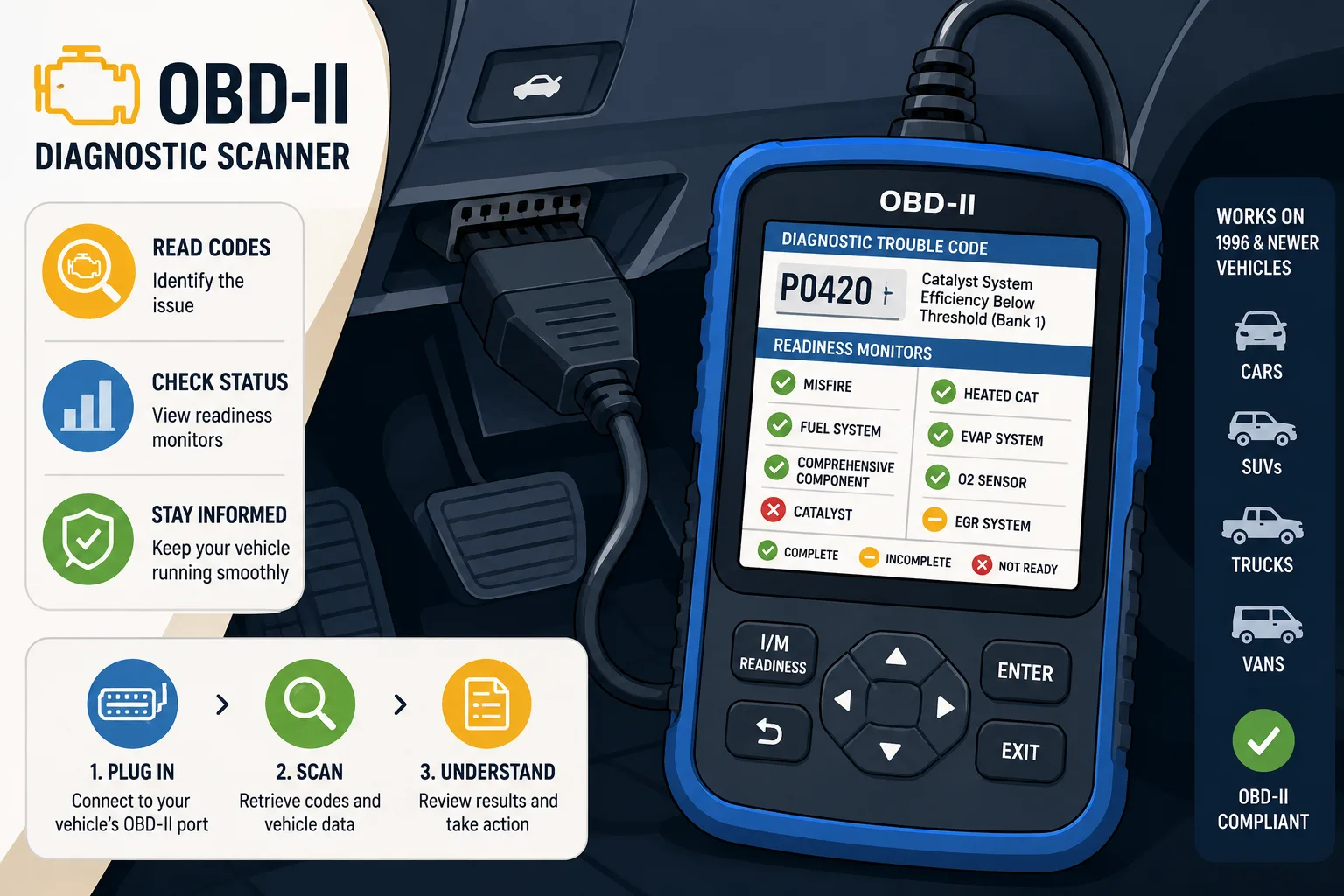
An OBD-II scanner is often the smarter solution compared to disconnecting the battery blindly. Modern scanners allow drivers to:
- Read diagnostic trouble codes
- Save freeze-frame data
- Clear codes safely
- Monitor readiness status
- Track live sensor data
Recent automotive experts emphasize that scanners clear codes without wiping all adaptive memory. That means fuel trims, shift patterns, and personalized settings remain intact.
Scanners also help identify whether the problem is active, pending, or permanent. Instead of guessing, drivers can pinpoint the actual fault and repair it correctly.
When Professional Diagnosis Is Necessary
Some situations demand professional help. Persistent misfires, transmission faults, airbag warnings, hybrid system alerts, and advanced driver-assistance errors often require specialized equipment and manufacturer-specific software.
Professional technicians can interpret freeze-frame data, perform system relearns, and identify hidden issues that generic scanners may miss. In newer vehicles packed with electronics, proper diagnosis saves time, money, and frustration.
Trying to repeatedly reset warning lights without understanding the root cause is a little like muting a fire alarm while smoke continues filling the room. The silence feels comforting temporarily, but the danger remains.
Conclusion
Disconnecting the battery can sometimes clear temporary trouble codes and reset vehicle memory, but it is far from a universal fix. Most older vehicles require around 10–15 minutes without battery power for volatile memory to clear, especially when combined with methods that discharge residual electrical energy. Modern vehicles, however, increasingly store critical information in non-volatile memory that survives power loss entirely.
Drivers should also understand the trade-offs involved. Battery resets can erase radio presets, adaptive fuel trims, transmission learning, and readiness monitors. They may temporarily improve symptoms without solving the actual fault. If the underlying issue remains, the check engine light almost always returns.
Using an OBD-II scanner is generally safer, faster, and more precise than disconnecting the battery. It preserves adaptive memory while allowing accurate diagnosis and controlled code clearing. For persistent or serious faults, professional diagnosis remains the best path forward.
FAQs
1. How long should I disconnect my car battery to reset the ECU?
Most vehicles require about 10–15 minutes for the ECU’s volatile memory to clear completely. Some newer vehicles may retain codes even after longer disconnect periods because they use non-volatile memory systems.
2. Will disconnecting the battery permanently fix the check engine light?
No. Disconnecting the battery only clears stored information temporarily. If the underlying mechanical or electrical issue still exists, the check engine light usually returns after a few drive cycles.
3. Can disconnecting the battery damage my car?
If done correctly, it is generally safe. Problems usually occur when cables are removed or reconnected improperly, or when sensitive electronics lose calibration during the process.
4. Why does my car run differently after reconnecting the battery?
The ECU loses adaptive memory during a reset. Fuel trims, idle settings, and transmission learning must rebuild over time, which can temporarily affect drivability.
5. Is an OBD-II scanner better than disconnecting the battery?
Yes. An OBD-II scanner clears codes more precisely while preserving adaptive memory and important settings. It also provides diagnostic information that helps identify the real problem.

Marco Vestri is a 29-year-old American content writer based in Spokane, Washington. He specializes in creating well-researched automotive maintenance guides, troubleshooting articles, and practical ownership advice for everyday drivers. His work emphasizes accuracy, clear explanations, and reliable sources, helping readers make informed decisions with confidence. As a regular contributor to carissues.wiki, Marco combines years of blogging experience with a passion for simplifying complex vehicle topics into useful, trustworthy content for a broad audience.