

Your Nissan Altima’s transmission is a lot like the heart of the vehicle. It keeps power flowing smoothly from the engine to the wheels, making acceleration feel effortless and gear changes nearly invisible. But when transmission fluid gets low, dirty, or overheated, things can go south quickly. Shifting becomes rough, strange noises appear, and before long, you could be staring at a repair bill that costs more than a family vacation.
The tricky part? Checking transmission fluid in a Nissan Altima is not always straightforward. Older Altimas often came with a dipstick that made checking fluid simple, while many newer models use a sealed CVT system that requires a different process entirely. That difference confuses a lot of owners. You pop the hood expecting to find a dipstick, and suddenly it feels like Nissan turned your transmission into a secret vault.
Recent Nissan maintenance guidance recommends inspecting CVT fluid regularly and replacing it around every 60,000 miles under severe driving conditions. Ignoring fluid condition is one of the fastest ways to shorten CVT life, especially in hotter climates or stop-and-go traffic conditions. So if you’ve ever wondered how to check your Altima’s transmission fluid properly, this guide walks you through everything in plain English.
Why Transmission Fluid Matters in a Nissan Altima
Transmission fluid is not just lubricant. A lot of drivers think it works like engine oil, but in a Nissan Altima; especially one with a CVT; it does far more than reduce friction. It controls hydraulic pressure, cools moving components, and helps the transmission deliver smooth power. Think of it as both blood and nervous system combined into one fluid. Without the proper amount and condition, the transmission simply cannot operate correctly.
Modern Nissan Altima models rely heavily on CVT technology, which stands for Continuously Variable Transmission. Unlike traditional automatics that shift between fixed gears, CVTs constantly adjust gear ratios for smoother acceleration and better fuel economy. That design makes fluid quality incredibly important. According to Nissan maintenance guidance, CVT fluid should be inspected regularly and replaced at specific intervals under severe driving conditions.
When fluid becomes contaminated or low, drivers often notice symptoms quickly. The car may hesitate before moving, RPMs may surge unexpectedly, or the transmission may produce whining noises during acceleration. Some drivers describe it as feeling like the car is “thinking too hard” before shifting. Reddit owners discussing Altima CVT issues frequently report whining noises and slipping tied to overdue fluid service.
Ignoring these signs can lead to overheating, internal wear, and eventually total transmission failure. That’s why checking transmission fluid isn’t just maintenance; it’s preventative medicine for your Altima.
Knowing Whether Your Altima Uses a Dipstick or Sealed System
One of the biggest points of confusion among Nissan Altima owners is figuring out whether their vehicle actually has a transmission dipstick. Older models usually do. Many newer ones don’t. That simple difference changes the entire checking process.
Generally speaking, older Nissan Altimas; especially pre-2013 models; often used traditional automatic transmissions equipped with accessible dipsticks. These work similarly to engine oil dipsticks. You pull it out, wipe it clean, reinsert it, and read the level. Simple and familiar. Many DIY mechanics prefer these systems because they make maintenance easy without specialized tools.
Newer Altimas equipped with CVTs commonly use sealed transmission systems. Nissan designed these systems to reduce contamination and improve reliability, but it also made fluid inspection more complicated. Instead of a visible dipstick, owners often find only a capped fill tube or no obvious access point at all. This leads many drivers to think transmission fluid can’t be checked; which isn’t entirely true.
Sealed CVTs are typically checked using an overflow plug method that requires the vehicle to be level and the transmission fluid at a precise temperature range. That process is far less forgiving than a standard dipstick check. Some owners buy aftermarket dipsticks for monitoring levels, but accuracy can vary widely depending on calibration.
If you are unsure which setup your Altima uses, check your owner’s manual or look under the hood carefully. A traditional dipstick usually has a colored handle near the transmission housing. If you can’t find one, chances are high your Altima uses a sealed CVT system.
Tools and Safety Precautions Before Checking Transmission Fluid
Checking transmission fluid sounds simple until someone burns themselves on hot components or gets an inaccurate reading because the car is parked unevenly. Preparation matters more than most people realize.
If your Altima uses a dipstick, the tool list is short. You mainly need clean lint-free rags, gloves, and good lighting. But sealed CVT systems require more. Owners often need jack stands, a fluid transfer pump, temperature monitoring tools, and specific hex sockets to access fill and overflow plugs.
Safety should always come first. Never crawl under a vehicle supported only by a jack. Use jack stands or ramps rated for your vehicle’s weight. Transmission fluid checks on sealed systems often require the engine to remain running during inspection, which adds another layer of risk. Loose clothing, dangling jewelry, and poor ventilation can quickly turn routine maintenance into an accident.
A level surface is also critical. Transmission fluid readings depend on gravity distributing the fluid evenly inside the pan. Even a slight incline can create inaccurate readings that make the system appear overfilled or low. That’s especially important for sealed CVT systems where tiny differences in fluid height matter.
Another overlooked detail is cleanliness. Dirt entering a CVT can create serious problems because these transmissions rely on precise hydraulic control. Even a small amount of contamination can interfere with valve operation. That’s why Nissan strongly recommends using only approved NS-3 CVT fluid in newer Altimas.
Think of transmission maintenance like surgery. Clean tools, proper conditions, and patience make all the difference.
Warming Up the Vehicle Before Checking Fluid Levels
Temperature changes everything when it comes to transmission fluid. Checking fluid cold is one of the most common mistakes Altima owners make, and it can produce wildly inaccurate results.
Transmission fluid expands significantly as it heats up. That means a fluid level that looks low when cold may actually be perfectly normal at operating temperature. On the other hand, overfilling based on a cold reading can create foaming, overheating, and pressure issues once the transmission warms up.
Most experts recommend driving the Altima for around 15 to 20 minutes before checking the fluid. Mixed city and highway driving works best because it circulates fluid through all transmission components. Simply idling in the driveway may not heat the transmission evenly enough for accurate readings.
For sealed CVT systems, temperature accuracy becomes even more important. Some Nissan procedures specify checking fluid only within a narrow temperature range. Professional technicians often use scan tools or infrared thermometers to verify the exact fluid temperature before opening overflow plugs.
This step might feel tedious, but it’s necessary. Imagine trying to measure water in a balloon while the balloon constantly expands and contracts. That’s essentially what happens with transmission fluid during temperature changes.
If you notice hard shifting only when the vehicle is cold, pay close attention. Several Altima owners have reported mild slipping or hesitation tied to low or aging CVT fluid during cold starts. Those symptoms often improve temporarily once the fluid warms up, masking the problem until damage becomes severe.
How to Check Transmission Fluid on Dipstick-Equipped Altimas
If your Nissan Altima still uses a traditional transmission dipstick, you’re lucky. The process is relatively simple and can usually be completed in under ten minutes.
Start by parking the car on a level surface with the engine fully warmed up. Keep the engine running and engage the parking brake. Open the hood and locate the transmission dipstick. It’s usually near the rear of the engine bay and may have a colored handle labeled “Transmission.”
Pull the dipstick out carefully and wipe it clean using a lint-free cloth. Reinsert it fully, then pull it back out again to check the fluid level. Most dipsticks have “HOT” and “COLD” markings along with safe operating ranges. Since the transmission should already be warm, focus on the HOT range.
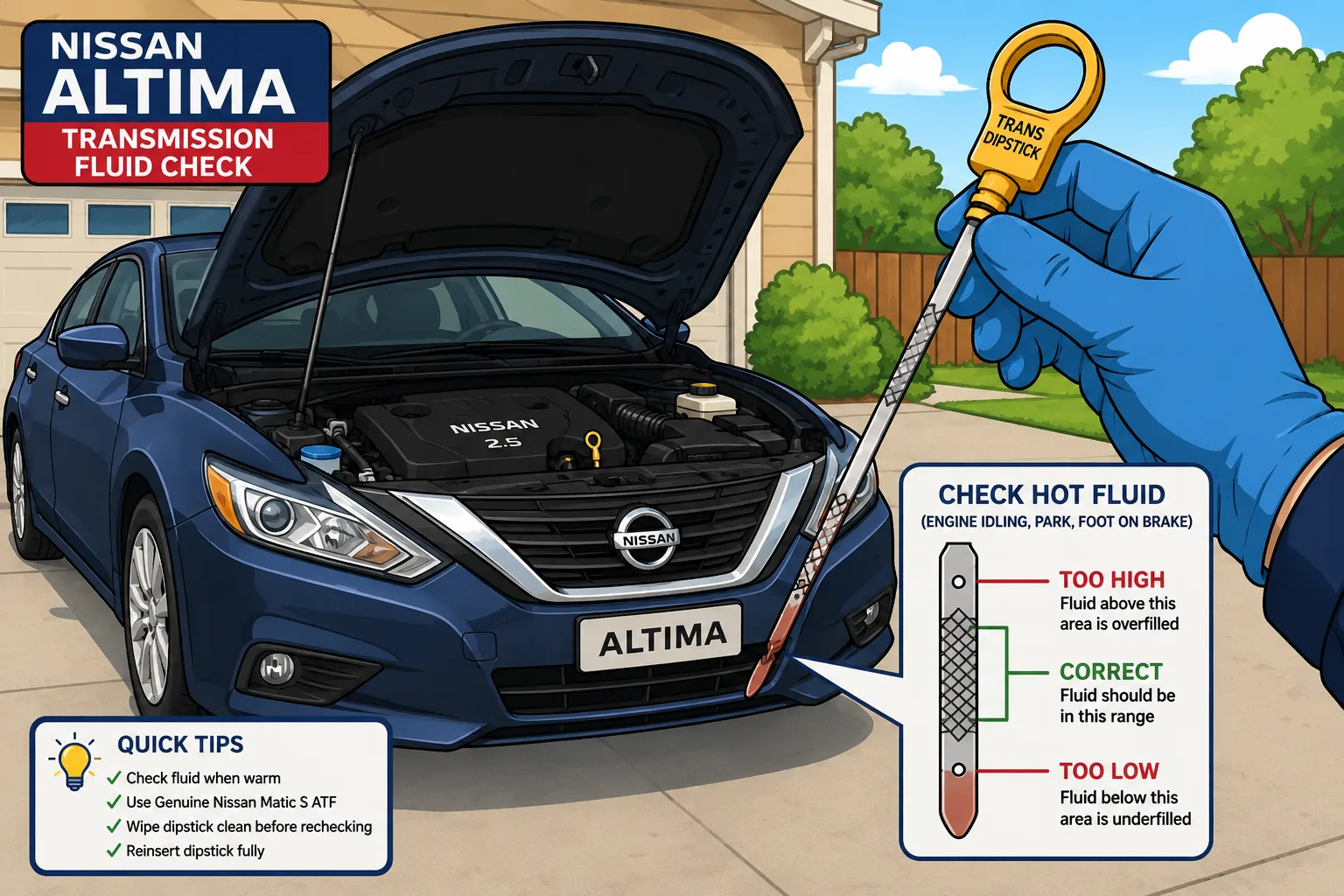
Reading the Fluid Level Correctly on the Dipstick
This part trips up more drivers than you’d think. You’re not just checking whether fluid exists; you’re evaluating condition and accuracy simultaneously.
Healthy transmission fluid should appear reddish or light amber depending on age and fluid type. The level should sit within the marked range without exceeding it. Too low means insufficient hydraulic pressure. Too high can cause foaming and overheating.
Pay close attention to how the fluid smells. Fresh transmission fluid has a mildly sweet petroleum scent. Burnt fluid smells sharp, bitter, and unpleasant; almost like overheated electronics. That burnt smell usually indicates excessive heat or internal wear.
Texture matters too. Rub a little fluid between your fingers. If it feels gritty or contaminated, internal wear may already be occurring. Some metallic shimmer is a warning sign that components inside the transmission are deteriorating.
Many drivers only check the level and ignore fluid condition entirely. That’s like judging milk solely by how full the carton is while ignoring whether it smells spoiled.
How to Check Transmission Fluid on Sealed Nissan Altima CVTs
Checking fluid on a sealed Nissan Altima CVT is much more technical than using a dipstick. It’s still possible for experienced DIY owners, but precision matters.
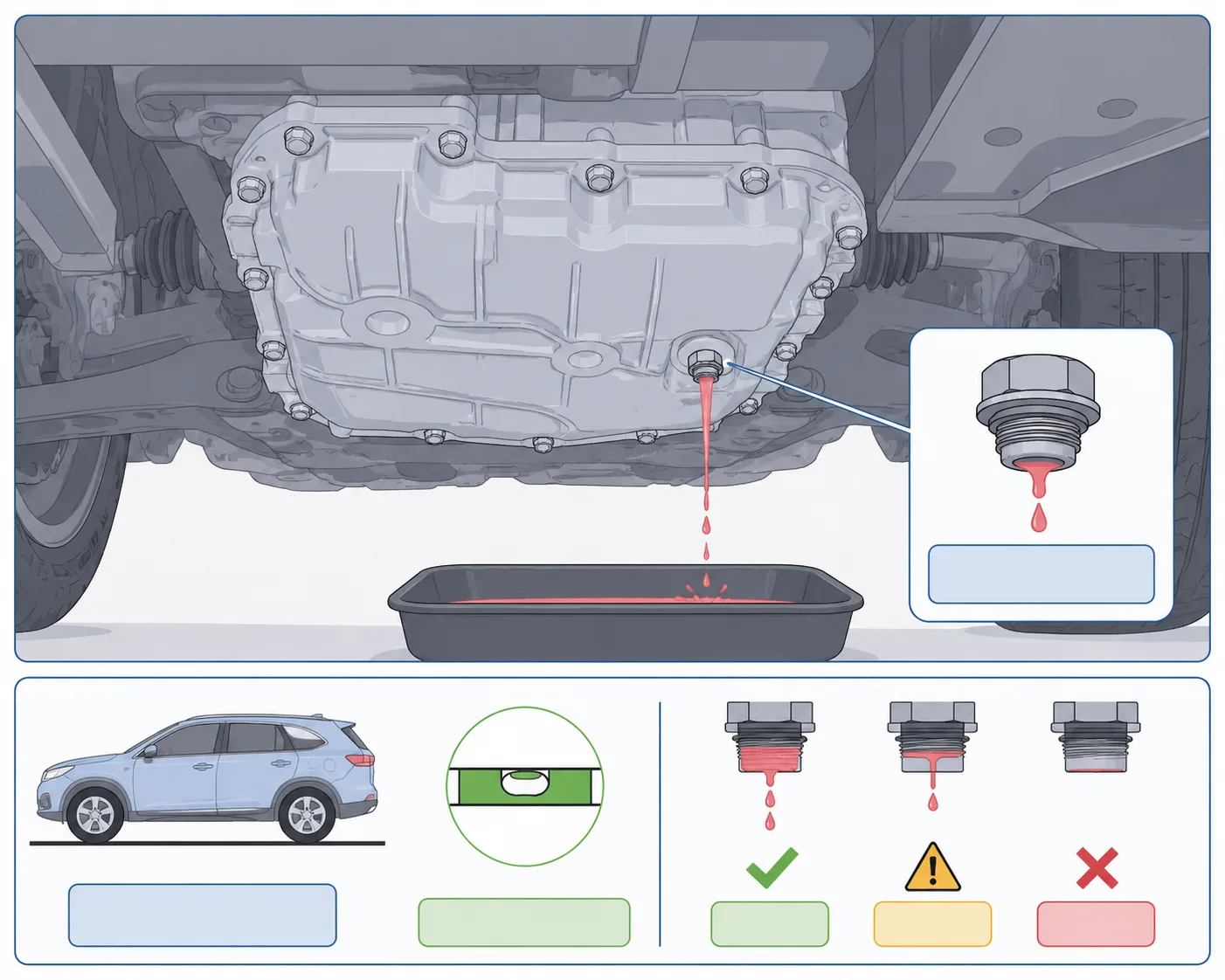
The process generally involves raising the vehicle level on jack stands, warming the transmission to operating temperature, and removing the overflow or check plug while the engine remains running. If fluid drips lightly from the overflow port, the level is usually correct. No fluid may indicate low levels, while heavy flow could suggest overfilling.
Understanding the Overflow Plug Method
This method works similarly to filling a sink to overflow level. Once fluid reaches the proper height internally, excess drains out through the overflow tube. That’s why temperature and vehicle level are so important. Even small variations can create false readings.
Some owners purchase aftermarket dipsticks to simplify the process, especially for monitoring changes over time. However, many Reddit discussions warn that aftermarket dipsticks may not always be perfectly calibrated for Nissan CVTs.
Nissan also strongly recommends using only NS-3 CVT fluid for newer Altimas. Using generic fluid can damage the transmission because CVTs rely on very specific friction characteristics. This isn’t an area where bargain fluids save money long term.
Why Many Owners Prefer Professional Service
There’s a reason many shops handle CVT maintenance professionally. The procedure requires accurate temperature measurement, safe vehicle lifting, and precise fluid management. Overfilling or underfilling by even a small amount can cause shifting problems.
Think of a CVT like a precision watch. It may look simple from the outside, but tiny internal tolerances matter enormously. One careless mistake during service can create expensive consequences later.
Color and Smell Changes That Signal Transmission Trouble
Your transmission fluid tells a story every time you inspect it. The color, smell, and consistency reveal clues about what’s happening inside the transmission long before warning lights appear.
Fresh Nissan CVT fluid usually appears translucent with a red or greenish tint depending on formulation. It should look clean and smooth without visible debris. Healthy fluid also has a mild smell; not harsh or burnt.
Dark brown or nearly black fluid is a major warning sign. It often means the transmission has been running excessively hot. Heat breaks down the fluid’s additives and reduces its ability to lubricate and cool internal components. Once that happens, wear accelerates quickly.
Burnt odors are even more concerning. If transmission fluid smells like scorched metal or burnt toast, internal clutch materials may already be deteriorating. In some cases, drivers also notice whining sounds, slipping, delayed engagement, or jerking during acceleration. Reddit discussions among Altima owners frequently connect whining noises and poor acceleration with overdue fluid changes.
Cloudy fluid can indicate contamination from moisture or coolant intrusion. Metallic particles may suggest severe internal wear. These are situations where topping off fluid alone won’t solve the problem.
Fluid inspection is like reading tea leaves for your transmission. The signs are often there long before total failure happens.
Common Mistakes That Lead to Incorrect Readings
Transmission fluid checks seem easy until small mistakes create major misunderstandings. Many Altima owners accidentally misdiagnose problems because they skip critical steps.
The biggest mistake is checking fluid cold. As discussed earlier, transmission fluid expands significantly with heat. Cold checks often produce readings that falsely appear low. Owners then add extra fluid, unintentionally overfilling the system.
Another common error is shutting the engine off during the check. Many transmissions; especially CVTs; must remain running so fluid circulates properly. If the engine is off, fluid settles differently and produces inaccurate measurements.
Using the wrong fluid type is another dangerous mistake. Nissan explicitly warns against mixing generic automatic transmission fluid with CVT fluid. The friction properties are different, and incorrect fluid can damage pulleys, belts, and hydraulic components.
People also underestimate the importance of vehicle levelness. Parking on an incline may not seem like a big deal, but fluid distribution changes enough to affect readings significantly.
Then there’s contamination. Dirty funnels, lint-covered rags, or careless handling can introduce debris into the transmission. CVTs are especially sensitive to contamination because their hydraulic systems rely on extremely precise fluid flow.
The frustrating thing about transmission problems is that they often develop slowly. A small servicing mistake today might not reveal itself until thousands of miles later.
How Low Fluid Affects Shifting Performance
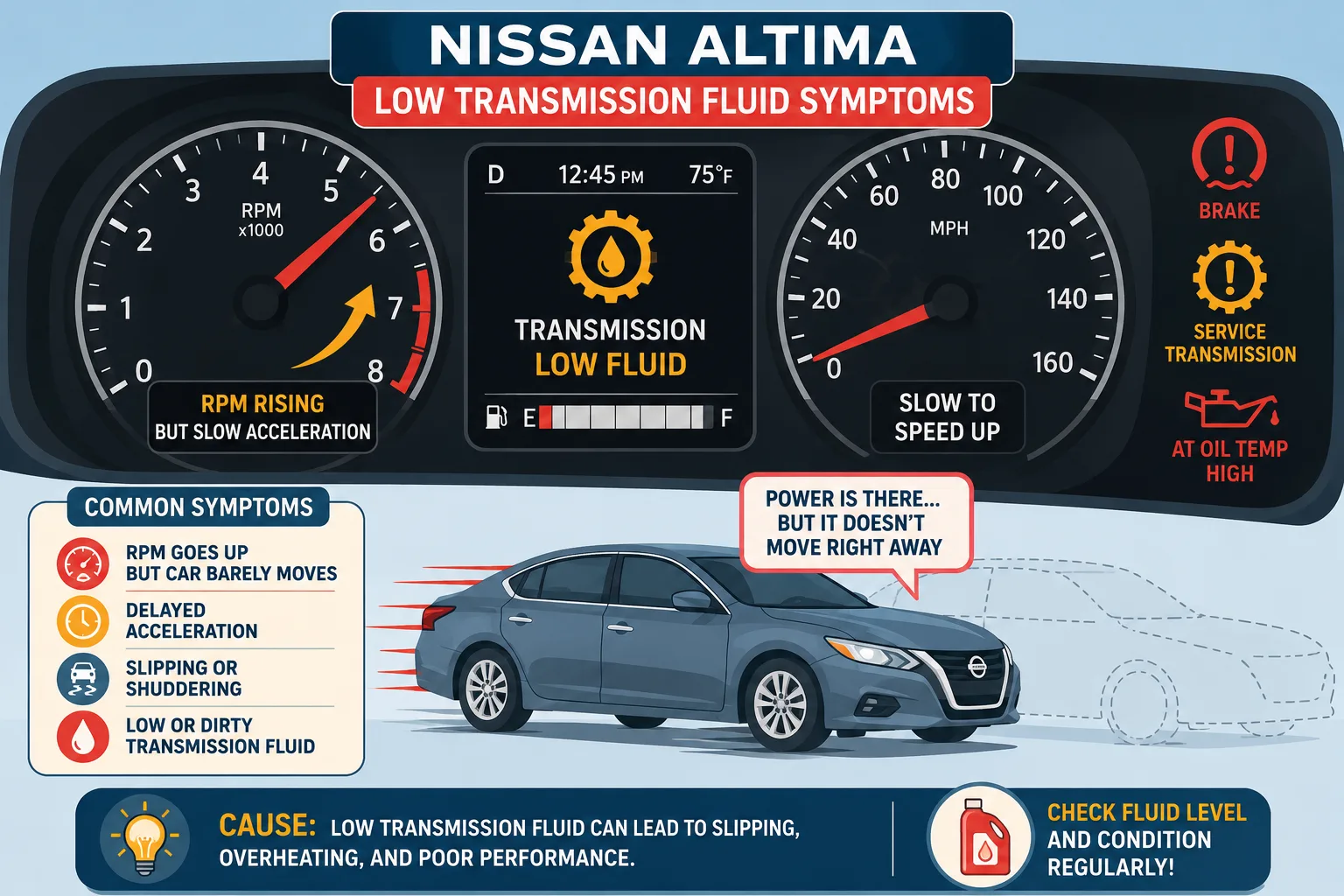
Low transmission fluid changes the way your Altima drives almost immediately. The symptoms may start subtle, but they rarely stay that way for long.
One of the earliest signs is delayed acceleration. You press the gas pedal, the engine revs, but the vehicle hesitates before moving forward smoothly. It feels disconnected; almost like stretching a rubber band before it snaps into motion.
Drivers may also notice slipping. RPMs climb unexpectedly while acceleration feels weak. In CVT-equipped Altimas, low fluid often creates whining noises because the belt and pulleys struggle to maintain proper hydraulic pressure.
Jerking, shuddering, or rough engagement during acceleration can also appear. Some vehicles hesitate when shifting into drive or reverse after sitting overnight. These symptoms often worsen during hot weather because fluid viscosity changes with temperature.
Long-Term Transmission Damage Risks
Low fluid doesn’t just affect drivability; it damages internal components. Transmission fluid removes heat from moving parts. Without enough fluid, temperatures rise rapidly and metal components wear against each other.
Over time, seals harden, bearings wear out, and internal surfaces become damaged. Once overheating occurs repeatedly, fluid degrades even faster, creating a vicious cycle. Eventually the transmission may fail entirely.
Replacing a Nissan CVT can cost thousands of dollars. Compared to that, regular fluid inspection feels like incredibly cheap insurance.
When Transmission Fluid Should Be Replaced Instead of Topped Off
Topping off transmission fluid only makes sense when the fluid itself remains healthy. If the fluid is burnt, contaminated, or severely aged, adding fresh fluid is like pouring clean water into muddy soup. The overall condition barely improves.
Nissan maintenance schedules suggest regular inspections and replacement intervals depending on driving conditions. Severe conditions; such as heavy traffic, extreme heat, mountain driving, or towing; may require fluid replacement around every 60,000 miles. Many experienced Altima owners actually prefer changing CVT fluid even sooner, especially on higher-mileage vehicles.
Signs that replacement is necessary include:
| Warning Sign | What It May Mean |
|---|---|
| Burnt smell | Overheating and fluid breakdown |
| Dark brown fluid | Oxidation and contamination |
| Slipping or hesitation | Hydraulic pressure issues |
| Whining noises | Possible low or degraded fluid |
| Metal particles | Internal transmission wear |
A full drain-and-fill service is often safer than aggressive transmission flushing on aging CVTs. Some mechanics avoid high-pressure flushes because they can dislodge debris and create additional problems in worn transmissions.
Replacing fluid at proper intervals helps extend transmission life dramatically. It’s one of those maintenance tasks people regret skipping only after expensive problems appear.
Conclusion
Learning how to check transmission fluid in a Nissan Altima is one of the smartest things an owner can do for long-term reliability. Whether your Altima uses a traditional dipstick or a sealed CVT system, understanding the correct procedure helps prevent costly mistakes and keeps the transmission operating smoothly.
The key lessons are simple but important: always warm the vehicle properly, use the correct Nissan-approved fluid, check readings carefully, and pay attention to fluid color and smell. Small warning signs; like delayed acceleration, whining noises, or burnt-smelling fluid; often appear long before major transmission failure.
Modern CVTs are efficient and smooth when maintained correctly, but they’re far less forgiving than older transmissions when maintenance is ignored. Treat transmission fluid like the lifeblood of your Altima, because that’s exactly what it is.
FAQs
1. Does every Nissan Altima have a transmission dipstick?
No. Many older Altimas use traditional dipsticks, while newer CVT-equipped models often use sealed transmission systems without accessible dipsticks.
2. What color should Nissan Altima transmission fluid be?
Healthy transmission fluid is usually reddish or light amber and should appear clean and translucent.
3. Can low transmission fluid cause slipping?
Yes. Low fluid reduces hydraulic pressure, which can cause slipping, delayed acceleration, whining noises, and rough shifting.
4. How often should CVT fluid be replaced in a Nissan Altima?
Nissan maintenance guidance commonly recommends inspection every 10,000 miles and replacement around 60,000 miles under severe conditions.
5. Can I use regular automatic transmission fluid in a Nissan CVT?
No. Nissan specifically recommends NS-3 CVT fluid for compatible Altima models. Using incorrect fluid can damage the transmission.

Marco Vestri is a 29-year-old American content writer based in Spokane, Washington. He specializes in creating well-researched automotive maintenance guides, troubleshooting articles, and practical ownership advice for everyday drivers. His work emphasizes accuracy, clear explanations, and reliable sources, helping readers make informed decisions with confidence. As a regular contributor to carissues.wiki, Marco combines years of blogging experience with a passion for simplifying complex vehicle topics into useful, trustworthy content for a broad audience.