

Modern vehicles are smart, but sometimes they act like that one friend who panics over nothing. Few things grab a driver’s attention faster than a glowing tire pressure warning light on the dashboard. If you drive a Ford, understanding how to reset the Ford Tire Pressure Monitor System, why the warning light comes on, and what can prevent a successful reset can save you stress, time, and unnecessary trips to the dealership. This guide walks you through the entire process step by step, using current Ford TPMS behavior and reset methods, explained in plain English and backed by up-to-date manufacturer guidance.
Understanding Ford’s Tire Pressure Monitoring System
Ford’s Tire Pressure Monitoring System, commonly called TPMS, is designed to do one simple but critical job: alert you when one or more tires drop below a safe pressure threshold. Since 2007, all Ford vehicles sold in the U.S. have been required to include TPMS as a standard safety feature, following federal safety regulations enforced by the National Highway Traffic Safety Administration. Ford primarily uses direct TPMS, which means each wheel contains a pressure sensor that communicates real-time data to the vehicle’s computer.
Unlike indirect systems that guess pressure changes based on wheel speed, Ford’s direct TPMS measures actual air pressure inside the tire. This precision is great for safety but also means the system is sensitive. Even a small pressure fluctuation can trigger the warning light. Think of TPMS like a smoke detector: it’s better at being overly cautious than silent when there’s real danger. Understanding that sensitivity helps you reset it properly without fighting the system.
What Triggers the Tire Pressure Warning Light
The most common reason your Ford’s TPMS warning light turns on is low tire pressure, but that’s not the only trigger. Sudden temperature drops are notorious for causing false alarms. Air contracts when it gets cold, and for every 10°F drop in temperature, tire pressure can fall by about 1 PSI. That means a perfectly inflated tire in summer can suddenly appear underinflated on a cold winter morning.
Other triggers include slow leaks from nails or valve stem issues, damaged or aging sensors, and even mismatched tire sizes after replacement. Ford’s system compares sensor readings against a preset threshold, usually around 25% below the recommended PSI. Once that line is crossed, the warning light stays on until the system sees corrected pressure and completes a relearn or reset cycle. Ignoring the light doesn’t make it go away; it just trains you to ignore a real safety signal.
Checking Tire Pressure Before Starting the Reset
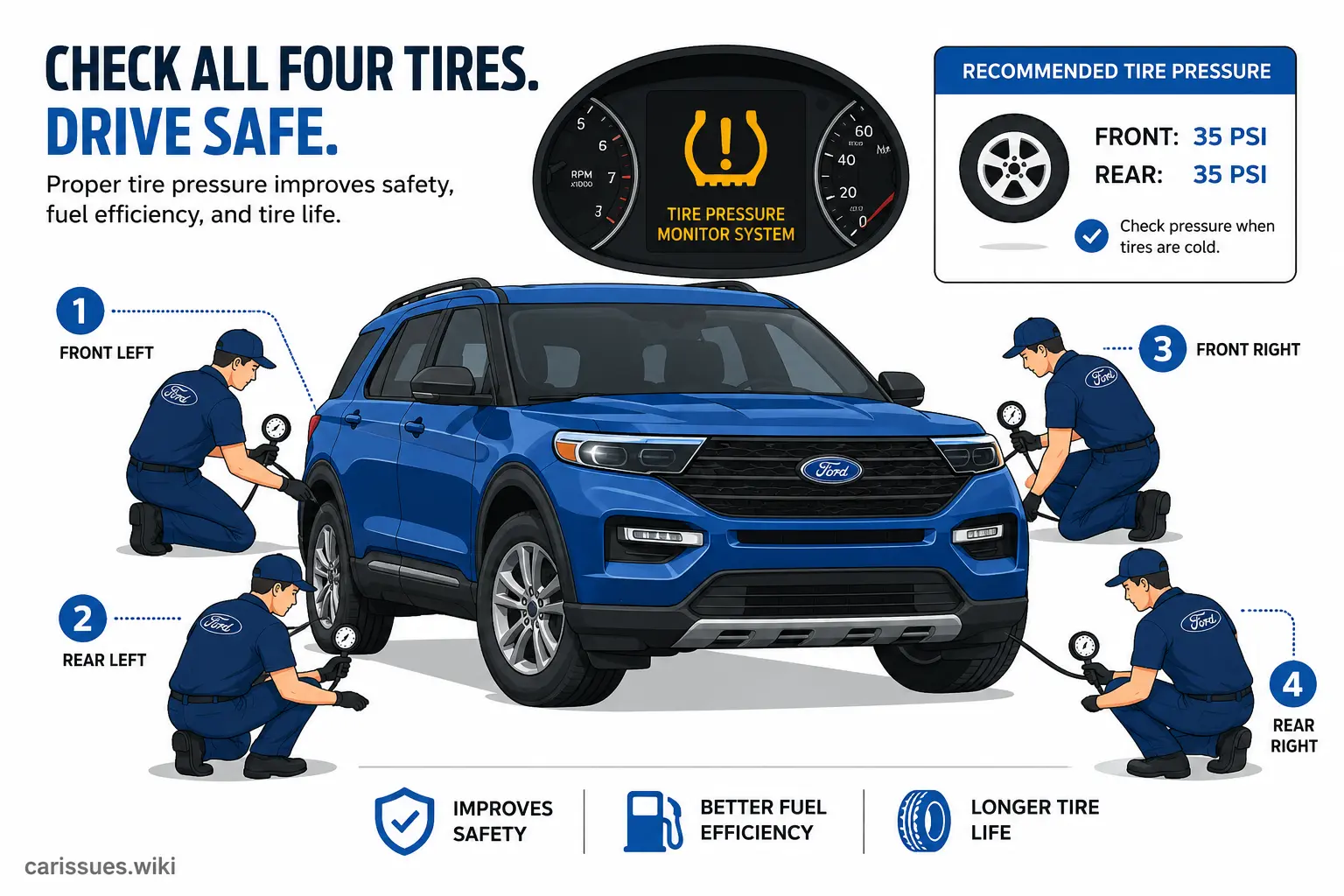
Before you even think about resetting the system, you must check and correct tire pressure. This step isn’t optional; it’s the foundation of the entire reset process. Ford’s TPMS will not reset properly if the tires are not inflated to the correct specifications. You can find the recommended PSI on a sticker inside the driver’s door jamb or in the owner’s manual.
Always check tire pressure when the tires are cold, meaning the vehicle has been parked for at least three hours or driven less than one mile. Hot tires give inflated readings, and if you adjust pressure while the tires are warm, the system may later detect a drop and trigger the warning again. Use a reliable digital or dial gauge, inflate each tire to the exact PSI listed, and don’t forget the spare if your model monitors it. Skipping this step is like trying to calibrate a scale while standing on it; it just won’t work.
How to Reset Ford TPMS in Newer Models
Most newer Ford vehicles make TPMS reset surprisingly simple. If your Ford has a digital instrument cluster or infotainment screen, the reset option is often built right into the menu system. Start by turning the ignition on without starting the engine. Navigate to Settings, then Driver Assist or Vehicle, and look for Tire Pressure Monitor or TPMS Reset.
Once selected, the system will prompt you to confirm the reset. Some models will honk the horn or display a confirmation message when the reset is complete. This method relies on the vehicle’s computer recognizing the correct pressure values and re-calibrating the sensors automatically. If done correctly, the warning light should turn off within a few minutes of driving. If it doesn’t, that’s your signal that something else is going on beneath the surface.
Finding the TPMS Reset Option in Different Ford Models
Ford doesn’t use a one-size-fits-all approach, which can be frustrating if you switch between models. F-Series trucks like the F-150 often include TPMS options in the instrument cluster controls on the steering wheel. SUVs such as the Escape, Explorer, and Edge usually house the reset feature inside the central touchscreen under vehicle settings.
Older or base-trim models may not display a clear “reset” label at all. In those cases, the system may automatically relearn after driving for a certain period at consistent speeds. Knowing where to look saves time and prevents unnecessary button-mashing. If you’re unsure, the most reliable source remains the official guidance from Ford Motor Company, which publishes model-specific instructions in owner manuals and service bulletins.
Using the Hazard Light Method on Older Systems
Some older Ford vehicles use a less intuitive but surprisingly effective TPMS reset technique known as the hazard light method. This process typically applies to models produced before advanced infotainment systems became standard. To begin, turn the ignition from off to on three times, ending in the on position. Press the hazard light button six times within a few seconds.
If done correctly, the horn will chirp or the warning light will flash, indicating the vehicle has entered TPMS relearn mode. From there, you inflate or deflate each tire in a specific order until the system acknowledges each sensor. It feels a bit like cracking a secret code, but once you know the rhythm, it works reliably. This method exists because older systems lack the software interface newer vehicles enjoy, but the underlying sensor logic remains the same.
Sensor Relearning Steps After Tire Rotation or Replacement
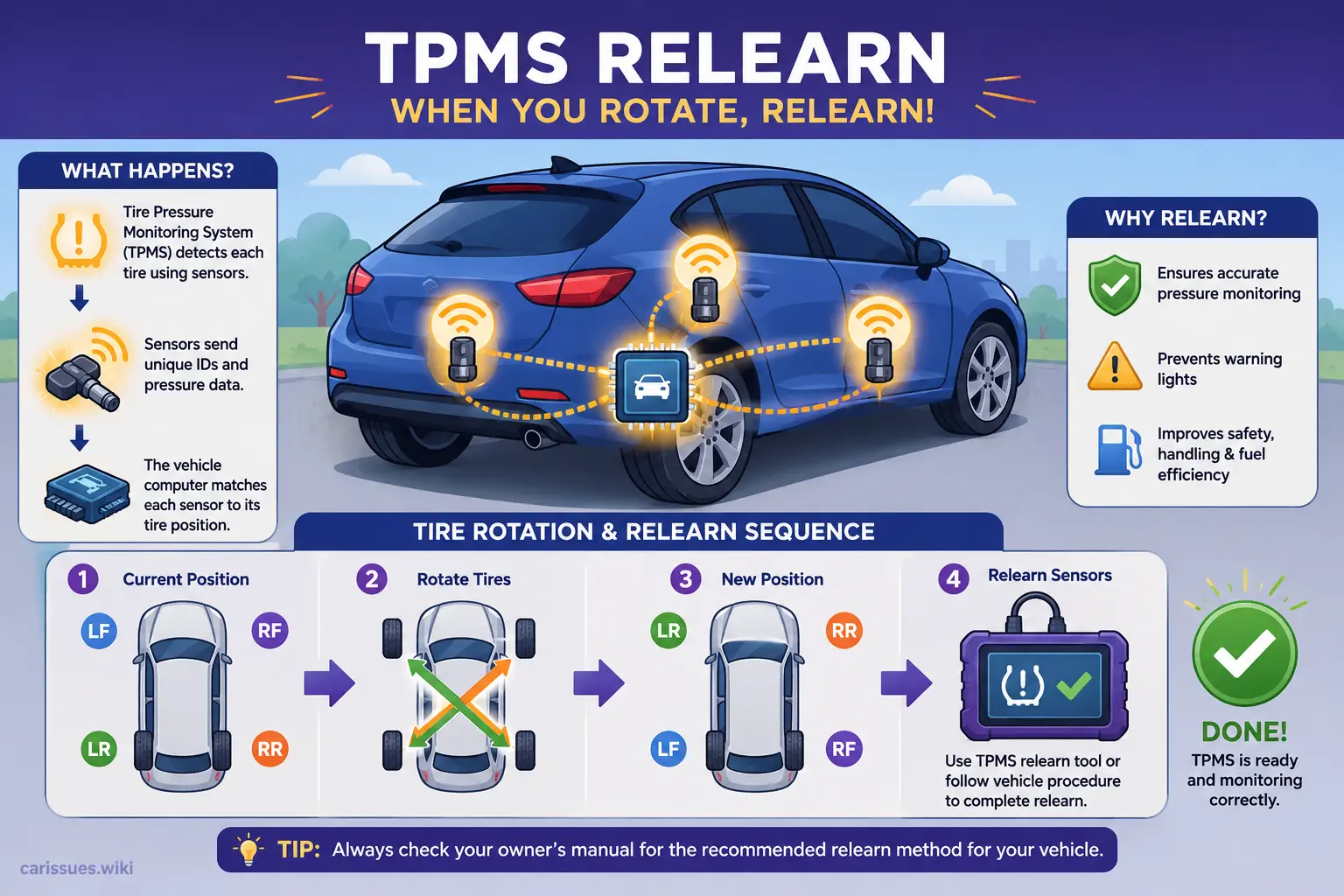
Any time you rotate tires or replace a sensor, the system must relearn which sensor belongs to which wheel position. Ford vehicles handle this in one of two ways: automatic relearn or manual relearn. Automatic relearn happens during normal driving, usually within 10 to 20 minutes at speeds above 30 mph. The vehicle’s computer reassigns sensor positions based on signal strength and rotation patterns.
Manual relearn, on the other hand, requires you to place the system into relearn mode and trigger each sensor individually, often by adjusting tire pressure or using a TPMS activation tool. If you skip this step after rotation, the system may report low pressure in the wrong tire, which is both confusing and dangerous. Think of relearning as updating a contact list; if the names don’t match the numbers, communication breaks down.
What Happens If the Warning Light Stays On
When the TPMS warning light refuses to turn off after a proper reset, it’s telling you something important. A constantly illuminated light usually indicates a sensor fault, while a blinking light followed by a solid glow often signals a communication failure. TPMS sensors run on small internal batteries that typically last 5 to 10 years, depending on driving habits and climate.
Once a sensor battery dies, the entire sensor must be replaced. Resetting won’t fix it because there’s nothing left to communicate. Driving with a faulty sensor doesn’t immediately affect vehicle performance, but it removes a key safety net. According to tire safety studies referenced by federal transportation agencies, underinflated tires contribute to reduced fuel efficiency and increased stopping distances, making TPMS more than just a convenience feature.
Common Mistakes That Interrupt the Reset Process
Many TPMS resets fail for simple, avoidable reasons. The most common mistake is incorrect tire pressure, even if it’s off by just a few PSI. Another frequent issue is performing the reset with the engine running when the system requires ignition-only mode. Timing matters, too; some Ford models require precise sequences that, if rushed, won’t register.
Using mismatched tire sizes or aftermarket wheels without compatible sensors can also confuse the system. Even over-inflating tires beyond the recommended PSI can trigger errors. Resetting TPMS isn’t about forcing the light off; it’s about aligning real-world conditions with what the system expects. Treat it like syncing a smartwatch; everything has to be in the right state for it to work.
Keeping the Monitoring System Accurate Over Time
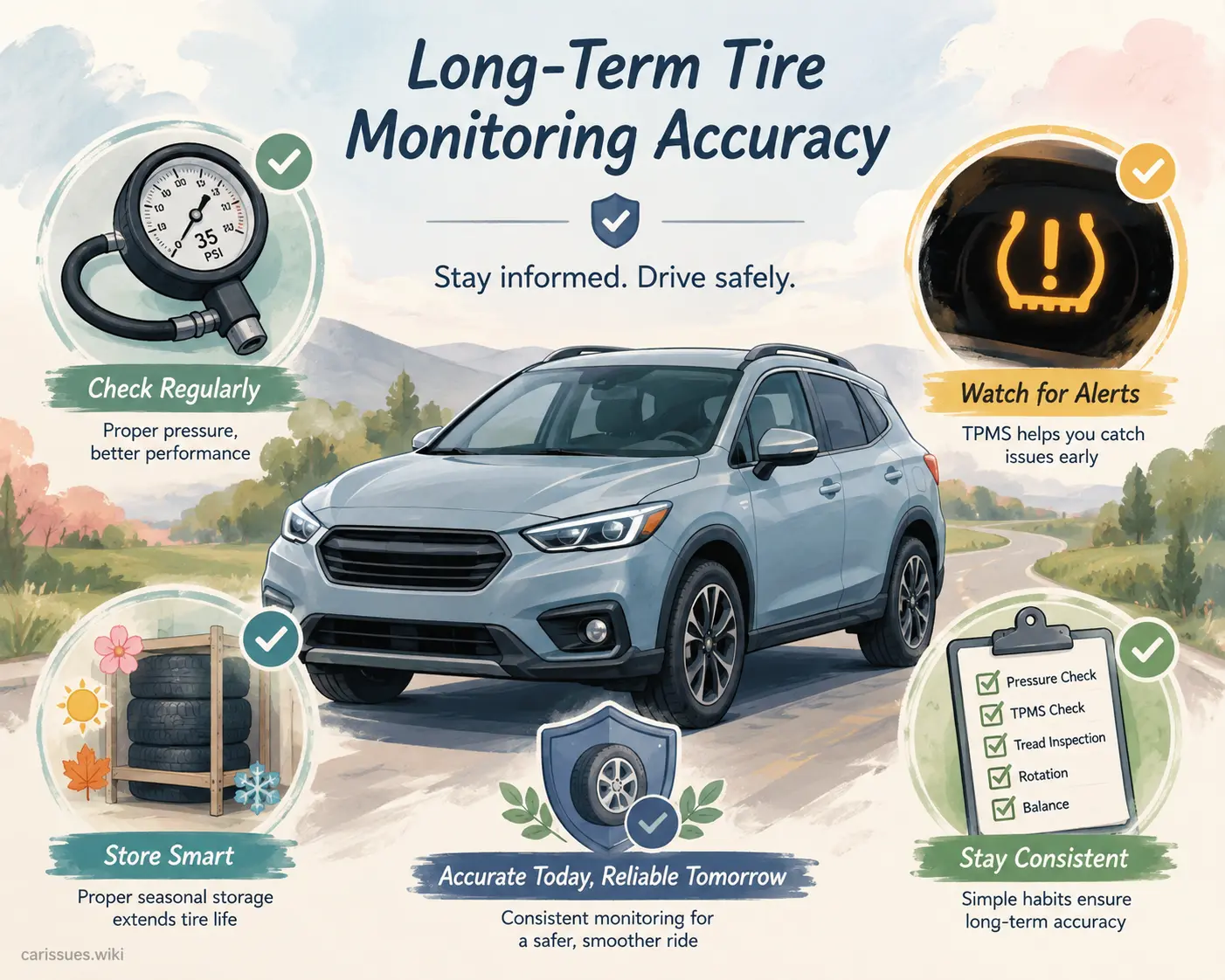
Long-term TPMS accuracy depends on consistent habits. Check tire pressure monthly, especially during seasonal temperature changes. Replace valve stems when installing new tires, and avoid harsh tire sealants unless absolutely necessary, as they can damage sensors. During tire service, always confirm that technicians perform a sensor relearn if required.
Storing winter or summer tires properly also protects sensor longevity. Keeping your TPMS healthy means fewer false alarms and more trust in the system when it does alert you. Over time, that trust translates into safer driving, better fuel economy, and longer tire life. It’s a small maintenance effort with outsized benefits.
Conclusion
Resetting the Ford Tire Pressure Monitor System isn’t complicated, but it does require doing things in the right order. Understanding what triggers the warning light, checking tire pressure correctly, and using the appropriate reset method for your specific Ford model makes all the difference. When done properly, TPMS becomes a quiet partner in safety rather than an annoying dashboard distraction. Treat it with the same respect you give your brakes or steering, and it will quietly look out for you mile after mile.
FAQs
1. Can I reset Ford TPMS without special tools?
Yes, most newer Ford models allow TPMS reset through the vehicle settings menu without any tools.
2. How long does it take for TPMS to reset after inflating tires?
Typically 5 to 20 minutes of driving at normal speeds, depending on the model.
3. Will disconnecting the battery reset TPMS?
No, disconnecting the battery may reset warning lights temporarily but does not properly recalibrate TPMS sensors.
4. Does Ford TPMS monitor the spare tire?
Some models do, especially full-size SUVs and trucks, but many do not.
5. Is it safe to drive with the TPMS light on?
It’s safe short-term, but you should check tire pressure immediately to avoid long-term safety and efficiency issues.