

Every car owner eventually hears about wheel bearings, usually when something starts making a strange humming or grinding noise. At first, it may sound like a minor issue hiding somewhere under the vehicle. Then the sound grows louder, the steering feels odd, and suddenly a tiny mechanical part becomes the center of attention. That small component matters far more than most drivers realize. A wheel bearing quietly handles enormous stress every single second your car is moving.
A wheel bearing is a set of steel balls or rollers housed inside a metal ring called a race. Its main job is to allow the wheel to spin smoothly while supporting the vehicle’s weight. Think of it like the knee joint of your car. Without healthy knees, walking becomes painful and unstable. Without properly functioning wheel bearings, your car cannot roll safely or efficiently. These components reduce friction between the wheel and axle, making driving smoother, quieter, and safer.
Modern vehicles rely heavily on sealed wheel bearing assemblies designed to last thousands of miles with minimal maintenance. According to recent automotive service reports, many wheel bearings are engineered to survive between 85,000 and 100,000 miles under normal driving conditions. Still, harsh roads, potholes, water intrusion, oversized tires, and aggressive driving habits can dramatically shorten their lifespan.
The tricky part about wheel bearing failure is how subtle it begins. One day your vehicle feels perfectly normal. The next, you notice a faint humming sound during highway driving. Ignore it long enough, and the problem can escalate into dangerous steering instability or even wheel separation. That’s why understanding what wheel bearings do; and recognizing early warning signs; can save money, prevent accidents, and keep your vehicle performing at its best.
Understanding the Basic Purpose of a Wheel Bearing
Wheel bearings may be small, but they carry one of the heaviest responsibilities in your vehicle. Every turn of your tires depends on them working correctly. They sit between the wheel hub and axle, allowing the wheels to rotate with as little resistance as possible. Imagine trying to ride a bicycle with rusty pedals that barely move. That grinding resistance is exactly what wheel bearings are designed to eliminate inside a car.
Where Wheel Bearings Are Located in a Vehicle
Each wheel on your car has its own bearing assembly hidden inside the wheel hub. This placement allows the bearing to support rotational movement while enduring constant pressure from acceleration, braking, and cornering. In modern vehicles, many wheel bearings are integrated into a sealed hub assembly that also houses sensors for systems like ABS braking and traction control.
The location of wheel bearings makes them vulnerable to punishment from the road. Every pothole, curb strike, speed bump, and water puddle sends shockwaves directly through the bearing assembly. It’s like repeatedly punching the same small joint with thousands of pounds of force. Over time, even the strongest materials begin wearing down.
How Wheel Bearings Reduce Friction
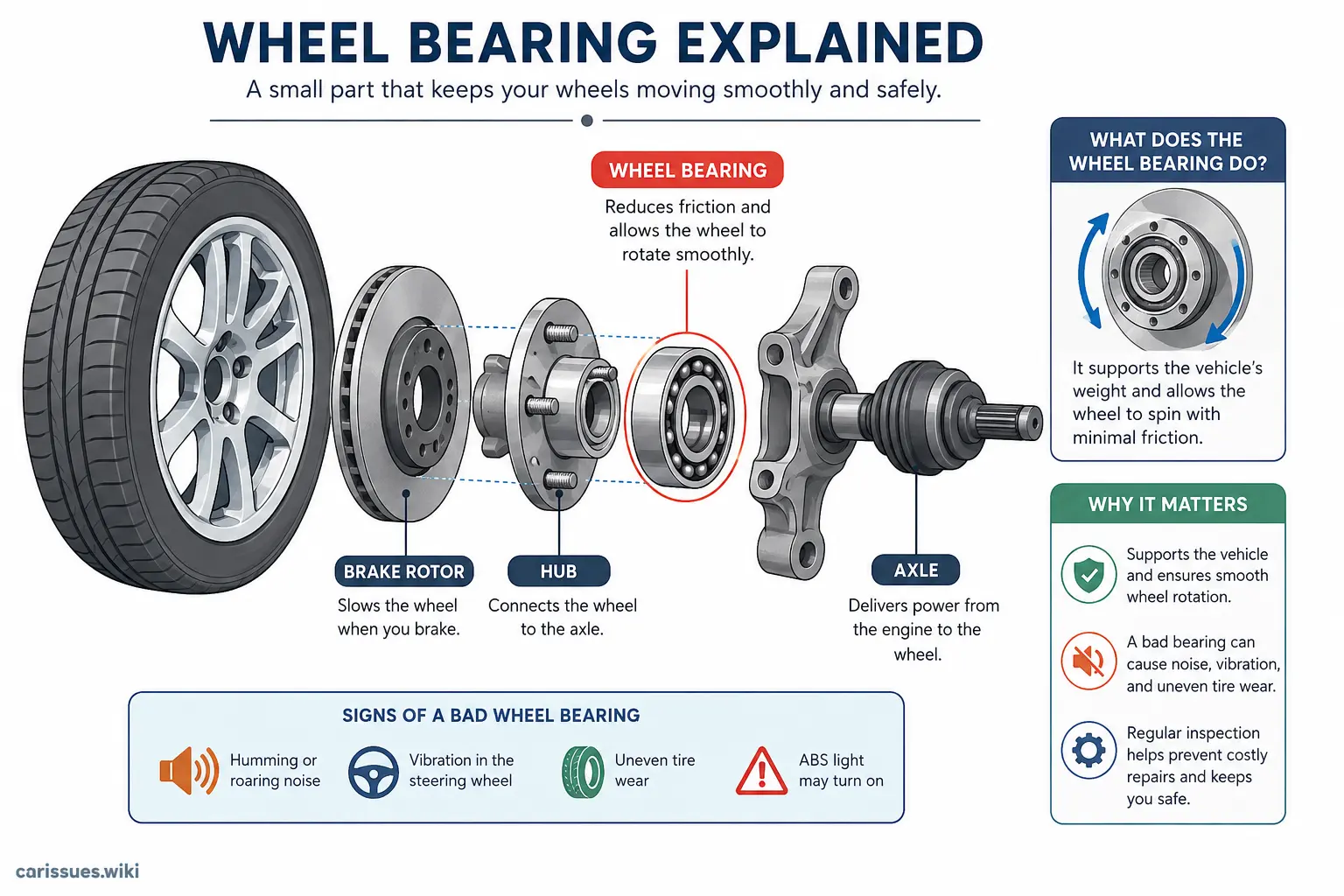
The magic of wheel bearings lies in their ability to reduce friction. Metal-on-metal contact naturally creates heat and resistance. Bearings use lubricated steel balls or rollers to minimize that friction while supporting heavy loads. This smooth movement improves fuel efficiency, steering response, and ride comfort.
Without wheel bearings, wheels would grind directly against stationary components, creating enormous heat and damage almost instantly. Modern sealed bearings contain specialized grease that keeps everything lubricated while blocking out contaminants like water, dirt, and road salt. Once those seals fail, the bearing becomes vulnerable to corrosion and rapid deterioration.
The reason drivers rarely think about wheel bearings is because healthy bearings operate silently. They do their job in the background without attention; until they begin failing. Then the silence disappears and the symptoms become impossible to ignore.
The Role Wheel Bearings Play in Smooth Driving
Smooth driving depends on countless components working together, but wheel bearings sit at the heart of that experience. They influence steering precision, ride comfort, tire wear, and overall vehicle stability. A vehicle with healthy wheel bearings glides along the road almost effortlessly, while worn bearings can make even a good car feel rough and unstable.
Why Smooth Wheel Rotation Matters
Every wheel rotates thousands of times during even short trips. At highway speed, the rotational force becomes enormous. Bearings ensure this movement stays controlled and efficient. If the bearing begins wearing out, the wheel no longer rotates perfectly straight. Tiny vibrations start developing, gradually spreading through the suspension and steering system.
Drivers often describe the sensation as a low humming noise or vibration that grows louder with speed. According to automotive repair specialists, humming and growling sounds are among the most common early symptoms of wheel bearing failure.
Smooth wheel rotation also matters for fuel efficiency. Extra friction forces the engine to work harder to maintain speed. That increased resistance may not seem dramatic initially, but over time it contributes to higher fuel consumption and accelerated wear on surrounding parts.
The Connection Between Bearings and Steering Stability
Wheel bearings also help maintain steering accuracy. When bearings develop looseness, steering becomes less predictable. The vehicle may drift slightly, feel unstable during lane changes, or vibrate through the steering wheel. It’s similar to wearing loose shoes while running; you lose precision and confidence in movement.
This instability becomes especially dangerous during emergency maneuvers or wet road conditions. A failing wheel bearing can affect braking performance, traction systems, and wheel alignment. In severe cases, drivers report wobbling sensations that feel like the wheel itself is moving independently.
Modern vehicles are designed with tight tolerances, meaning even minor bearing wear can noticeably affect driving feel. That’s why mechanics often recommend immediate inspection when symptoms appear instead of waiting for the issue to worsen.
How Wheel Bearings Support the Weight of the Vehicle
One of the most impressive things about wheel bearings is the amount of weight they support. Every bearing must carry the full load of the vehicle while enduring acceleration, braking force, and side pressure from cornering. It’s a nonstop workout happening every second the car is moving.
Bearing Load Capacity Explained
Wheel bearings are engineered to handle both radial and axial loads. Radial load refers to the vertical pressure from the vehicle’s weight pressing downward. Axial load involves side forces created during turns and cornering. Together, these forces place immense stress on a relatively compact component.
Think about a large SUV loaded with passengers, luggage, and cargo. Now imagine that entire weight constantly shifting during turns, pothole impacts, and braking. The wheel bearings absorb much of that punishment while still allowing smooth rotation.
Automotive experts note that heavier vehicles and electric vehicles often place additional strain on bearings due to increased curb weight and torque delivery. Some industry estimates suggest EV wheel bearings may experience a 15% to 20% reduction in lifespan because of these added stresses.
Why Heavy Vehicles Put More Stress on Bearings
Large trucks, SUVs, and modified vehicles tend to wear bearings faster. Oversized wheels and wider tires increase leverage forces on the bearing assembly, accelerating wear. Recent automotive service reports specifically identify larger aftermarket wheels and tires as a common contributor to premature bearing failure.
Road conditions also matter tremendously. Repeated pothole impacts are like tiny hammer blows against the bearing. Over time, those impacts damage internal surfaces and weaken seals. Water intrusion then contaminates the grease, causing corrosion and additional friction.
Drivers who frequently tow trailers or carry heavy cargo place even greater pressure on bearings. The extra load intensifies heat buildup, and heat is one of the biggest enemies of long-term bearing durability.
Strange Noises That Often Point to Bearing Trouble
If wheel bearings had a language, noise would be it. Strange sounds are usually the first warning sign drivers notice. The problem is that these sounds often begin subtly, making them easy to dismiss at first.
Humming, Grinding, and Growling Sounds
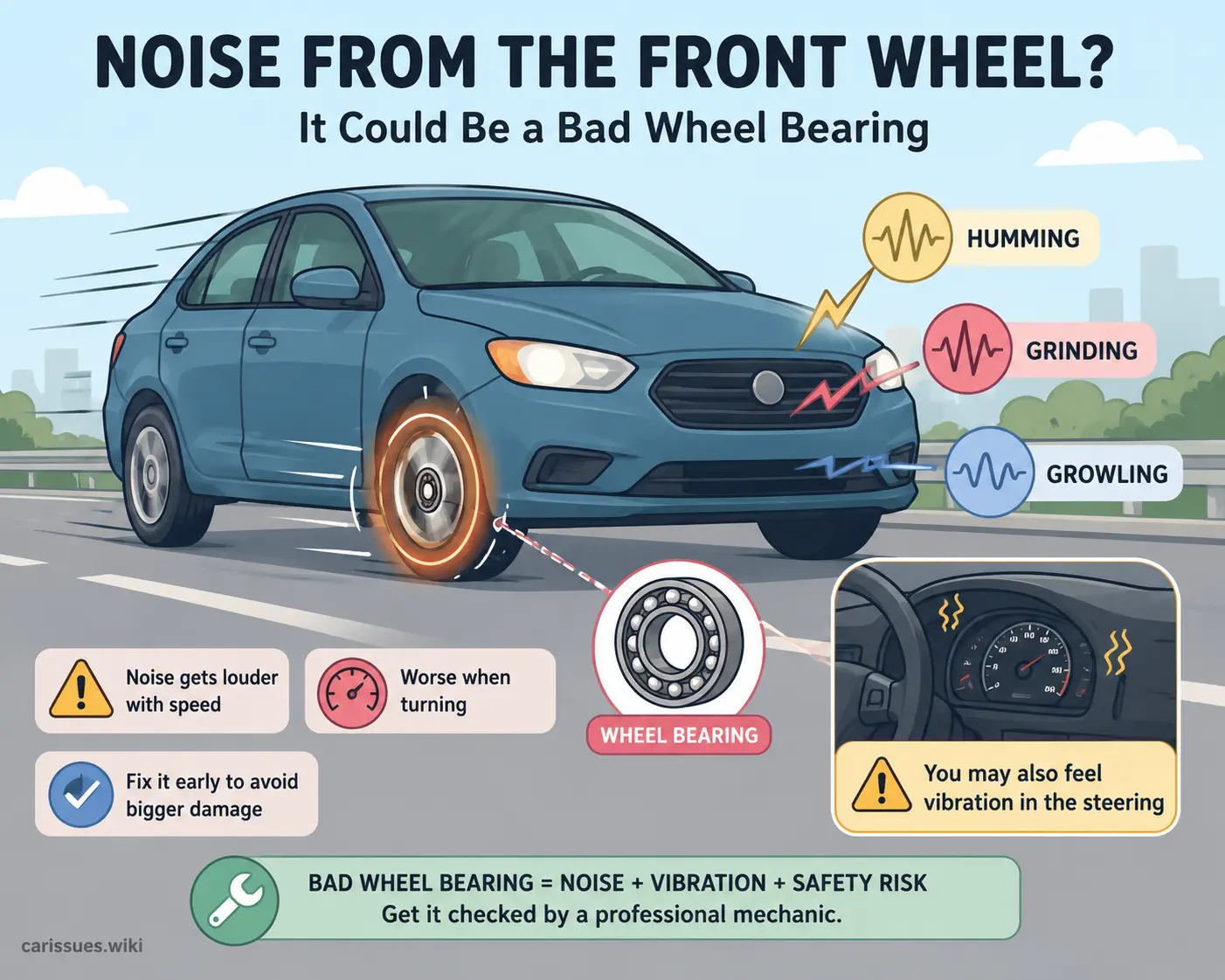
A failing wheel bearing commonly produces a humming, growling, rumbling, or grinding noise that increases with speed. Mechanics frequently compare the sound to aggressive tire noise or distant airplane turbulence.
The sound happens because worn bearing surfaces no longer rotate smoothly. Instead of gliding effortlessly, damaged rollers create uneven contact and vibration. As speed increases, the frequency and volume of the noise rise as well.
Here’s a quick breakdown of common wheel bearing noises:
| Noise Type | Possible Meaning |
|---|---|
| Humming | Early-stage wear |
| Growling | Increased internal damage |
| Grinding | Severe bearing deterioration |
| Clicking | Advanced failure or looseness |
| Rumbling | Damaged rollers or races |
Many drivers initially mistake wheel bearing noise for tire issues. The difference is consistency. Tire noise often changes with road texture, while wheel bearing noise remains steady and grows with speed.
Why Noise Changes With Speed
One fascinating clue mechanics use is how the sound changes during turns. When turning left, pressure shifts onto the right-side bearings, and vice versa. If the sound becomes louder during a turn, it can help identify which bearing is failing.
This happens because the extra load intensifies friction inside the damaged bearing. It’s similar to walking on an injured ankle. The more pressure applied, the more noticeable the pain becomes.
Drivers should never ignore these sounds, even if they seem minor. What begins as a faint hum can eventually evolve into severe grinding, vibration, or dangerous wheel instability.
What Driving Feels Like When a Bearing Starts Failing
Wheel bearing problems don’t just create noise. They also change the entire feel of the vehicle. Many drivers describe the sensation as “something just feels off,” even before they understand the exact cause.
Steering Wheel Vibrations
One common symptom is vibration through the steering wheel. The vibration usually intensifies at higher speeds and may come and go during turns. This happens because the damaged bearing creates uneven wheel movement, sending vibrations throughout the suspension system.
At first, the vibration may feel minor; almost like rough pavement. Over time, it becomes more noticeable and constant. Drivers may also experience a shaking sensation through the floorboards or seats.
The scary part is how quickly deterioration can escalate. A slightly rough bearing can deteriorate rapidly once heat and friction increase. That’s why symptoms sometimes seem to worsen suddenly rather than gradually.
Vehicle Pulling and Loose Handling
Failing bearings can also make steering feel loose or unpredictable. Some vehicles begin drifting slightly to one side because the damaged wheel no longer rotates evenly. Others develop a vague or “sloppy” steering feel.
In advanced cases, drivers report wobbling wheels or clunking sounds over bumps. These symptoms indicate excessive play inside the bearing assembly and represent a serious safety concern.
Modern vehicles equipped with ABS systems may even trigger dashboard warning lights if bearing wear affects wheel speed sensor readings. Drivers sometimes assume the problem involves brakes or electronics when the root issue is actually mechanical bearing wear.
Common Causes of Premature Wheel Bearing Wear
Wheel bearings are designed for durability, but several factors can dramatically shorten their lifespan. Most failures are linked to contamination, impact damage, or improper installation.
Potholes, Water, and Road Salt Damage
Road hazards are brutal on wheel bearings. Potholes create sudden impact loads that damage internal bearing surfaces. Hitting curbs or speed bumps aggressively has a similar effect.
Water intrusion is another major killer. Once water, mud, or road salt breaches the bearing seal, lubrication becomes contaminated. Corrosion starts forming internally, increasing friction and wear. Automotive experts consistently identify contaminated grease as one of the leading causes of bearing failure.
Winter driving conditions are especially harsh. Salt exposure accelerates corrosion, while freezing temperatures can harden seals and increase brittleness.
Improper Installation and Oversized Tires
Incorrect installation destroys many new bearings prematurely. Using impact tools incorrectly or failing to torque components properly can damage internal surfaces before the vehicle even leaves the repair shop.
Vehicle modifications also matter. Larger wheels and low-profile tires may look attractive, but they increase stress on wheel bearings significantly. Stiffer suspensions transfer more impact force directly into the bearing assembly instead of absorbing it.
Cheap aftermarket parts create additional risks. Lower-quality bearings may use inferior materials or poor heat treatment, leading to shorter lifespan and reduced reliability.
The Risk of Ignoring a Damaged Bearing
Ignoring a bad wheel bearing is like ignoring chest pain during exercise. The problem rarely fixes itself, and the consequences can become severe quickly.
Tire Damage and Brake Problems
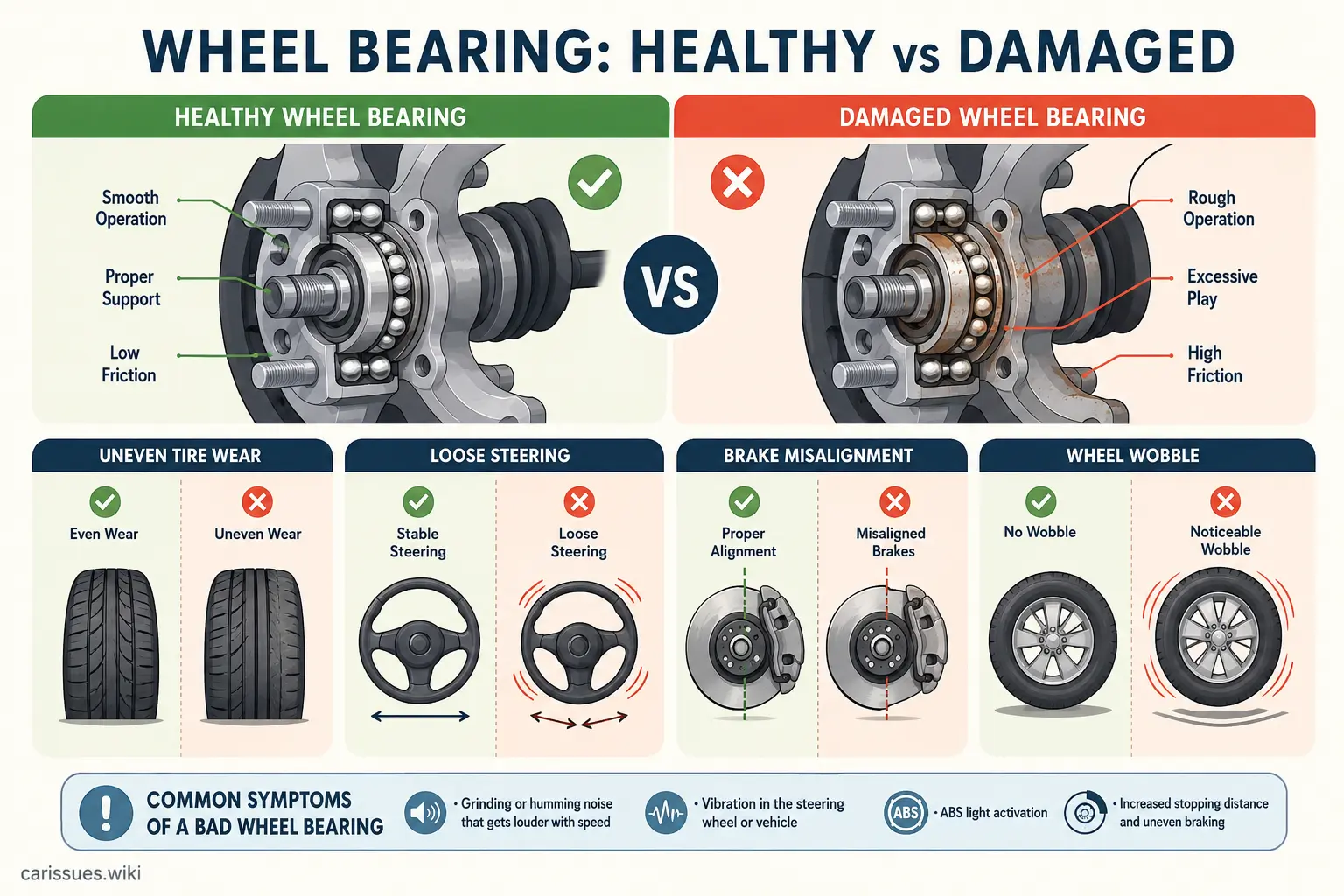
A damaged bearing often causes uneven tire wear because the wheel no longer rotates correctly. Drivers may notice scalloped or cupped tire patterns that reduce traction and shorten tire life.
Brake performance may also suffer. Excessive wheel movement affects brake rotor alignment, causing pulsation, vibration, or uneven braking response. ABS systems can malfunction if bearing looseness interferes with wheel speed sensors.
Repair costs also climb dramatically when the issue is ignored. A simple bearing replacement can evolve into damaged hubs, axles, brakes, or suspension components.
Dangerous Wheel Separation Risks
The worst-case scenario is catastrophic bearing failure. In extreme situations, the wheel can separate from the vehicle entirely. Multiple automotive experts warn that complete wheel detachment becomes possible once bearings deteriorate severely enough.
That possibility sounds dramatic, but it happens in real-world accidents. A seized or collapsed bearing can instantly destroy steering control, especially at highway speed.
Reddit mechanics and drivers frequently describe wheel bearings as one repair you should never delay unnecessarily. Several firsthand experiences mention seized hubs, overheated assemblies, and dangerous instability after prolonged neglect.
How Mechanics Confirm a Wheel Bearing Problem
Diagnosing wheel bearings requires both experience and careful inspection. Many symptoms overlap with tire, suspension, or drivetrain issues, so mechanics use multiple methods to confirm the problem.
Road Testing and Sound Diagnosis
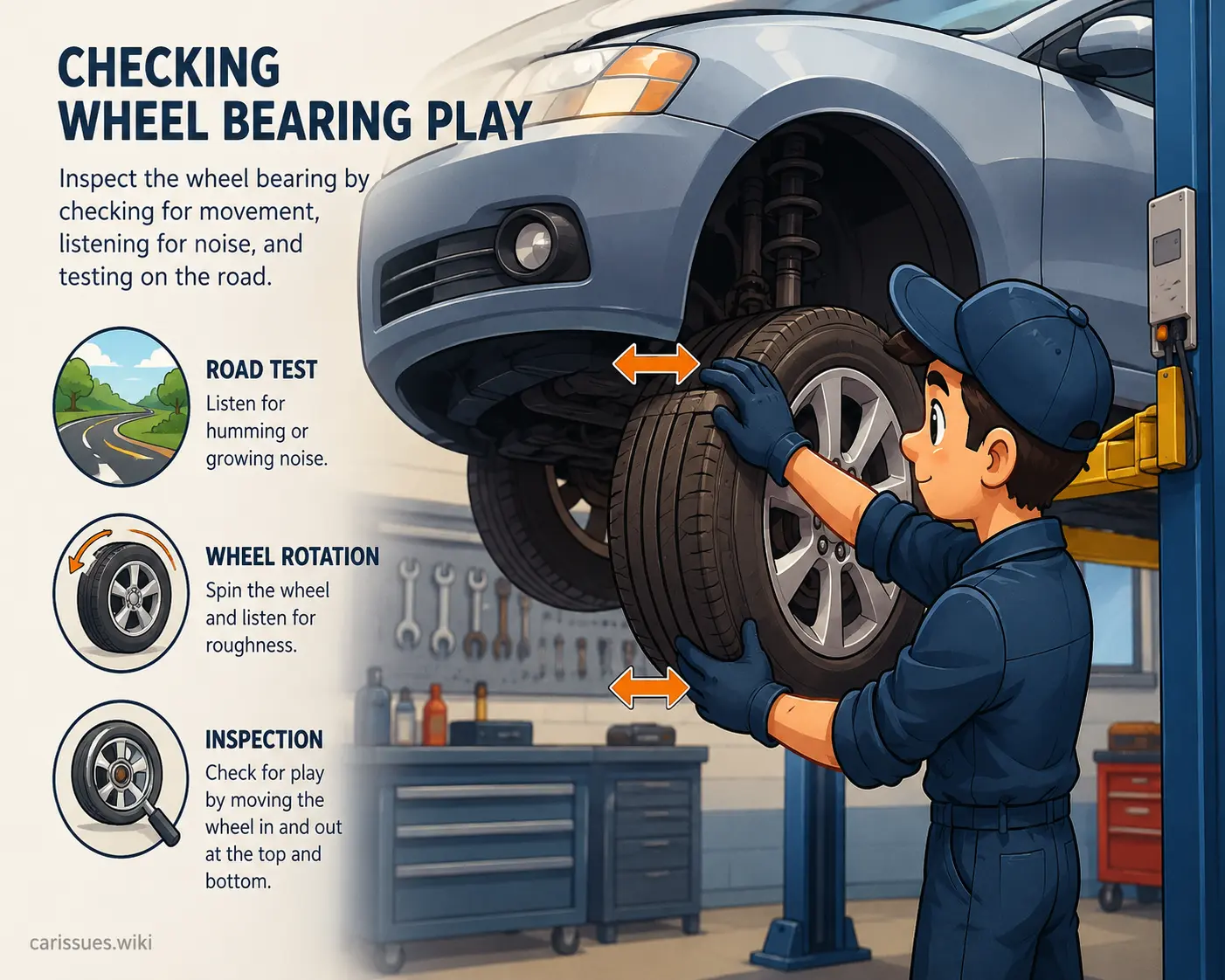
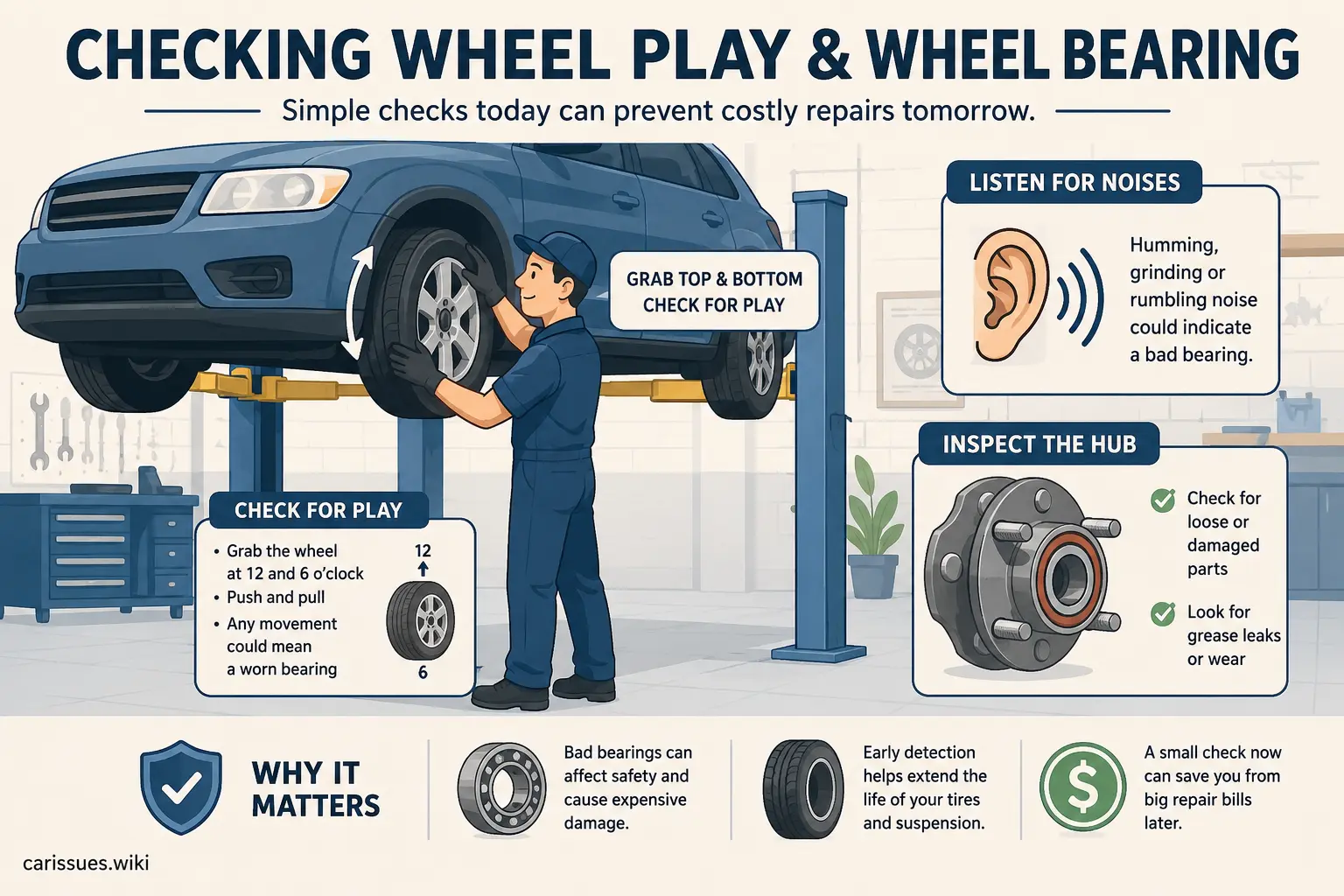
Most diagnoses begin with a road test. Mechanics listen for humming or growling sounds that change with speed or steering direction. Turning maneuvers help isolate which side of the vehicle contains the failing bearing.
Experienced technicians can often identify wheel bearing noise almost immediately because the sound pattern is distinct. It rises steadily with speed and often changes during cornering.
Some repair shops also use electronic chassis ears or specialized microphones attached near the wheel hubs. These tools amplify vibration and pinpoint the exact source of the noise.
Physical Inspection and Wheel Play Checks
Once the vehicle is lifted, mechanics inspect for wheel play by grasping the tire and rocking it side to side. Excessive movement may indicate bearing wear.
Technicians also spin the wheel manually, listening for roughness or grinding sensations. Healthy bearings rotate smoothly and quietly. Damaged ones often feel gritty or uneven.
Here’s a simplified overview of common diagnostic methods:
| Diagnostic Method | What It Reveals |
|---|---|
| Road test | Noise behavior |
| Steering input test | Load-sensitive sounds |
| Wheel play inspection | Bearing looseness |
| Wheel spin test | Rough internal movement |
| ABS scan | Sensor-related bearing issues |
Modern diagnostic equipment helps, but mechanic experience still plays a huge role. Subtle wheel bearing sounds can mimic tire noise, CV joint issues, or differential problems.
Driving Habits That Help Bearings Last Longer
The good news is that drivers can significantly extend wheel bearing lifespan through smarter habits and preventative maintenance.
Safer Driving Techniques
Gentle driving protects wheel bearings more than most people realize. Avoiding potholes, curbs, and aggressive speed bump impacts reduces shock loads dramatically.
Smooth cornering and braking also help. Aggressive driving transfers higher stress into suspension and bearing components. Think of wheel bearings like running shoes. Constant abuse shortens their useful life quickly.
Drivers should also avoid overloading vehicles beyond recommended weight limits. Excess cargo places enormous additional strain on wheel assemblies.
Maintenance Tips for Long-Term Reliability
Regular inspections are essential. Mechanics often spot early bearing issues during tire rotations or brake service appointments. Catching problems early prevents expensive secondary damage.
Drivers should also pay attention to unusual sounds immediately. A faint hum today could become a dangerous failure weeks later.
Helpful maintenance habits include:
- Rotating tires regularly
- Maintaining proper wheel alignment
- Avoiding oversized wheel setups
- Replacing damaged suspension parts promptly
- Using quality replacement bearings
- Addressing noises early
Quality matters too. Premium bearings installed correctly usually last far longer than cheap components paired with improper installation practices.
Conclusion
Wheel bearings rarely get attention until something goes wrong, but they are among the most important safety components in any vehicle. They quietly support the vehicle’s weight, allow smooth wheel rotation, and help maintain stable steering and braking performance. Without them, driving would feel rough, noisy, and dangerously unstable.
The challenge with wheel bearings is how deceptively small their symptoms begin. A faint hum, a subtle vibration, or minor steering looseness can easily seem harmless at first. Yet these early warning signs often point to a problem that can escalate into serious mechanical failure if ignored. Modern vehicles place enormous demands on bearings, especially with heavier SUVs, electric vehicles, and rough road conditions becoming increasingly common.
Understanding how wheel bearings work gives drivers an advantage. Recognizing noises early, avoiding harsh impacts, and maintaining proper vehicle care can dramatically extend bearing lifespan. Most importantly, addressing symptoms quickly helps protect not only your wallet but also your safety on the road.
A healthy wheel bearing is almost invisible because it performs perfectly in silence. Once that silence disappears, your car is asking for attention; and it’s wise to listen.
Frequently Asked Questions
1. How long do wheel bearings usually last?
Most wheel bearings last between 85,000 and 100,000 miles under normal conditions. Driving habits, road quality, vehicle weight, and water exposure can shorten or extend that lifespan significantly.
2. What does a bad wheel bearing sound like?
A failing wheel bearing commonly produces humming, growling, rumbling, or grinding noises that become louder as vehicle speed increases.
3. Is it safe to drive with a bad wheel bearing?
Driving with a damaged wheel bearing is risky. Severe failure can cause wheel instability, brake issues, or even wheel separation in extreme cases.
4. Can potholes damage wheel bearings?
Yes. Potholes and curb impacts create sudden shock loads that can damage wheel bearings and shorten their lifespan considerably.
5. How much does wheel bearing replacement cost?
Costs vary depending on vehicle type and labor rates. Recent automotive estimates suggest replacement costs may range from around $10 for individual parts to several hundred dollars for complete hub assemblies and labor.

Marco Vestri is a 29-year-old American content writer based in Spokane, Washington. He specializes in creating well-researched automotive maintenance guides, troubleshooting articles, and practical ownership advice for everyday drivers. His work emphasizes accuracy, clear explanations, and reliable sources, helping readers make informed decisions with confidence. As a regular contributor to carissues.wiki, Marco combines years of blogging experience with a passion for simplifying complex vehicle topics into useful, trustworthy content for a broad audience.