

A whining noise during acceleration can feel like your car is trying to tell you a secret in a language you do not quite understand. Maybe it starts as a faint high-pitched sound when you press the gas pedal. Then, little by little, it becomes louder, sharper, and impossible to ignore. Most drivers instantly think the engine is failing, but the truth is a bit more complicated. That whining sound could come from several systems working together under the hood, including the power steering pump, transmission, serpentine belt, pulleys, turbocharger, alternator, or differential. Modern vehicles are packed with rotating components, and when one of them loses lubrication, alignment, or internal integrity, the result is often a whining sound that changes with RPM or speed.
Recent automotive diagnostics reports and mechanic discussions show that low fluid levels and worn belt-driven accessories remain among the most common causes of whining noises under acceleration. Drivers often ignore these early warning signs because the car still drives normally. That is a risky move. A small bearing issue today can become a seized pulley or destroyed transmission tomorrow. Think of the noise as your vehicle’s version of a smoke alarm. It may not mean the house is burning down yet, but it definitely means something deserves attention.
Before throwing parts at the problem or panicking over repair costs, it helps to understand what the sound actually means. The pitch, timing, and conditions behind the noise can reveal a lot. Does the whine change with engine RPM? Does it happen only while steering? Is it louder at highway speeds? These clues narrow the possibilities quickly. Understanding those patterns can save you hundreds or even thousands of dollars in unnecessary repairs.
What a Whining Noise Usually Indicates Under Acceleration
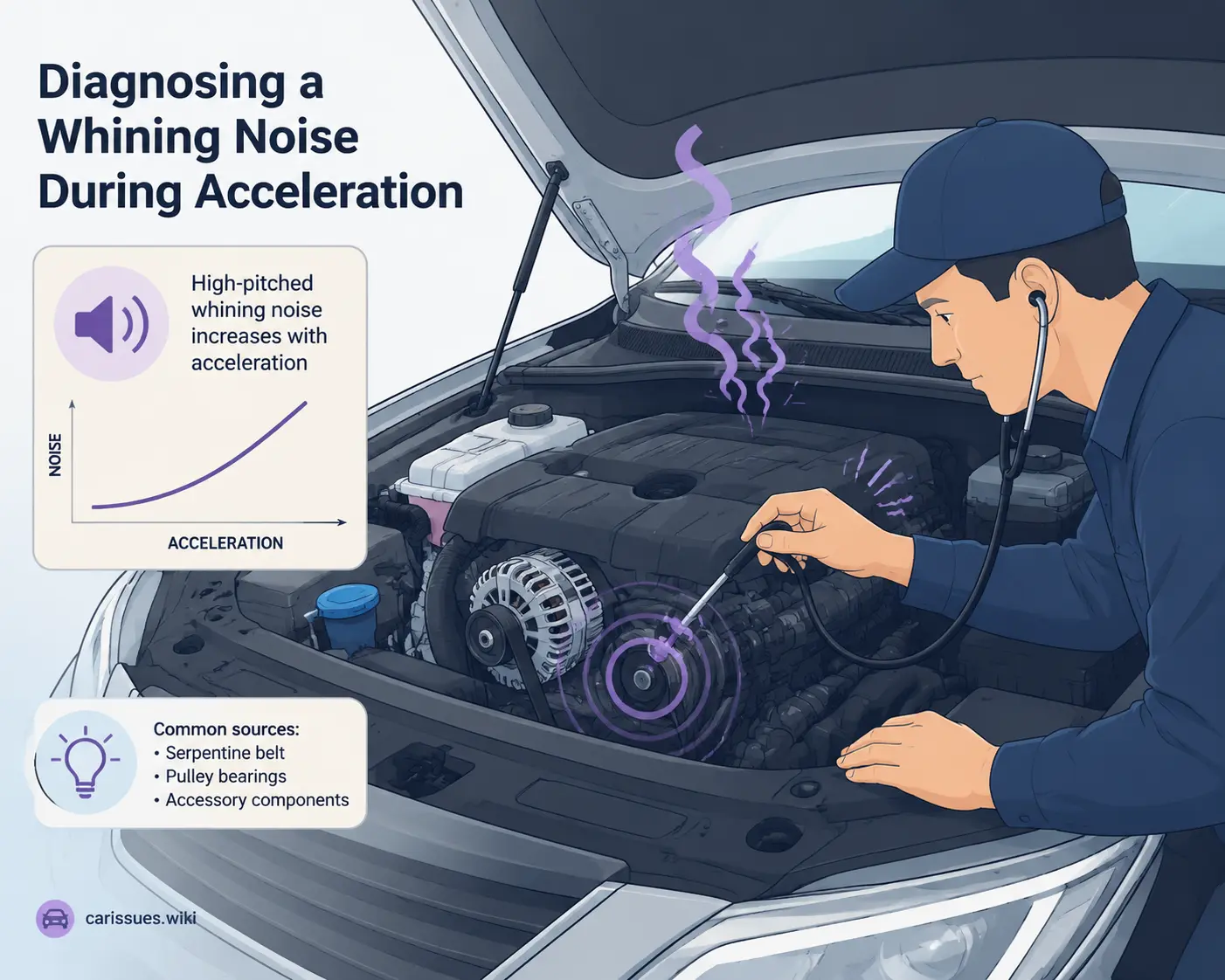
A whining noise almost always points to a component dealing with friction, pressure, or rotational stress. When you accelerate, the engine works harder, the RPM climbs, and every accessory connected to the engine begins spinning faster. That includes the alternator, power steering pump, air conditioning compressor, tensioners, pulleys, and transmission components. If one of those parts is struggling because of low lubrication, worn bearings, or excessive load, it creates a high-frequency sound that rises with speed. That is why many whining noises seem to “sing” louder as you push the accelerator harder.
Think about a bicycle wheel with dry bearings. At low speed it may seem fine, but once you spin it faster, the friction becomes obvious. Your vehicle behaves in much the same way. Automotive technicians often use the sound pattern itself to identify the failing component. A steady whine linked directly to engine RPM often points toward belt-driven accessories or pumps, while a sound linked to vehicle speed may indicate issues inside the transmission, differential, or wheel bearings.
Many drivers confuse whining, squealing, humming, and grinding noises, but each has its own personality. A squeal usually suggests slipping belts. A grinding sound often means metal-on-metal contact. A whine sits somewhere in between, commonly caused by bearings or hydraulic systems under strain. The challenge is that modern vehicles contain dozens of rotating parts capable of making similar sounds.
Another important clue is whether the noise changes under load. For example, if the whine grows louder while climbing hills or accelerating aggressively, the component may only struggle when placed under stress. That behavior is common with failing transmissions, weak power steering pumps, and worn pulleys. Catching those symptoms early can dramatically reduce repair costs because most parts fail progressively rather than instantly.
Power Steering Components That Often Create the Sound
One of the most common sources of a whining noise is the power steering system. Hydraulic power steering pumps rely on fluid pressure to reduce steering effort, and when fluid levels drop or air enters the system, the pump begins cavitating. Cavitation happens when air bubbles move through hydraulic fluid under pressure, creating a whining or groaning sound that becomes especially noticeable during acceleration or steering input. Mechanics consistently report low power steering fluid as a leading cause of whining complaints.
The sound often becomes louder when turning the wheel because the pump works harder under steering load. Drivers may also notice stiff steering, vibration through the wheel, or fluid leaks beneath the vehicle. In many cases, topping off the fluid temporarily quiets the noise, but that does not solve the underlying problem. Fluid does not simply disappear. If levels are low, there is likely a leaking hose, damaged seal, or failing steering rack somewhere in the system.
Power steering pumps themselves can also fail internally. Worn bearings inside the pump create a sharp whining noise that rises and falls with RPM. Over time, those bearings wear due to contaminated fluid, age, or overheating. If ignored long enough, the pump can seize entirely, potentially snapping the serpentine belt and disabling other accessories connected to the engine.
Here is a quick comparison of common power steering symptoms:
| Symptom | Likely Cause | Urgency |
|---|---|---|
| Whine while turning | Low fluid or air in system | Moderate |
| Stiff steering with noise | Failing pump | High |
| Fluid leaks under car | Damaged hose or seal | Moderate |
| Constant whining at all RPM | Pump bearing failure | High |
Drivers sometimes mistake power steering noises for alternator or belt problems because the sounds overlap. That is why observing when the sound changes matters so much. If steering input changes the noise, the power steering system immediately becomes a prime suspect.
Belt Wear and Pulley Problems Behind High-Pitched Noises
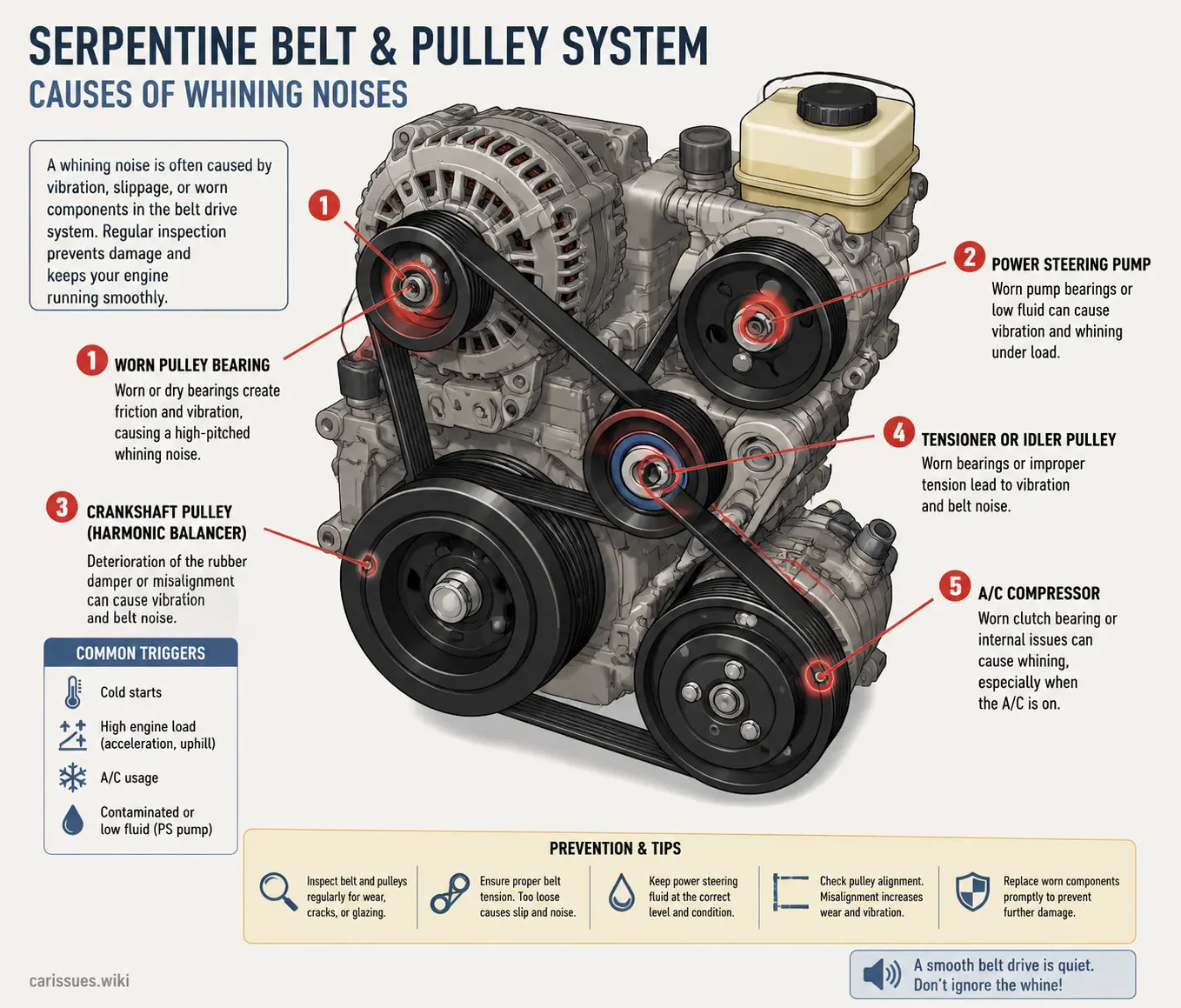
The serpentine belt system acts like the central nervous system for many engine accessories. A single belt often drives the alternator, water pump, power steering pump, and AC compressor. When that belt becomes worn, loose, glazed, or contaminated with oil, it can slip against the pulleys and create a high-pitched whine or squeal during acceleration. Recent automotive repair data confirms that belt slippage remains one of the most common explanations for whining or squealing under load.
Belts naturally wear with age. Heat cycles harden the rubber, grooves crack, and the surface loses grip. Under acceleration, the engine suddenly demands more torque from the accessories, forcing the belt to work harder. If it cannot maintain proper traction, it slips momentarily and produces that unmistakable sound. Moisture can make the problem worse. Ever notice how some cars squeal loudly on rainy mornings? Water reduces friction on worn belts, exposing problems already developing beneath the surface.
Pulleys and tensioners also deserve attention. Idler pulleys contain bearings that spin constantly while the engine runs. When those bearings dry out or fail, they generate a whining noise remarkably similar to a bad alternator or transmission. Weak tensioners create another issue by allowing the belt to flutter or lose proper tension. Mechanics often diagnose these issues by spraying water lightly on the belt or using a mechanic’s stethoscope near the pulleys.
Some symptoms that point toward belt-drive problems include:
- Noise worsening when the AC turns on
- Squealing during cold starts
- Chirping or rhythmic whining
- Burning rubber smells
- Visible cracks or glazing on the belt
Ignoring belt noise is dangerous because a snapped serpentine belt can disable multiple systems instantly. That may include the alternator, water pump, and steering assist. Suddenly, a minor annoyance becomes an overheating engine stranded on the side of the road.
Transmission Issues That Become Louder With Speed
Transmission-related whining noises are often more serious than belt or steering problems because they can indicate internal wear. Automatic transmissions depend heavily on hydraulic pressure and fluid lubrication. When fluid levels drop, the transmission pump begins sucking air along with fluid, creating a whining sound known as pump cavitation. According to recent mechanic reports, low transmission fluid is among the leading causes of whining under acceleration.
Transmission whines usually behave differently from engine accessory noises. Instead of responding directly to engine RPM, they often become louder with vehicle speed or gear changes. Drivers may hear the sound strongest during acceleration from a stop or while climbing hills. Some transmissions also whine more loudly in specific gears, which helps technicians pinpoint internal problems.
CVT transmissions are especially known for producing unique whining characteristics. Unlike traditional automatics with fixed gears, CVTs use pulleys and belts or chains to create continuously variable ratios. That design naturally creates a faint whine during operation. Many owners mistake normal CVT sounds for mechanical failure. However, excessive or suddenly louder whining may indicate pulley wear, fluid degradation, or internal belt problems.
Here is a breakdown of common transmission whining symptoms:
| Noise Pattern | Possible Cause |
|---|---|
| Whine during acceleration | Low fluid or pump cavitation |
| Noise in one specific gear | Gear or bearing wear |
| Constant highway-speed whine | Differential or transmission bearings |
| Delayed shifting with whine | Torque converter problems |
One critical warning sign is burnt-smelling or dark transmission fluid. Healthy transmission fluid should typically appear reddish or pink and smell mildly sweet. Burnt fluid suggests overheating and internal wear. Continuing to drive with low or degraded fluid can destroy a transmission surprisingly quickly, turning a simple maintenance issue into a multi-thousand-dollar rebuild.
Turbocharged Engines and Normal Whining Sounds
Not every whining noise means disaster. In turbocharged vehicles, a certain amount of turbo whine is perfectly normal. Turbochargers spin at incredibly high speeds, often exceeding 100,000 RPM, compressing air into the engine for extra power. That rapid airflow naturally creates a whistle or whine during acceleration. Enthusiasts often enjoy the sound because it signals boost building under load.
The tricky part is distinguishing normal turbo sounds from warning signs of failure. Healthy turbo noise tends to sound smooth and consistent, almost like a soft jet-engine whistle. A failing turbo, on the other hand, often produces louder whining, siren-like noises, or metallic scraping sounds. Oil starvation is a major reason turbos fail because their bearings depend on a constant supply of clean, pressurized oil.
Boost leaks can also mimic turbo failure. Cracked intercooler pipes, loose clamps, or damaged intake hoses allow pressurized air to escape, producing a hissing or whining sound during acceleration. Drivers may notice reduced power, poor throttle response, or increased fuel consumption alongside the noise.
Turbocharged engines teach an important lesson about diagnostics: context matters. A performance car with a mild turbo whistle may be operating perfectly normally, while the same sound in a naturally aspirated sedan would immediately raise suspicion. Understanding what your specific vehicle normally sounds like helps you recognize when something changes unexpectedly.
How Fluid Levels Affect Engine Bay Noise
Fluids are the lifeblood of every major automotive system. Oil, transmission fluid, power steering fluid, coolant, and differential fluid all serve one critical purpose: reducing friction and controlling heat. When levels drop or fluids break down, components lose their protective cushion, allowing metal parts to grind, vibrate, and whine against each other. Many drivers underestimate how quickly low fluids can create noise problems throughout the engine bay.
Imagine running a marathon without drinking water. At first, your body manages. Then performance drops, overheating begins, and eventually serious damage occurs. Mechanical systems react similarly when deprived of proper lubrication. Bearings overheat, pumps cavitate, and gears struggle under load.
Regular fluid inspections can prevent many whining noises before they begin. Drivers should check:
- Engine oil
- Power steering fluid
- Transmission fluid
- Differential fluid
- Coolant levels
Fluid condition matters just as much as quantity. Dirty or contaminated fluid loses viscosity and protective qualities. Tiny metal particles suspended in old fluid can accelerate wear dramatically. That is why manufacturers recommend fluid replacement intervals even when levels appear normal.
Leaks deserve immediate attention because they rarely fix themselves. A small seep from a steering hose today may become catastrophic tomorrow. Likewise, ignoring low transmission fluid often causes internal damage long before obvious shifting problems appear. Many expensive repairs start with simple maintenance neglect that could have been prevented with routine inspections.
Tracking Down Whether the Sound Changes With RPM
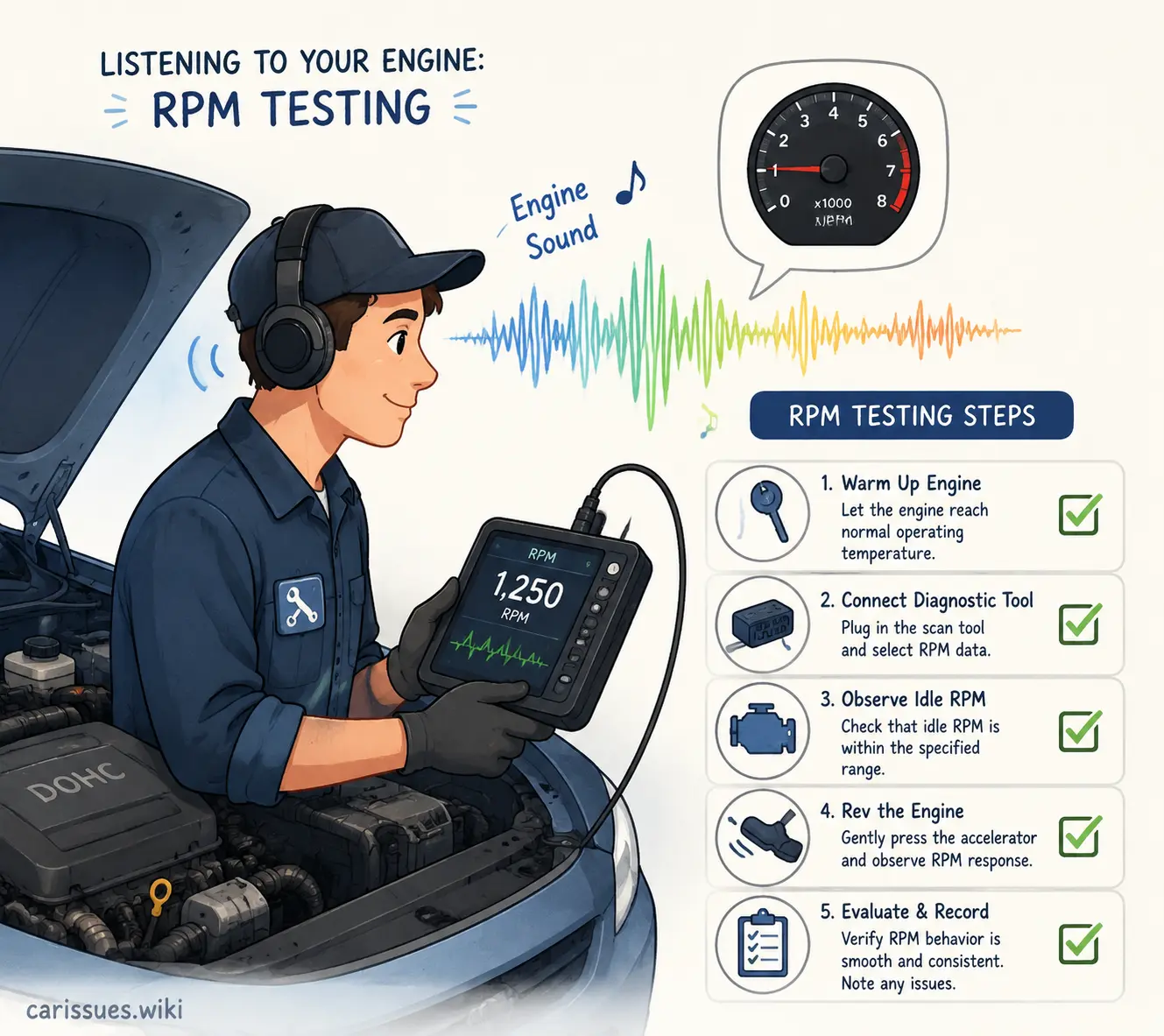
One of the smartest ways to diagnose a whining noise is determining whether it changes with engine RPM or vehicle speed. This distinction acts like a roadmap for troubleshooting. If the sound increases while revving the engine in park or neutral, the problem likely involves engine-driven accessories such as belts, pulleys, alternators, or pumps.
If the noise only appears while driving and changes with road speed instead of RPM, attention shifts toward wheel bearings, differentials, or transmission components. That simple observation alone can eliminate half the possible causes immediately.
Drivers can safely perform a few basic checks without advanced tools:
- Rev the engine gently while parked.
- Turn the steering wheel while listening for changes.
- Switch the AC on and off.
- Observe whether the noise changes during gear shifts.
- Listen for sounds during coasting versus acceleration.
These tests help isolate which systems are under stress when the noise appears. For example, if turning the wheel amplifies the whine, the power steering pump becomes highly suspect. If the noise changes when the AC compressor engages, the belt drive system may be involved.
Professional mechanics often use electronic stethoscopes or chassis ears to pinpoint noises more accurately. Those tools amplify sound from specific components, helping isolate failing bearings or pumps hidden deep inside the engine bay. Still, many whining problems can be narrowed down surprisingly well through careful listening and observation alone.
When the Noise Signals Immediate Mechanical Trouble
Some whining noises are annoying but manageable for a short time. Others demand immediate attention because they indicate imminent mechanical failure. A loud, sudden whine accompanied by warning lights, overheating, smoke, burning smells, or loss of steering assist should never be ignored. Those symptoms often point toward failing belts, seized pulleys, dying transmissions, or collapsing bearings.
One especially dangerous scenario involves a failing serpentine belt tensioner. If the tensioner locks up, the belt can shred instantly. That single failure may disable the water pump, causing rapid overheating within minutes. Likewise, transmission whining paired with slipping gears or delayed engagement often signals internal wear severe enough to destroy the unit if driven further.
Drivers should seek immediate inspection if they notice:
- Burning smells
- Smoke from the engine bay
- Sudden loss of power steering
- Transmission slipping
- Rapid overheating
- Grinding mixed with whining
- Battery warning lights
The hardest part about vehicle noises is that they rarely disappear on their own. Cars are mechanical ecosystems. When one component begins failing, it often stresses surrounding systems as well. A bad pulley damages the belt. A slipping belt overworks the alternator. Low fluid overheats the transmission. Small issues snowball quickly.
Paying attention early usually means cheaper repairs and less downtime. Waiting until the car becomes undriveable almost always guarantees higher costs and greater inconvenience.
Conclusion
A whining noise during acceleration is your vehicle’s way of asking for attention before a bigger failure develops. While the sound may seem mysterious at first, the underlying causes usually fall into a few major categories: power steering problems, worn belts and pulleys, low fluid levels, transmission issues, or turbocharger behavior. The key to proper diagnosis lies in observing when and how the noise changes. Does it follow engine RPM? Does steering affect it? Does it grow louder with speed?
Many whining noises begin as relatively minor maintenance concerns. A low fluid level, worn belt, or aging pulley can often be fixed affordably if caught early. Ignore those symptoms long enough, though, and the damage can escalate into catastrophic failures involving transmissions, seized accessories, or overheated engines.
Your ears are one of the most valuable diagnostic tools you have as a driver. Cars communicate constantly through vibrations, smells, and sounds. A whining noise is not something to fear automatically, but it is definitely something to investigate promptly. Treat it like an early warning system rather than background noise, and your vehicle will reward you with better reliability, lower repair costs, and a much longer lifespan.
FAQs
1. Is it safe to drive with a whining noise during acceleration?
It depends on the cause. Minor belt noise may not require immediate towing, but whining caused by transmission issues, failing bearings, or low fluid levels can become dangerous quickly. If the noise worsens suddenly or appears with warning lights, stop driving and inspect the vehicle immediately.
2. Can low engine oil cause a whining noise?
Yes. Low engine oil can reduce lubrication inside the engine and accessory components, leading to whining, ticking, or grinding sounds. Turbochargers are especially sensitive to low oil levels because their bearings spin at extremely high speeds.
3. Why does my car whine only when turning?
A whining noise that becomes louder while turning usually points toward the power steering system. Low fluid, air in the lines, or a failing power steering pump are common causes.
4. Do turbocharged cars normally make whining noises?
Yes, mild turbo whistle or whine during acceleration is often completely normal. Excessively loud whining, siren noises, or power loss may indicate turbo bearing wear or boost leaks.
5. How much does it cost to fix a whining noise?
Repair costs vary widely depending on the cause. A serpentine belt replacement may cost under $150, while transmission repairs can exceed several thousand dollars. Early diagnosis usually keeps costs significantly lower.

Marco Vestri is a 29-year-old American content writer based in Spokane, Washington. He specializes in creating well-researched automotive maintenance guides, troubleshooting articles, and practical ownership advice for everyday drivers. His work emphasizes accuracy, clear explanations, and reliable sources, helping readers make informed decisions with confidence. As a regular contributor to carissues.wiki, Marco combines years of blogging experience with a passion for simplifying complex vehicle topics into useful, trustworthy content for a broad audience.