

Car interiors take more abuse than most drivers realize. Every time keys scrape a door panel, a shoe drags across the lower trim, or a bag rubs against the center console, tiny marks start building up. At first, they seem harmless. Then one day sunlight hits the dashboard just right, and suddenly those scratches look impossible to ignore. The frustrating part is that many people accidentally make the damage worse while trying to fix it. A rough cloth, aggressive sanding, or too much heat can permanently ruin textured plastic trim in seconds.
Modern vehicles rely heavily on plastic surfaces because they are lightweight, affordable, and easy to shape into stylish interiors. The downside is that plastic scratches far more easily than leather, vinyl, or metal trim. According to recent detailing guides and repair discussions, light scratches can often be blended successfully with careful cleaning, controlled heat, or plastic restorers, while deep gouges usually require filler compounds and texture repair techniques.
The good news is that most interior scratches are repairable or at least far less noticeable with the right methods. Think of interior plastic like human skin. A light scratch may heal with a little attention, while a deep cut requires more careful treatment and patience. Knowing the difference is the key to choosing the correct repair strategy instead of gambling with expensive trim pieces.
Why Interior Plastic Scratches Happen So Easily
Car interior plastics are softer than many people expect. Manufacturers design them this way to improve safety and flexibility during temperature changes, but softer materials naturally scratch more easily. Even everyday items like rings, phone chargers, grocery bags, or belt buckles can leave visible marks. Once sunlight and dust settle into those scratches, the damage becomes even more obvious.
Another reason scratches appear so easily is texture. Many dashboards and door panels use textured plastic grain to reduce glare and improve appearance. Ironically, that same texture traps dirt and highlights scratches when the plastic surface gets disturbed. White scratch marks often happen because the plastic stretches slightly during impact, changing how light reflects off the damaged area. Several detailing professionals compare this effect to bending a piece of plastic until it turns white.
Temperature also plays a role. During hot summers, plastic softens and becomes more vulnerable to scuffs. In colder weather, the same material becomes brittle and more likely to gouge deeply. Add years of UV exposure, and interior trim slowly loses its protective oils, making scratches appear brighter and more permanent.
The biggest mistake drivers make is assuming all scratches are the same. They are not. Some marks only affect the surface sheen, while others cut deep into the material itself. Trying a harsh repair on a light scratch can flatten the texture permanently. On the other hand, using only polish on a deep gouge is like putting lotion on a cracked sidewalk. The repair method must match the damage depth.
Understanding the Difference Between Light and Deep Scratches
Before touching any repair product, you need to understand exactly what kind of scratch you are dealing with. This step matters more than the repair itself. Many DIY disasters happen because someone treats a deep gouge like a surface scuff or attacks a minor mark with sandpaper that should never have been used.
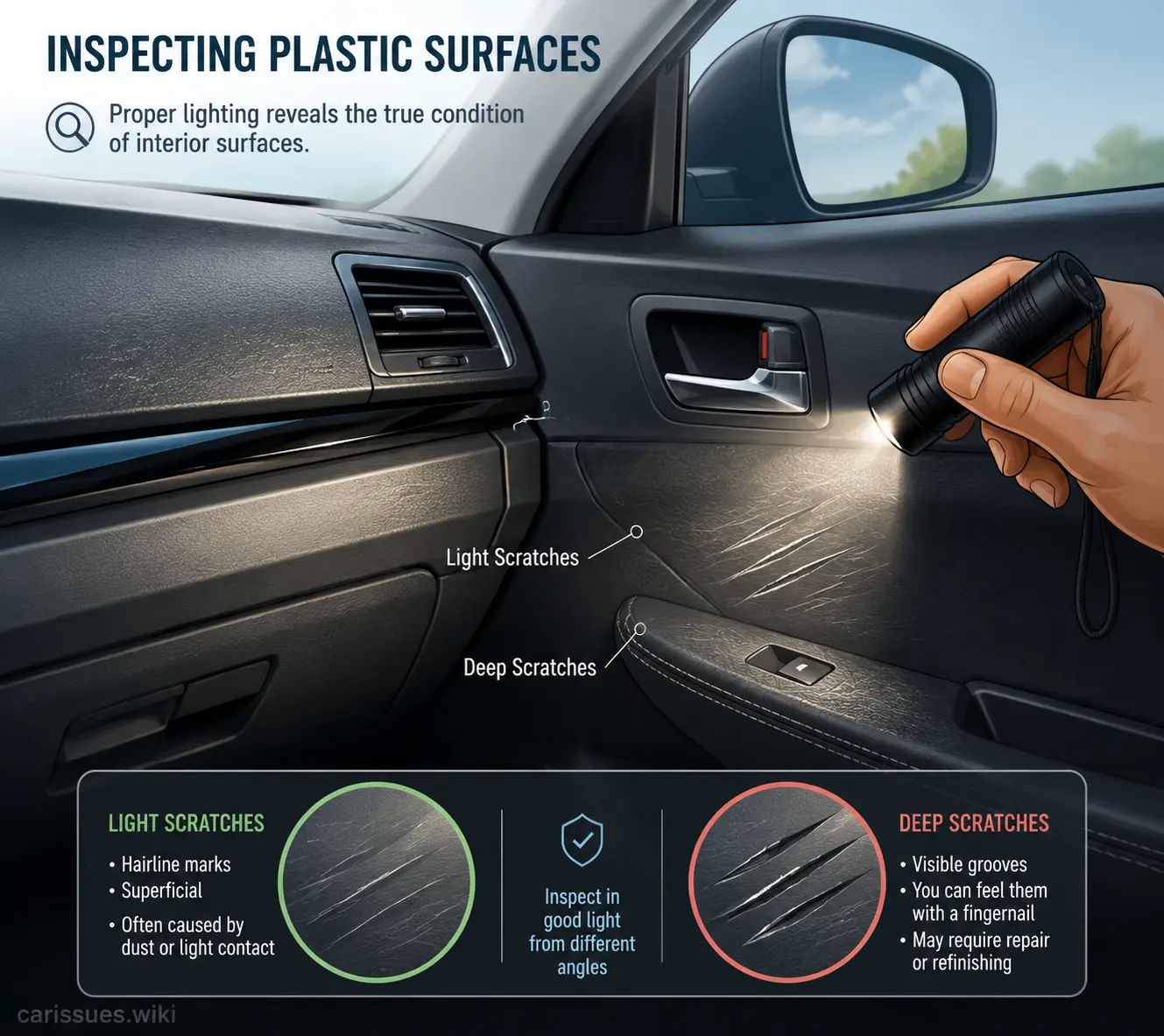
Light scratches usually appear white or gray under direct light but cannot be felt strongly with your fingernail. These are often surface scuffs where the top layer of plastic has been disturbed but not deeply cut. In many cases, these marks respond well to gentle heat or plastic restoration products because the material itself is still mostly intact.
Deep scratches are different. Your fingernail will clearly catch when dragged across the damaged area. These scratches remove or displace material, creating an actual groove in the trim. They often require filler compounds, texture restoration, and flexible coatings to look acceptable again. Some detailing experts even recommend replacement when damage becomes too severe because heavy sanding can destroy factory texture permanently.
One of the easiest ways to inspect scratches properly is with side lighting. Overhead garage lights hide defects surprisingly well. Shine a flashlight at a low angle across the plastic surface, and every scratch suddenly becomes obvious. Professional detailers use this technique because it reveals both depth and texture distortion immediately.
Here is a quick comparison table to help identify damage levels:
| Scratch Type | Appearance | Fingernail Test | Best Repair Method |
|---|---|---|---|
| Surface Scuff | Visible only under certain light | Nail does not catch | Plastic polish or mild heat |
| Medium Scratch | White line clearly visible | Slight catch | Heat plus light polishing |
| Deep Gouge | Visible indentation | Strong catch | Filler, sanding, texture repair |
Knowing the difference saves time, money, and frustration. It also prevents overcorrecting a problem that only needed a gentle touch in the first place.
Cleaning the Surface Before Any Repair Work
Skipping the cleaning stage is one of the fastest ways to ruin a repair attempt. Dirt particles trapped inside scratches act like sandpaper during buffing or heating. Once heated, oils and grime can permanently stain the plastic surface, creating discoloration that looks worse than the original damage.
Professional detailers consistently stress the importance of deep cleaning before any repair process begins. Most recommend spraying interior cleaner onto a microfiber cloth rather than directly onto the panel. This reduces overspray and prevents liquid from soaking into seams or electronics. Soft-bristle brushes are especially useful for textured plastic because they lift debris from the grain without scratching the surface further.
Isopropyl alcohol is commonly used during preparation because it removes oils, silicone dressings, and residues that interfere with repair products. A clean surface allows fillers, restorers, and coatings to bond properly. Think of it like painting a wall. Even the best paint will fail if applied over grease and dust.
The type of cloth matters too. Cheap paper towels or rough rags can create additional swirl marks while cleaning. High-quality microfiber towels trap debris safely instead of dragging it across the plastic. This sounds like a small detail, but it makes a major difference when working on sensitive textured trim.
Patience during cleaning often determines how invisible the final repair becomes. Many people rush straight to heating or polishing because they want immediate results. That impatience usually backfires. Interior plastic repair is less about force and more about precision. The cleaner the surface, the more predictable the repair outcome will be.
Simple Methods That Help Blend Minor Damage
Light scratches often look worse than they actually are. Because plastic scratches reflect light differently, even shallow scuffs can appear dramatic in sunlight. The good news is that many of these marks can be blended rather than fully removed, making them almost invisible during normal use.
One of the simplest methods involves using a microfiber cloth with a dedicated plastic polish or trim restorer. These products contain mild abrasives and conditioning oils that smooth the microscopic ridges around a scratch while restoring color to faded areas. Experts recommend applying the product using small circular motions with minimal pressure. The goal is not to grind away the scratch but to level the surrounding appearance gently.
Plastic restorers are especially effective on black or dark-gray trim because they reduce the chalky white appearance commonly seen in surface scratches. Some detailers describe this process as “camouflaging” rather than repairing. The scratch technically still exists, but your eye no longer notices it because the contrast has been reduced.
Buffing too aggressively creates another common problem. Excessive pressure can flatten textured grain or create shiny spots that stand out even more than the original scratch. This is particularly risky on matte dashboards where uniform texture matters more than absolute smoothness.
Many drivers are surprised by how much improvement comes from cleaning and conditioning alone. In online detailing communities, users frequently report that scratches initially thought to be permanent became barely visible after proper cleaning followed by trim dressing or polish.
Minor repairs work best when expectations remain realistic. You are not rebuilding damaged plastic at this stage. You are reducing visibility, restoring color balance, and blending the surface so the eye stops focusing on the defect.
Using Heat Carefully on Textured Plastic Panels
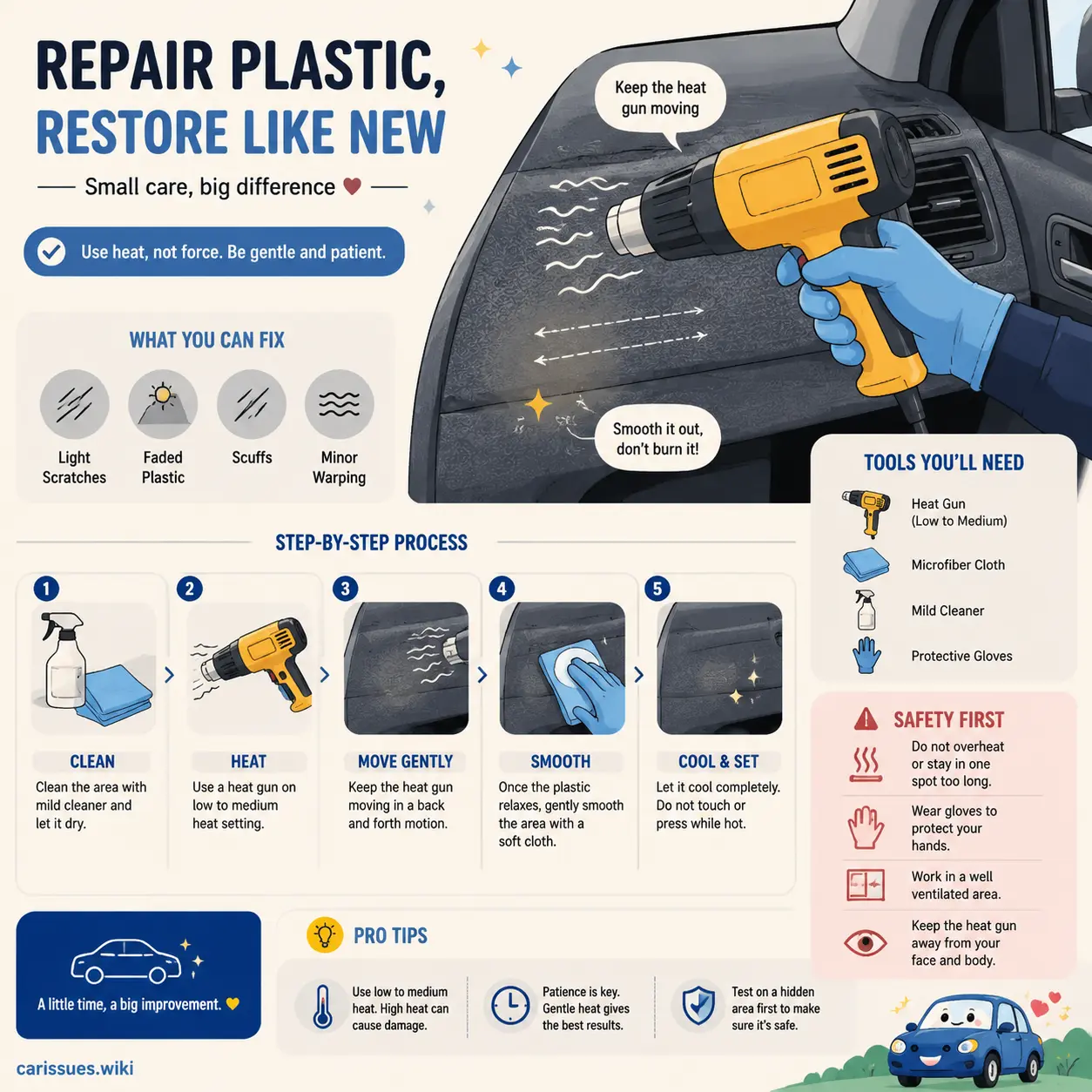
Heat treatment is one of the most talked-about interior scratch repair methods, and for good reason. When used correctly, controlled heat can soften thermoplastic surfaces just enough for minor scratches to blend back into the surrounding texture. The effect can feel almost magical when a white scuff suddenly fades away.
The science behind it is surprisingly simple. Most automotive interior plastics are thermoplastics, meaning they soften slightly when heated. Controlled warmth relaxes the stretched polymer chains around a scratch, allowing the material to settle and redistribute itself.
The process requires caution, though. A heat gun or hair dryer should always remain moving continuously. Most experts recommend staying about six to eight inches away from the surface and using the lowest heat setting available.
Here are the safest heat application basics:
- Clean the panel completely first.
- Start with the lowest heat setting.
- Keep the tool moving constantly.
- Stop immediately if the plastic becomes shiny.
- Let the panel cool naturally before touching it.
The danger with heat is overconfidence. Too much heat can warp the panel, erase texture, create glossy patches, or permanently melt the surface. Several detailing discussions warn that overheating may even make plastic more brittle over time.
Textured panels require extra care because the grain pattern can disappear if the surface softens too much. Imagine ironing a wrinkled shirt until the fabric texture vanishes completely. That is essentially what excessive heat does to dashboard plastic.
Hair dryers are generally safer for beginners because they produce less concentrated heat than professional heat guns. The results may take longer, but the lower risk often makes the tradeoff worthwhile.
When Scratch Repair Products Actually Work
The market is flooded with products claiming to erase scratches instantly. Some work surprisingly well, while others simply hide damage temporarily with oils or silicone fillers. Understanding what these products actually do helps avoid disappointment.
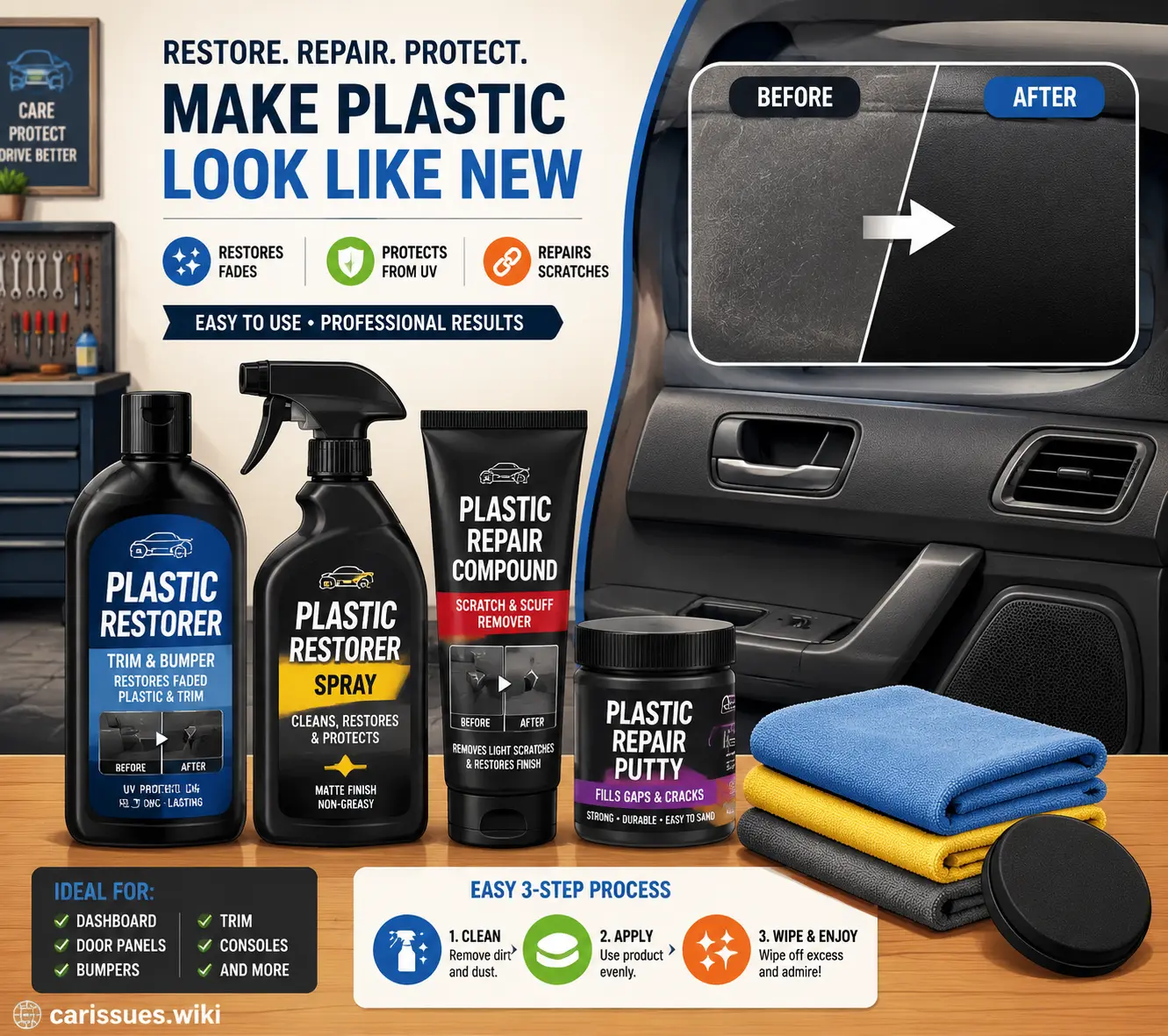
Scratch removal compounds are most effective on surface-level damage where material has not been deeply removed. These compounds contain mild abrasives that smooth surrounding edges and reduce light reflection around the scratch. Plastic restorers and trim dressings work differently by darkening faded plastic and reducing contrast between damaged and undamaged areas.
Deep scratches require more serious solutions. Plastic fillers or two-part epoxies rebuild missing material before sanding and texture restoration begin. Flexible coatings are then applied to restore the original appearance and color consistency.
Here is a practical comparison of common repair options:
| Product Type | Works Best For | Main Limitation |
|---|---|---|
| Plastic Polish | Light surface scratches | Cannot fill grooves |
| Trim Restorer | Faded or chalky scratches | Temporary on severe damage |
| Scratch Compound | Minor visible lines | Risk of over-polishing |
| Plastic Filler | Deep gouges | Requires texture matching |
| Texture Spray | Grain restoration | Hard to color match perfectly |
Online detailing communities often emphasize realistic expectations. Some scratches cannot disappear completely without professional refinishing or replacement. What matters most is reducing visibility enough that the damage stops drawing attention every time you enter the vehicle.
Interestingly, several experienced detailers recommend testing products on hidden trim sections first because some plastics react differently to chemicals and heat. A repair product that works beautifully on one dashboard may discolor another.
Restoring Faded Areas After the Scratch Is Removed
Even after a scratch becomes less visible, the surrounding plastic may still look faded or uneven. This is especially common on older vehicles exposed to years of UV radiation. Sunlight slowly dries interior trim, causing discoloration and making repaired areas stand out against surrounding panels.
Trim restoration products help restore richness and uniform color after repairs. These products work by replenishing oils and enhancing surface tone, similar to conditioning leather shoes after polishing them. Dark plastics benefit the most because restorers reduce the pale appearance left behind by scratches and oxidation.
Matching factory sheen is critical. Some products leave a glossy finish that looks unnatural on matte dashboards. Others dry too flat and make repaired sections appear dull. Professionals usually recommend applying restorers lightly and evenly across the entire panel rather than only the repaired spot. This creates a consistent appearance instead of a noticeable patch.
UV protection matters just as much as the repair itself. Interior protectants with UV blockers slow future fading and help plastic retain flexibility. Without protection, repaired areas may become brittle and scratch more easily over time.
One overlooked trick is allowing products to cure fully before judging results. Freshly applied restorers often appear shinier than they will after drying. Patience prevents overapplying product and creating greasy residue that attracts dust.
Think of interior trim restoration like refinishing wood furniture. Repairing the scratch is only part of the process. Blending the finish and protecting the material afterward is what creates a truly professional-looking result.
Mistakes That Can Make Interior Damage Worse
Interior plastic repair is full of potential pitfalls. Many well-intentioned DIY repairs end with melted trim, flattened texture, or discoloration that costs more to fix than the original scratch ever would have.
Overheating is probably the most common mistake. Holding a heat gun too close or staying in one spot too long can permanently warp plastic panels. Once texture disappears or gloss spots form, reversing the damage becomes extremely difficult.
Over-sanding causes another major issue. Coarse sandpaper removes the factory grain pattern quickly, especially on textured dashboard surfaces. Even fine-grit sanding should remain limited only to severe repairs where filler leveling becomes necessary.
Harsh household cleaners also damage automotive plastics more than many people realize. Products containing ammonia, bleach, or strong solvents can dry out trim, weaken protective coatings, and create discoloration around repaired areas. Dedicated automotive interior cleaners remain the safest choice.
Another mistake involves unrealistic expectations. Some scratches are simply too deep for invisible DIY repair. In those cases, blending the appearance or replacing the trim may be smarter than endless sanding and heating attempts.
Online detailing discussions frequently mention people making scratches worse by panicking and rushing the process. Plastic repair rewards patience. Quick fixes often create permanent damage.
A smart rule to follow is this: if you are unsure, start with the gentlest possible method first. Cleaning and conditioning rarely hurt anything. Aggressive sanding and heat absolutely can.
Keeping Plastic Trim Looking New Longer
Preventing scratches is far easier than repairing them later. The simplest habits often make the biggest difference in preserving a clean-looking interior.
Microfiber towels should always replace paper towels during cleaning because rough fibers create fine scratches over time. Bags, keys, and sharp objects should stay away from door panels and center consoles whenever possible. Even small changes, like emptying pockets before entering the vehicle, reduce accidental scuffs significantly.
Regular cleaning also matters more than people think. Dirt particles act like tiny abrasives whenever someone wipes the dashboard or leans against trim. Keeping surfaces clean reduces friction damage dramatically.
UV protection is another essential habit. Parking in shaded areas, using windshield sunshades, and applying UV-protectant interior dressings help preserve plastic flexibility and color. Sun-damaged plastic scratches much more easily than healthy, conditioned trim.
Drivers who transport tools, sports equipment, or large boxes should consider protective mats or temporary covers for vulnerable panels. Many deep scratches happen during loading and unloading rather than daily driving.
The goal is not perfection. Cars are meant to be used. But a little preventive care keeps interior trim looking newer for years and reduces the need for stressful repair attempts later on.
Conclusion
Car interior plastic scratches can feel frustrating because they are impossible to ignore once noticed. The encouraging reality is that many scratches are repairable or at least dramatically improvable with careful techniques. The most important step is identifying whether the damage is light, moderate, or deep before choosing a repair method.
Cleaning thoroughly before any repair work creates the foundation for success. Minor scratches often respond well to microfiber buffing, plastic restorers, or controlled heat application. Deep gouges require more advanced solutions like fillers and texture restoration. Patience matters throughout the process because rushing almost always creates bigger problems.
Heat can be incredibly effective on textured plastics when used carefully, but excessive heat easily destroys factory grain and finish. Likewise, aggressive sanding and harsh chemicals usually cause more harm than good.
Protecting interior trim afterward is what keeps repairs looking good long term. UV protectants, gentle cleaning habits, and careful handling help preserve the plastic surface and prevent future scratches from becoming major eyesores.
A scratched dashboard or door panel does not automatically mean expensive replacement parts. With the right approach, many interior blemishes can fade into the background instead of dominating the entire cabin.
FAQs
1. Can all interior plastic scratches be removed completely?
No. Light scratches and scuffs can often become nearly invisible, but deep gouges usually require filler or replacement. Some severe damage can only be improved rather than fully erased.
2. Is a hair dryer safer than a heat gun for scratch repair?
Yes. Hair dryers produce lower temperatures, making them safer for beginners. Heat guns work faster but carry a much higher risk of melting or warping the plastic.
3. Why do scratches on black plastic turn white?
The scratch stretches or disturbs the plastic surface, changing how light reflects off it. This creates the pale or chalky appearance commonly seen on interior trim.
4. Should I sand textured dashboard plastic?
Only when absolutely necessary for deep repairs. Sanding textured surfaces can flatten the factory grain permanently and make damage more noticeable.
5. How do I protect interior plastic after repairing scratches?
Use UV-protectant interior dressings, clean with microfiber towels, avoid harsh chemicals, and minimize contact with sharp objects like keys or bags.

Marco Vestri is a 29-year-old American content writer based in Spokane, Washington. He specializes in creating well-researched automotive maintenance guides, troubleshooting articles, and practical ownership advice for everyday drivers. His work emphasizes accuracy, clear explanations, and reliable sources, helping readers make informed decisions with confidence. As a regular contributor to carissues.wiki, Marco combines years of blogging experience with a passion for simplifying complex vehicle topics into useful, trustworthy content for a broad audience.