
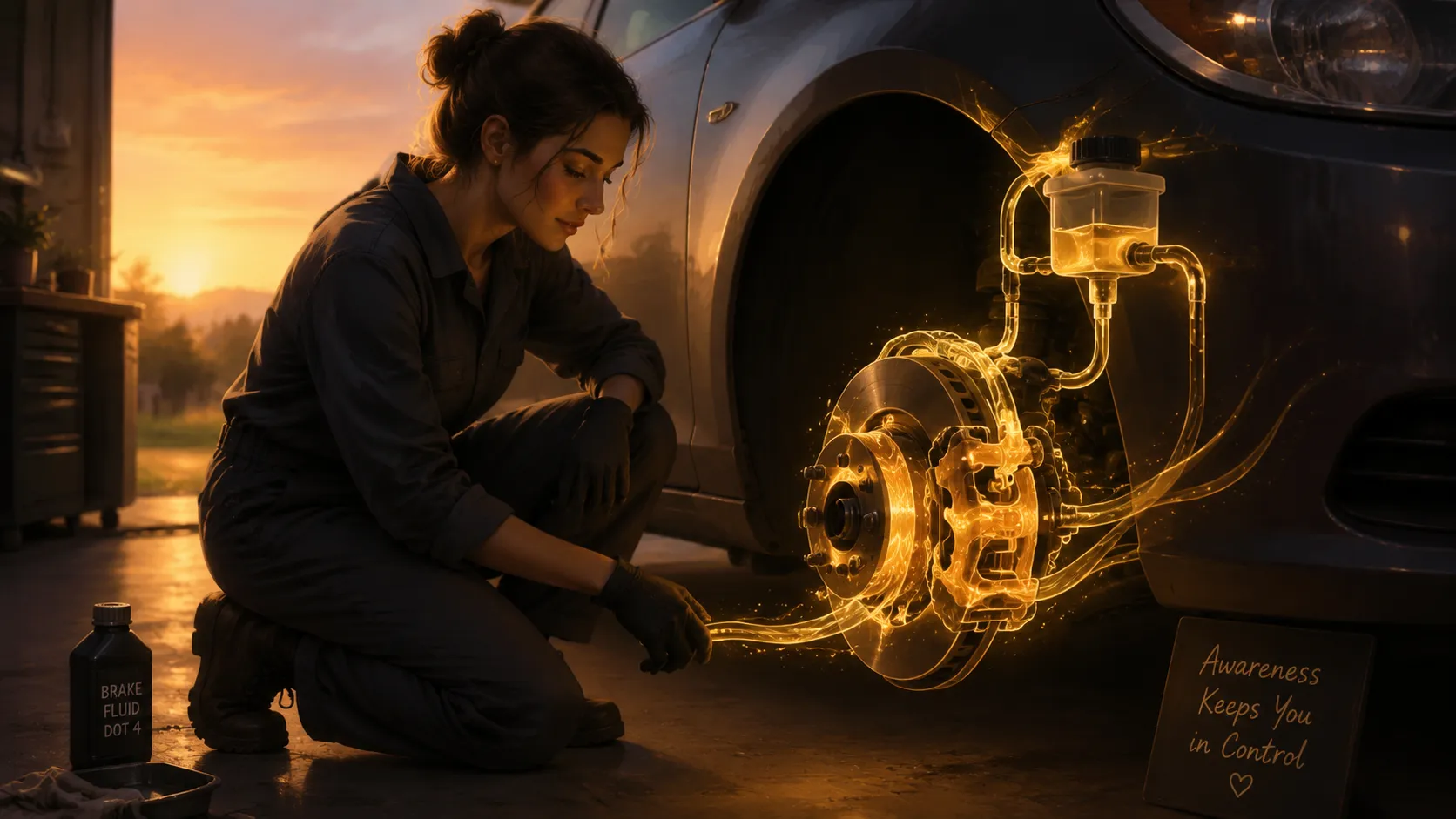
Your car’s braking system is a little like the nervous system in the human body. Everything has to communicate instantly and perfectly. The moment you press the brake pedal, hydraulic pressure created by brake fluid travels through lines and components to stop thousands of pounds of moving metal. When the fluid becomes contaminated, low, or degraded, that communication weakens. The result can range from slightly delayed stopping to total brake failure.
A surprising number of drivers never think about brake fluid until something feels wrong. They change engine oil regularly, replace tires, and maybe even rotate them on schedule, but brake fluid often gets ignored because it sits quietly inside a reservoir under the hood. That silence can be dangerous. According to recent automotive maintenance research, moisture contamination is one of the biggest reasons brake fluid loses effectiveness over time. Glycol-based fluids such as DOT 3 and DOT 4 naturally absorb moisture from the air, reducing boiling points and increasing corrosion risks inside the braking system.
The tricky part is that bad brake fluid rarely announces itself all at once. Instead, it whispers through subtle changes. Maybe the pedal suddenly feels softer. Maybe the ABS warning light flickers on. Maybe the car takes a little longer to stop at a red light. These signs often appear gradually, which makes them easy to dismiss until the situation becomes serious. Understanding these warning signs early can save money, prevent expensive repairs, and most importantly, protect lives.
Why Brake Fluid Matters More Than Most Drivers Think
The Hidden Role of Hydraulic Pressure
Most people assume the brake pedal physically pushes brake pads against the rotors. That is only partially true. The real force behind the system is hydraulic pressure generated by brake fluid. When you step on the pedal, the master cylinder compresses the fluid, which then transfers pressure evenly to each wheel. Because liquids are nearly incompressible, this process creates fast and powerful braking action.
Imagine trying to drink through a straw with holes in it. No matter how hard you sip, the pressure escapes. Brake systems behave the same way when fluid is contaminated or leaking. Even tiny air bubbles or moisture pockets can reduce hydraulic efficiency. That is why drivers often notice a “spongy” feeling when brake fluid goes bad. The pedal loses firmness because the system can no longer transfer pressure consistently.
Modern vehicles rely on brake fluid even more than older cars did. Anti-lock braking systems, traction control, and electronic stability systems all depend on clean hydraulic fluid moving precisely through tiny channels and valves. Contaminated fluid can interfere with these systems and trigger warning lights on the dashboard. Experts from automotive maintenance organizations warn that neglected brake fluid accelerates corrosion inside master cylinders, brake calipers, and ABS modules.
The scary thing is that brake fluid problems often develop invisibly. You cannot always see moisture contamination without testing equipment. Drivers sometimes assume the brakes are fine because the car still stops. Yet under heavy braking, such as descending a mountain road or stopping suddenly at highway speed, compromised fluid may boil inside the lines and dramatically reduce stopping power.
Why Modern Braking Systems Depend on Clean Fluid
Cars today are smarter than ever. Sensors constantly monitor wheel speed, traction, and brake performance. But even the most advanced technology cannot compensate for degraded brake fluid forever. Think of brake fluid as the bloodstream of the braking system. If the bloodstream becomes contaminated, every connected component suffers.
Fresh brake fluid is typically clear or light amber. Over time, exposure to heat, oxygen, and moisture darkens the fluid. Some drivers mistakenly assume dark fluid is harmless because the brakes still work normally during everyday driving. Yet automotive experts caution that fluid can become unsafe before dramatic symptoms appear.
Heat is one of the biggest enemies of brake fluid. Brakes naturally create enormous heat during operation. Under hard braking conditions, temperatures can climb high enough to boil contaminated fluid. When fluid boils, vapor bubbles form inside the brake lines. Unlike liquid, vapor compresses easily. The pedal suddenly feels mushy, and braking force drops sharply. That moment can feel terrifying because the car no longer responds as expected.
Corrosion is another hidden danger. Moisture absorbed into brake fluid slowly rusts internal metal surfaces. Tiny particles from this corrosion circulate through the system, damaging seals and clogging sensitive ABS components. What begins as neglected fluid maintenance can eventually lead to expensive repairs costing hundreds or even thousands of dollars.
Changes in Brake Pedal Feel That Signal Trouble
Soft or Spongy Brake Pedal Symptoms
One of the earliest signs of brake fluid trouble is a change in pedal feel. Drivers often describe it as soft, spongy, or squishy. Instead of firm resistance when pressing the pedal, the pedal travels farther toward the floor. This sensation usually indicates air or moisture contamination inside the hydraulic system.
Picture stepping on a sponge instead of solid concrete. That extra give means pressure is not transferring efficiently. Moisture contamination lowers the fluid’s boiling point and allows tiny vapor pockets to form under heat. These bubbles compress under pressure, creating that unsettling softness beneath your foot.
A spongy pedal does not always appear overnight. Sometimes the change is so gradual that drivers unconsciously adapt to it. They press harder without realizing the system is weakening. That adaptation can become dangerous because the driver no longer notices declining brake performance until an emergency stop becomes necessary.
According to automotive maintenance guidance published recently, contaminated brake fluid containing as little as 3% water can dramatically reduce boiling resistance. This means even seemingly minor contamination can affect pedal feel under stress. Vehicles driven in humid climates often experience faster moisture buildup because glycol-based brake fluids naturally absorb water from the atmosphere.
Why a Sinking Pedal Can Mean Fluid Problems
A sinking brake pedal is different from a spongy one, and it should never be ignored. If the pedal slowly drops toward the floor while maintaining pressure, the system may have an internal leak or failing master cylinder seals. In some cases, deteriorated brake fluid accelerates seal wear and contributes to hydraulic failure.
Think of the brake pedal as a handshake between you and the car. A healthy system gives a firm, confident response. A sinking pedal feels weak and unreliable, almost like the car is hesitating to obey your command. That hesitation can add precious extra feet to stopping distance.
Sometimes drivers notice the pedal feels fine when the engine is off but sinks when the car is running. This can indicate pressure leakage inside the braking system. Fluid contamination and internal corrosion often play a role in these failures because degraded fluid damages rubber seals over time.
Ignoring these symptoms is risky. Brakes rarely repair themselves. Small hydraulic problems tend to grow steadily worse until a critical component finally fails. Early diagnosis can prevent expensive repairs and dangerous situations on the road.
Warning Lights That Should Never Be Ignored
Brake Warning Light vs ABS Warning Light
Dashboard warning lights are the car’s way of raising a red flag. Unfortunately, many drivers treat them like background decorations. The brake warning light and ABS light are especially important because they may indicate fluid-related problems.
The standard brake warning light often appears as a red symbol with an exclamation mark or the word “BRAKE.” It can signal low fluid levels, worn brake pads, or hydraulic pressure issues. The ABS light specifically relates to the anti-lock braking system. Since ABS depends heavily on hydraulic precision, contaminated fluid can interfere with sensor operation and valve performance.
Some drivers assume the brakes are fine if the car still stops normally. That is a dangerous assumption. ABS systems are designed to activate during emergency braking when traction becomes critical. If contaminated fluid disrupts the system, the vehicle may skid more easily during panic stops.
Modern brake systems monitor pressure constantly. Even subtle inconsistencies can trigger warning lights before the driver notices obvious symptoms. Treat these warnings like smoke from a fire alarm. The smoke may seem small now, but it usually points to a larger issue developing behind the scenes.
What Dashboard Alerts Reveal About Fluid Condition
Low brake fluid levels often trigger dashboard alerts because the reservoir contains a float sensor. As fluid drops below safe levels, the sensor activates the warning light. But low fluid itself is not always the main problem. Brake systems are sealed, so fluid should not disappear rapidly under normal conditions.
Sometimes low fluid simply reflects worn brake pads because caliper pistons extend farther as pads thin out. Other times, the fluid loss points to leaks somewhere in the system. Leaks around brake lines, wheel cylinders, or calipers gradually reduce hydraulic pressure and compromise braking performance.
Contaminated fluid can also affect electronic braking systems. Recent maintenance reports show that degraded brake fluid may trigger ABS warnings due to reduced hydraulic stability. This is especially true in vehicles equipped with sophisticated electronic stability control systems.
Drivers occasionally ignore warning lights because they disappear temporarily. That is like ignoring chest pain because it comes and goes. Intermittent warnings often indicate developing problems rather than false alarms.
What Dirty or Low Brake Fluid Looks Like
The Color Difference Between Fresh and Contaminated Fluid
Fresh brake fluid usually appears clear, pale yellow, or light amber. It almost looks like clean cooking oil. Dirty brake fluid, on the other hand, turns dark brown or cloudy as it absorbs moisture and collects contaminants.
6
The color change happens gradually. Heat cycles, oxidation, rubber debris, and corrosion particles slowly darken the fluid. Drivers sometimes open the reservoir cap and see fluid resembling old coffee instead of clean honey-colored liquid. That discoloration is a clear warning sign.
Still, appearance alone does not always tell the full story. Some fluid may absorb dangerous moisture levels before dramatic discoloration appears. Mechanics often use moisture testers or chemical strips to measure contamination more accurately. Discussions among technicians and automotive experts consistently emphasize that moisture content matters more than color alone.
Cloudiness is another bad sign. Brake fluid should look transparent. Milky or murky fluid may indicate water contamination or chemical breakdown. Sludge or floating debris inside the reservoir suggests advanced deterioration that could damage sensitive brake components.
Signs of Debris, Sludge, and Moisture
Brake fluid contamination behaves a little like rust inside plumbing pipes. Tiny particles circulate through the hydraulic system, wearing seals and clogging valves. Over time, sludge can form inside reservoirs and lines, especially in neglected systems.
Drivers sometimes notice greasy residue around the reservoir cap or sediment collecting at the bottom. These are warning signs of fluid breakdown. Moisture contamination accelerates internal corrosion, producing microscopic metal particles that circulate throughout the braking system.
According to automotive experts, contaminated brake fluid also loses lubricating properties over time. That lubrication matters because internal hydraulic components rely on fluid for smooth operation. Without it, seals wear faster and metal surfaces grind against each other.
Moisture contamination is especially dangerous because it quietly lowers boiling resistance. Under normal driving, you may notice nothing unusual. But during hard braking, contaminated fluid can suddenly boil and create vapor pockets that reduce stopping ability dramatically.
The Real Reason Moisture Causes Brake Problems
How Hygroscopic Brake Fluid Absorbs Water
Most brake fluids are hygroscopic, meaning they naturally absorb moisture from the surrounding air. Even sealed braking systems are not completely immune because microscopic amounts of moisture seep through rubber hoses and seals over time.
That formula explains why heat and vapor inside braking systems become dangerous. When moisture enters brake fluid and heats up, it expands into vapor. Vapor compresses far more easily than liquid, reducing braking efficiency.
This moisture absorption begins the moment a brake fluid bottle is opened. Mechanics often avoid storing opened containers for long periods because the fluid starts collecting water immediately. The process happens slowly but continuously throughout the fluid’s life inside the car.
Humid climates accelerate the problem. Vehicles operating in damp regions often require more frequent brake fluid changes because environmental moisture enters the system faster. Even cars driven infrequently are vulnerable because moisture absorption depends more on time and exposure than mileage alone.
Why Boiling Point Reduction Is Dangerous
Fresh brake fluid has a high boiling point designed to withstand intense braking heat. Water contamination lowers that boiling point significantly. According to maintenance data, contaminated fluid with only modest water content may boil hundreds of degrees sooner than fresh fluid.
Imagine carrying hot coffee in a paper cup with tiny weak spots. At first, everything seems fine. Then suddenly the cup softens and collapses under heat. Brake fluid behaves similarly when moisture contamination weakens its thermal stability.
Boiling fluid creates vapor pockets inside brake lines. Because vapor compresses, pressing the brake pedal no longer creates immediate stopping force. Drivers may experience “brake fade,” where the pedal feels soft and the car struggles to slow down effectively.
This situation becomes especially dangerous during repeated braking, such as driving downhill or towing heavy loads. Heat builds rapidly, and contaminated fluid reaches boiling temperature much sooner than expected.
Strange Noises and Braking Behavior to Watch For
Grinding, Screeching, and Delayed Stopping
Not every brake noise comes directly from fluid problems, but unusual sounds often accompany hydraulic issues. Grinding noises can indicate worn brake pads, while screeching may signal excessive heat or contamination affecting braking performance.
Drivers should also pay attention to delayed stopping response. If the car suddenly needs more distance to stop than usual, degraded fluid may be reducing hydraulic efficiency. The change might feel subtle at first, almost like the brakes are “thinking” before responding.
Cars with moisture-contaminated fluid sometimes behave unpredictably during emergency stops. One moment the brakes feel normal, and the next moment the pedal softens dramatically under hard pressure. That inconsistency is one of the clearest signs something inside the hydraulic system is failing.
Automotive technicians often compare brake fluid maintenance to changing blood in the circulatory system. When contaminants build up, every connected component works harder and less efficiently.
Vibrations and Inconsistent Brake Response
Brake vibrations usually point toward warped rotors, but hydraulic issues can contribute to inconsistent braking feel as well. Drivers may notice the car pulling slightly during braking or responding unevenly from one stop to another.
Inconsistent response can occur when contamination interferes with ABS valves or caliper operation. Corrosion inside hydraulic components may restrict fluid flow unevenly between wheels. That imbalance affects braking stability and steering control.
Sometimes drivers experience sudden pedal firmness changes. One stop feels normal, while the next feels soft. These fluctuations often indicate air pockets or boiling fluid inside the lines. Because the symptoms come and go, drivers may dismiss them as random quirks instead of recognizing an underlying hydraulic problem.
How Leaks Affect Stopping Power Over Time
Common Places Brake Fluid Leaks Start
Brake fluid leaks rarely begin as dramatic puddles under the car. Most leaks start small and grow gradually. Common leak points include brake hoses, calipers, wheel cylinders, brake lines, and master cylinder seals.
8
Drivers may notice oily residue near wheels or along brake lines. Brake fluid typically feels slippery and appears light brown or amber. Unlike engine oil, it damages paint quickly, so spills around the engine bay should never be ignored.
Small leaks reduce hydraulic pressure slowly over time. At first, drivers compensate unconsciously by pressing the pedal harder. Eventually, the pressure loss becomes severe enough to affect stopping distances noticeably.
Why Small Leaks Become Serious Safety Risks
Hydraulic braking systems rely on sealed pressure. Even tiny leaks weaken that pressure, just like a pinhole leak in an air mattress eventually causes collapse. The danger is not only fluid loss but also air entering the system.
Air bubbles compress under pressure, creating a soft pedal and inconsistent braking response. Over time, leaks can reduce fluid levels enough to trigger dashboard warnings or cause partial brake failure.
Technicians warn that leaks rarely improve on their own. Rubber seals continue deteriorating, corrosion spreads, and pressure loss increases. Delaying repairs often transforms a manageable issue into a major repair bill involving multiple hydraulic components.
Checking Fluid Levels the Right Way
Safe Steps for Inspecting Brake Fluid at Home
Checking brake fluid is relatively simple, but cleanliness matters enormously. Brake fluid contamination can begin from something as basic as touching the reservoir with dirty fingers.
Start by parking on level ground and allowing the engine to cool. Locate the brake fluid reservoir near the firewall on the driver’s side of the engine bay. Most reservoirs are translucent with “MIN” and “MAX” markings visible on the side.
Observe the fluid level without opening the cap unless necessary. If you must remove the cap, clean the surrounding area first to prevent debris from falling inside. Inspect the fluid color carefully. Clear or light amber fluid is generally healthy, while dark or cloudy fluid suggests contamination.
Experts recommend using only the fluid type specified in the owner’s manual. DOT 3, DOT 4, DOT 5, and DOT 5.1 fluids are not always interchangeable. Using the wrong fluid can damage seals and compromise braking performance.
Mistakes Drivers Make When Topping Off Fluid
One of the biggest mistakes drivers make is treating low brake fluid like low windshield washer fluid. Simply topping off the reservoir without investigating the cause can hide serious problems.
If fluid levels are dropping repeatedly, the system likely has worn brake pads or a leak somewhere. Adding fluid repeatedly without diagnosis masks the underlying issue instead of solving it.
Another mistake involves using old or previously opened brake fluid containers. Since brake fluid absorbs moisture quickly, partially opened bottles may already contain contamination. Mechanics generally recommend using fresh sealed containers whenever possible.
Overfilling the reservoir can also create problems. Brake fluid levels naturally change as brake pads wear. Filling beyond recommended levels may cause overflow when pads are replaced later.
When a Simple Top Off Is Not Enough
When You Need a Full Brake Fluid Flush
Sometimes topping off fluid is enough after minor service work. Other times, the entire system requires flushing and replacement. Dark fluid, moisture contamination, spongy pedal feel, or repeated warning lights usually indicate the need for a full brake fluid service.
Most manufacturers recommend changing brake fluid every two to three years, though driving conditions matter greatly. Vehicles exposed to humid climates, mountain driving, towing, or aggressive braking may require more frequent maintenance.
A brake fluid flush removes contaminated fluid from lines, calipers, ABS modules, and the master cylinder before replacing it with fresh fluid. This process restores boiling resistance and helps prevent internal corrosion.
Skipping fluid replacement may save money temporarily, but neglected systems often develop expensive hydraulic failures later. Corroded ABS modules and seized calipers can cost far more than routine maintenance.
Professional Inspection vs DIY Maintenance
DIY fluid inspections are useful for spotting early warning signs, but professional inspections provide deeper analysis. Technicians can test moisture content, inspect for leaks, measure hydraulic pressure, and evaluate ABS system performance.
Professional brake fluid exchanges also ensure air is properly removed from the system. Air trapped inside brake lines can create dangerous pedal softness even after fresh fluid is installed.
Drivers comfortable with basic maintenance can handle simple inspections safely, but major hydraulic repairs should usually remain in professional hands. Brakes are not an area where shortcuts make sense. A mistake in the braking system affects every second spent behind the wheel.
Conclusion
Brake fluid may not receive the same attention as engine oil or tires, but it plays one of the most critical roles in vehicle safety. Every stoplight, highway exit, school zone, and emergency maneuver depends on hydraulic pressure working perfectly beneath your foot. When brake fluid becomes contaminated, low, or degraded, the braking system slowly loses the precision and reliability drivers depend on every day.
The warning signs are often subtle at first. A softer pedal. A dashboard warning light. Dark fluid in the reservoir. Slightly delayed stopping. Strange noises. These symptoms are the braking system’s way of asking for attention before a dangerous failure occurs. Ignoring them is like ignoring cracks in a dam. The pressure keeps building until something finally gives way.
Routine brake fluid inspections and scheduled fluid changes are small investments compared to the cost of brake failure or major hydraulic repairs. Clean fluid protects seals, maintains proper boiling resistance, prevents corrosion, and ensures modern braking systems operate exactly as designed. Drivers who recognize the warning signs early not only protect their vehicles but also protect everyone sharing the road with them.
FAQs
1. How often should brake fluid be changed?
Most manufacturers recommend changing brake fluid every 2 to 3 years, though some vehicles may require service sooner depending on climate, driving style, and fluid type. Humid environments and heavy braking conditions can accelerate contamination.
2. Can low brake fluid mean worn brake pads?
Yes. As brake pads wear down, caliper pistons extend farther outward, which naturally lowers fluid levels in the reservoir. However, sudden or repeated fluid loss may also indicate a leak.
3. What color should healthy brake fluid be?
Fresh brake fluid is usually clear or light amber. Dark brown, cloudy, or murky fluid often indicates contamination, oxidation, or moisture buildup.
4. Is it safe to drive with a brake warning light on?
Driving with a brake warning light is risky because it may indicate low fluid, hydraulic pressure problems, or ABS malfunctions. The vehicle should be inspected as soon as possible.
5. Why does brake fluid absorb moisture?
Most glycol-based brake fluids are hygroscopic, meaning they naturally absorb moisture from the atmosphere over time. This lowers boiling points and increases the risk of corrosion inside the braking system.

Calder Rhodes is a 27-year-old American writer from Madison, Wisconsin, dedicated to producing in-depth automotive reference content for everyday vehicle owners. His background in technical blogging allows him to explain mechanical concepts in a straightforward and approachable way without sacrificing accuracy. As an active contributor to carissues.wiki, Calder enjoys researching emerging automotive technology while creating dependable resources that readers can trust.