
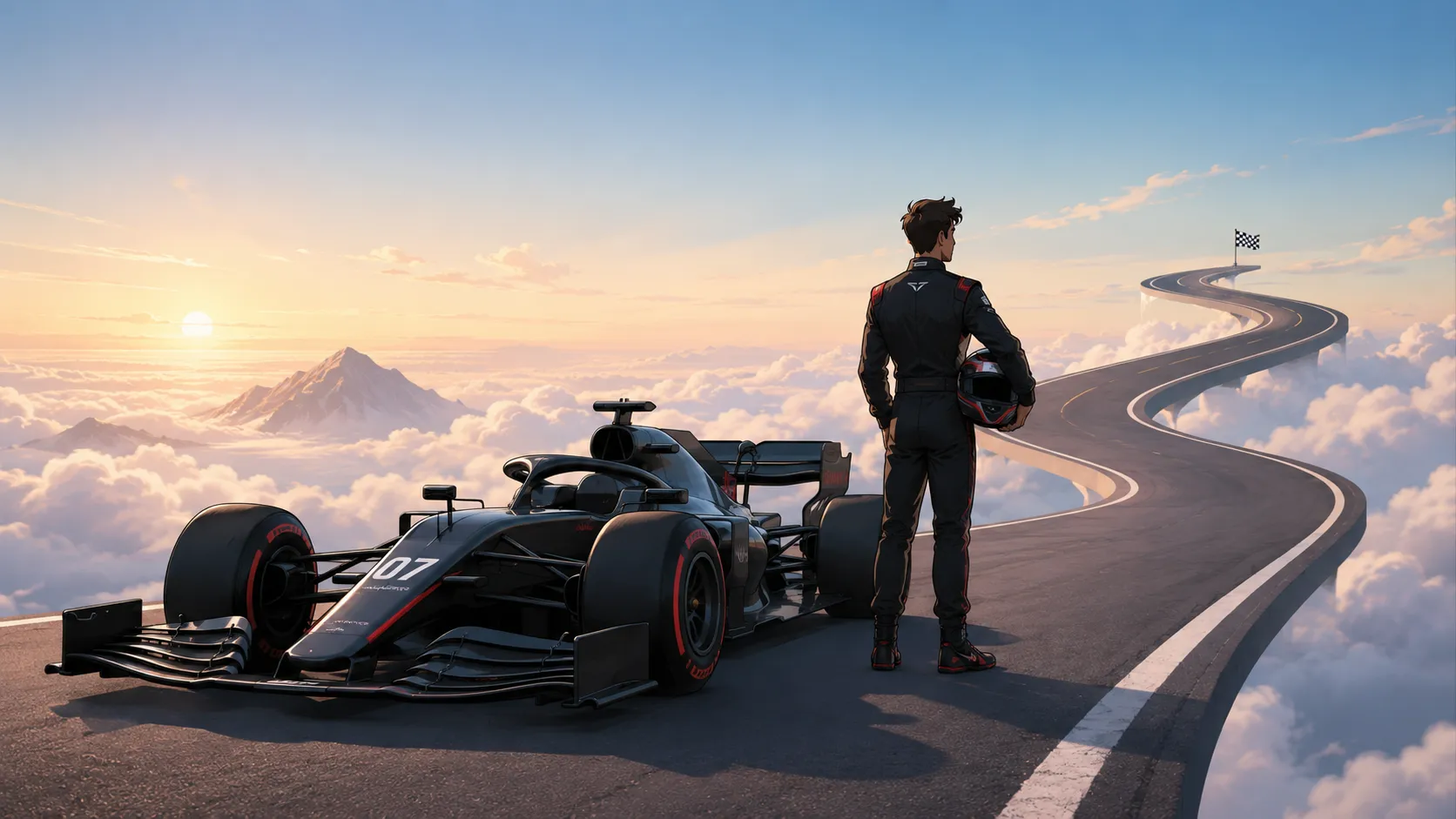
Formula 1 is not just another form of racing. It is often described as the absolute peak of motorsport engineering, where science, human reflexes, and mechanical precision collide at terrifying speeds. When most people imagine driving fast, they think of stepping harder on the gas pedal in a sports car. Driving an F1 car is an entirely different universe. It feels less like driving a normal vehicle and more like piloting a fighter jet strapped to the ground. Every movement matters, every mistake costs time, and every lap pushes the body close to its limits.
Modern Formula 1 cars can exceed 350 km/h on long straights while still cornering with incredible grip that would feel physically impossible in a road car. Drivers experience brutal forces under braking and through corners, often dealing with over 5G of pressure on their bodies during a race. Recent Formula 1 data shows drivers can lose up to 5% of their body weight during a Grand Prix because of heat, stress, and physical strain.
The sport also continues to evolve technologically. The latest 2026-era regulations introduced advanced energy systems, active aerodynamics, and new driver-controlled deployment modes that make cockpit management even more demanding. What makes Formula 1 fascinating is that drivers are not simply racing against competitors. They are racing against tire temperatures, aerodynamic balance, brake wear, fuel efficiency, and the clock itself. That is why becoming capable of driving an F1 car requires much more than courage. It demands years of discipline, technical understanding, and physical conditioning.
Why F1 Cars Are Built Unlike Road Cars
An ordinary car is built for comfort, practicality, and safety in everyday traffic. A Formula 1 car is designed with one purpose only: maximum performance around a racetrack. That single objective changes everything about its design. The chassis is made from ultra-light carbon fiber, the suspension is razor stiff, and every aerodynamic surface is sculpted to generate downforce. Downforce is essentially invisible pressure that pushes the car into the ground, allowing it to corner at insane speeds without sliding away.
One of the biggest differences lies in how the car creates grip. A road car relies mostly on mechanical grip from its tires. An F1 car combines tire grip with massive aerodynamic assistance. At high speed, the car is literally being sucked toward the asphalt, which is why drivers can attack corners with unbelievable aggression. This level of performance would feel shocking to someone used to normal driving. Imagine taking a highway exit ramp at triple the usual speed without losing traction. That is the kind of grip F1 cars produce.
The brakes are another area where Formula 1 becomes almost alien. Drivers can slow from 300 km/h to under 100 km/h within seconds. Current F1 braking systems combine carbon discs with advanced energy recovery systems that harvest power during deceleration. The brake pedal itself requires enormous force. Some drivers apply over 330 pounds of pressure during heavy braking zones. A normal person climbing into an F1 cockpit for the first time often cannot even push the brakes hard enough to stop efficiently.
The Technology That Separates Formula 1 From Everyday Driving
Technology inside a Formula 1 car resembles aerospace engineering more than traditional automotive design. Every component is monitored through telemetry systems that constantly send data back to engineers in real time. Tire temperatures, battery deployment, brake balance, fuel flow, and aerodynamic settings are all analyzed during every lap. Drivers are not just steering the car; they are actively managing a rolling supercomputer.
The steering wheel alone can overwhelm first-time observers. Modern Formula 1 steering wheels include dozens of buttons, rotary switches, and display systems that control everything from brake bias to hybrid power deployment. New 2026 regulations have added even more complexity with recharge modes, active aero controls, and overtake functions. During a race, drivers constantly adjust settings corner by corner while traveling at breathtaking speeds.
Unlike automatic road cars, F1 drivers must also carefully manage energy systems. Hybrid technology now plays a massive role in performance. Drivers harvest energy during braking and strategically deploy it during overtaking situations. It becomes a mental chess match played at 300 km/h. One small mistake in energy deployment can destroy a lap time or leave a driver vulnerable on straights.
What makes all this even more incredible is that the driver must handle these technical tasks while enduring extreme physical stress. The brain is processing huge amounts of information every second, similar to a high-speed air traffic controller making split-second decisions in a storm. That combination of physical punishment and technical precision is what truly separates Formula 1 from ordinary driving.
What It Feels Like to Sit Inside an F1 Cockpit
The Tight and Minimalist Driving Position
Sitting inside a Formula 1 cockpit is nothing like sitting inside a sports car. The space is incredibly tight because the chassis is molded precisely around the driver’s body. Drivers sit in a reclined position with their legs stretched forward and their hips almost level with the ground. It feels closer to lying down inside a missile than sitting upright behind a wheel.
Visibility is surprisingly limited. The halo safety structure, narrow cockpit opening, and low seating position create a tunnel-like field of vision. Drivers rely heavily on instinct and spatial awareness to position the car accurately on track. Every movement inside the cockpit is intentionally minimized because extra room would reduce aerodynamic efficiency and compromise safety.
The heat inside the cockpit can become unbearable during races. Temperatures may rise above 50 degrees Celsius, especially during hot-weather events. Drivers wear multiple layers of fire-resistant gear, gloves, helmets, and specialized boots while battling dehydration and fatigue. By the end of a race, even experienced professionals look physically exhausted.
There is also almost no comfort built into the car. Suspension setups are brutally stiff because softer suspension would reduce aerodynamic efficiency. Drivers feel every bump and vibration through their spine and neck. The entire experience is raw, violent, and physically draining. Yet elite drivers somehow maintain smooth precision lap after lap, which is one reason Formula 1 athletes are so respected in the sports world.
Learning the Steering Wheel and Driver Controls
The steering wheel in a Formula 1 car is one of the most complicated driver interfaces in motorsport. At first glance, it resembles something stolen from a spacecraft. Every button serves a specific purpose, and drivers memorize these controls until they become instinctive. During races, they constantly adjust settings while approaching corners at terrifying speed.
Modern F1 steering wheels manage brake balance, differential settings, fuel mixtures, energy deployment, radio communication, and overtaking systems. The newest regulations have introduced even more driver-controlled energy recovery modes and active aero functions. Drivers must know exactly when to deploy battery power and when to conserve it.
What makes this especially difficult is the speed at which decisions happen. A Formula 1 driver traveling at 300 km/h covers over 80 meters every second. That means even a tiny hesitation can destroy a lap. Drivers often make multiple steering wheel adjustments within a single corner sequence while simultaneously controlling throttle, steering angle, and braking pressure.
This level of multitasking is one reason why simulators play such a huge role in modern Formula 1 preparation. Teams spend countless hours training drivers in virtual environments where they practice cockpit procedures repeatedly. Muscle memory becomes essential because there is simply no time to consciously think through every control input during a race.
The Physical Demands Drivers Must Prepare For
G-Forces and Their Impact on the Human Body
The physical forces inside a Formula 1 car are difficult to understand until you compare them with everyday experiences. Most people feel maybe 1G during ordinary life. Roller coasters may briefly produce 3G. Formula 1 drivers regularly experience between 4G and 6.5G during braking and cornering. That means a driver’s head effectively weighs several times more than normal while turning at speed.
These forces attack the neck, shoulders, core muscles, and cardiovascular system continuously throughout a race. High-speed corners can feel like invisible giants are trying to rip the driver sideways out of the cockpit. Under braking, organs and muscles are pushed violently forward. Drivers must maintain precise control while fighting these physical loads for nearly two hours.
F=maF = ma
The neck is often the biggest challenge. Helmets alone weigh several kilograms, and under heavy cornering those loads multiply dramatically. Drivers train their neck muscles using weighted resistance systems specifically designed to simulate racing forces. According to recent reports, some drivers use training rigs with up to 30 kilograms of resistance attached to their helmets.
The physical punishment also affects concentration. As fatigue builds, reaction times slow slightly and mistakes become more likely. Formula 1 races are often decided by fractions of a second, so maintaining mental sharpness while the body is under stress becomes critical. It is similar to solving advanced math problems while sprinting uphill in extreme heat.
Neck, Core, and Mental Endurance Training
Formula 1 drivers train like elite Olympic athletes because racing performance depends heavily on physical conditioning. Cardio fitness is essential because the heart works incredibly hard during races. Drivers spend hours cycling, running, swimming, and rowing to improve endurance and oxygen efficiency. A weak cardiovascular system would lead to mental fatigue and slower reactions during long races.
Core strength is equally important. The abdominal and lower back muscles stabilize the body against violent cornering forces. Without strong core muscles, drivers would struggle to maintain consistent steering control. Neck training receives special attention because the head experiences extreme lateral loads during high-speed direction changes.
Mental conditioning also plays a massive role in Formula 1 preparation. Drivers train reaction speed, visual processing, and concentration through specialized drills and simulator sessions. Split-second decisions often determine overtaking opportunities or accident avoidance. Even tiny mental lapses can result in crashes at enormous speed.
What surprises many people is how calm elite drivers appear despite the chaos around them. The best Formula 1 racers develop a remarkable ability to slow down situations mentally. While everything happens incredibly fast physically, top drivers process information with extraordinary clarity. That mental composure is one reason legends like Lewis Hamilton and Max Verstappen excel under pressure.
Why Precision Matters More Than Raw Speed
Milliseconds Decide Everything
People often assume Formula 1 is purely about bravery and speed. In reality, precision matters far more than reckless aggression. Modern races are won and lost through tiny details measured in milliseconds. Drivers spend years refining braking points, steering angles, throttle application, and tire management because even the smallest inconsistency affects lap time.
An F1 driver cannot simply attack every corner at maximum aggression. Tire grip changes constantly during a race depending on temperature, wear, and fuel load. Drivers must adapt instantly to these variables while maintaining consistency. A slight lock-up under braking or a small slide exiting a corner may overheat the tires and ruin performance for multiple laps.
The margins are unbelievably small. In qualifying sessions, entire grids are often separated by less than one second. That means drivers must repeat nearly perfect laps with surgical accuracy. Precision becomes more valuable than pure courage because overdriving the car usually makes lap times slower.
This balance between aggression and control is what separates elite drivers from average racers. The greatest drivers operate right at the edge of grip without crossing beyond it. It is like walking a tightrope during a windstorm while calculating equations in your head. Every movement matters, and every mistake has consequences.
How Drivers Control Tire Temperature and Grip
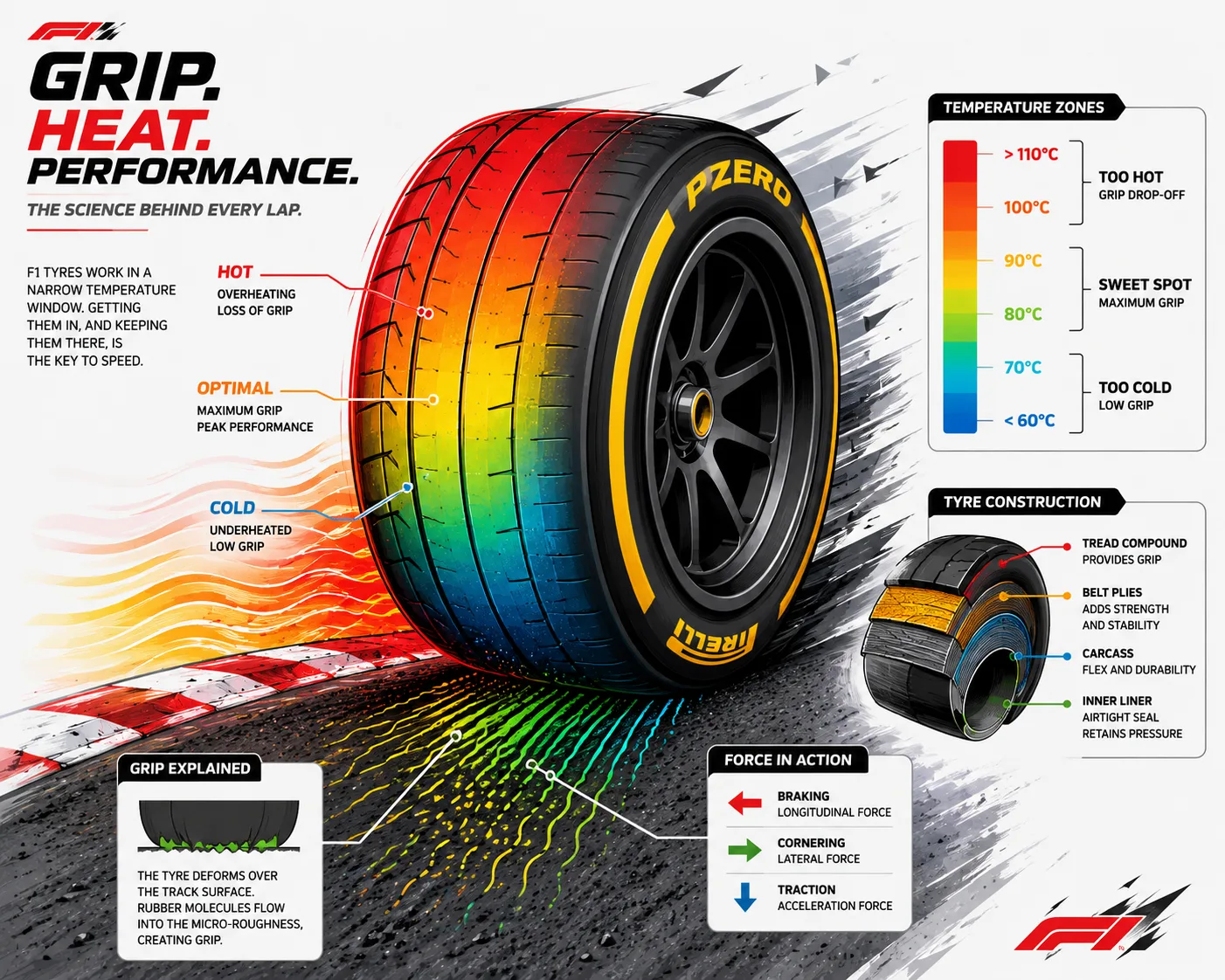
Tires are arguably the most important performance factor in Formula 1. Modern racing tires operate within very narrow temperature windows. Too cold, and they lose grip. Too hot, and performance collapses quickly. Drivers constantly adjust their driving style to maintain ideal tire conditions throughout a race.
This challenge becomes especially difficult during long stints. Aggressive steering inputs or excessive wheelspin can destroy tire life within a few laps. Drivers must carefully balance pace with preservation. That is why Formula 1 is often compared to chess played at 300 km/h. Drivers think strategically while still attacking at incredible speed.
Weather conditions make tire management even more complicated. Rain changes grip levels dramatically, while track temperatures affect how quickly tires heat up. Elite drivers develop an almost supernatural sensitivity to tire behavior. They can feel tiny grip changes through the steering wheel and seat before telemetry systems even confirm them.
Recent Formula 1 discussions around the 2026 regulations also highlight how energy deployment strategies influence cornering behavior and tire usage. Drivers now balance battery recharge zones with tire conservation and aerodynamic efficiency, creating an even more complex driving environment.
The Real Challenge of Braking and Cornering
Why F1 Brakes Feel Nothing Like Road-Car Brakes
Braking in a Formula 1 car feels brutally violent compared to normal driving. Most road-car brakes are designed for comfort and gradual stopping power. Formula 1 brakes are designed for maximum deceleration at racing speeds. Drivers slam the brake pedal with enormous force, often reducing speed from over 300 km/h in just a few seconds.
The brake systems use carbon materials that perform best under extreme heat. Unlike ordinary brakes, cold F1 brakes actually work poorly. Drivers must aggressively warm them during formation laps to reach ideal operating temperatures. Once hot, they generate astonishing stopping power.
a=ΔvΔta=frac{Delta v}{Delta t}
Modern Formula 1 braking systems also integrate sophisticated energy recovery technology. During braking, hybrid systems harvest kinetic energy and store it for later power deployment. This creates a unique challenge because drivers must manage both mechanical braking and regenerative systems simultaneously.
First-time drivers are usually shocked by how physically demanding the brakes feel. Many cannot initially apply enough force to maximize stopping performance. It is similar to trying to do a heavy gym leg press repeatedly while approaching a wall at enormous speed. The physical confidence required is extraordinary.
Cornering at Extreme Speeds
Cornering is where Formula 1 truly becomes mind-bending. The combination of aerodynamic downforce and tire grip allows drivers to carry incredible speed through turns that would send normal cars sliding off the track instantly. Watching onboard footage often feels deceptive because television cameras flatten the sensation of speed.
The real challenge lies in managing the transition between braking, turning, and acceleration. Elite drivers overlap these phases smoothly to maximize grip and maintain momentum. Tiny steering corrections can determine whether the car rotates perfectly or loses stability.
Some recent technical discussions around 2026 cars suggest that changing aerodynamic regulations may alter cornering behavior and driver technique. Even with evolving technology, the fundamental challenge remains the same: finding the absolute limit of grip without exceeding it.
This is where instinct becomes critical. Drivers develop an extraordinary feel for balance and traction over years of racing experience. They sense the car’s behavior almost subconsciously, reacting faster than conscious thought. That instinctive connection between driver and machine is what makes Formula 1 so mesmerizing to watch.
Training Paths That Lead Toward Formula Racing
Starting With Karting
Nearly every Formula 1 driver begins with karting at a very young age. Karting teaches racecraft, reflexes, braking technique, and spatial awareness in a highly competitive environment. Even though karts look simple, they provide an essential foundation for understanding vehicle dynamics and racing strategy.
Young drivers spend years competing in regional and international karting championships before progressing into formula categories. The environment is incredibly competitive because thousands of talented drivers dream of reaching Formula 1, yet only a tiny fraction succeed.
Karting also teaches mental resilience. Drivers learn how to handle pressure, recover from mistakes, and battle wheel-to-wheel against aggressive competitors. These lessons become invaluable later in professional racing careers.
Many legendary drivers started this exact way. Michael Schumacher, Ayrton Senna, and Fernando Alonso all developed their skills in karting long before reaching Formula 1 fame.
Moving Through Junior Racing Categories
After karting, drivers usually progress into junior formula categories such as Formula 4, Formula 3, and Formula 2. Each level introduces faster cars, more advanced aerodynamics, and tougher competition. Drivers gradually learn how to handle increased power and technical complexity.
| Racing Category | Main Purpose | Typical Driver Age |
|---|---|---|
| Karting | Basic racecraft and reflexes | 6–15 |
| Formula 4 | Introduction to single-seaters | 15–18 |
| Formula 3 | Advanced aerodynamic racing | 17–21 |
| Formula 2 | Final step before F1 | 18–24 |
The financial challenge is enormous. Motorsport is expensive, and many talented drivers struggle to continue without sponsorship support. Teams look not only for speed but also professionalism, technical feedback, and consistency under pressure.
Formula 4 and Formula 3 Development
Formula 4 and Formula 3 serve as crucial learning stages because they expose drivers to the realities of professional racing. Drivers begin working closely with engineers, studying telemetry, and refining technical understanding. They also learn media responsibilities, sponsor obligations, and team communication.
At these levels, races become highly strategic. Tire management, qualifying pace, and consistency grow increasingly important. Drivers start understanding how to develop a car through feedback rather than simply driving fast.
This stage often separates naturally talented racers from truly elite prospects. Some drivers possess raw speed but struggle with consistency or technical understanding. Others demonstrate exceptional adaptability and race intelligence, which are qualities Formula 1 teams value highly.
By the time drivers finally reach Formula 1, they have usually spent over a decade preparing for that moment. What looks effortless on television is actually the result of years of relentless sacrifice and training.

What Most First-Time Drivers Struggle With
Sensory Overload and Reaction Speed
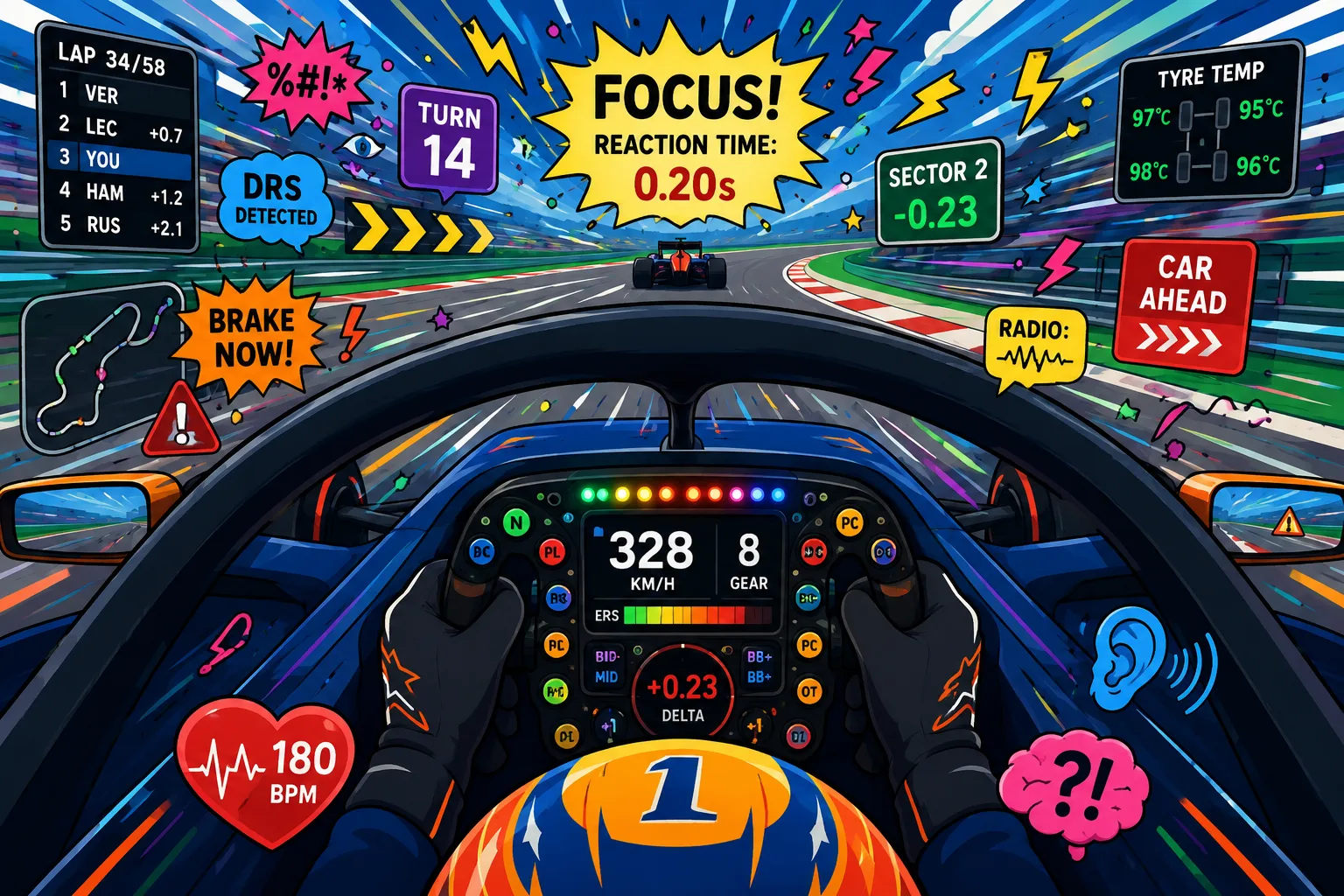
First-time Formula 1 drivers often describe the experience as sensory overload. The acceleration, vibration, noise, and speed arrive all at once. Corners approach so quickly that normal reaction patterns feel completely inadequate. Many drivers initially struggle simply to process information fast enough.
The steering also feels extraordinarily sensitive. Tiny movements create immediate directional changes because the car responds with incredible sharpness. Beginners often overcorrect, which destabilizes the car and destroys confidence.
Braking points are another massive challenge. Human instinct naturally wants to brake earlier when approaching corners at extreme speed. Formula 1 drivers train themselves to delay braking to astonishingly late moments while still maintaining control.
The psychological side matters too. Fear becomes unavoidable at some point because the speeds involved are genuinely dangerous. Successful drivers learn how to acknowledge fear without letting it dominate decision-making. That emotional control is one of the defining traits of elite racers.
Managing Fear While Driving on the Limit
Driving at the limit requires a delicate balance between confidence and caution. Too much fear makes drivers hesitate and lose performance. Too much aggression leads to mistakes and crashes. The best Formula 1 drivers operate in a narrow mental zone where risk feels controlled rather than reckless.
This mindset develops gradually through experience. Drivers build trust in the car, tires, brakes, and their own instincts over thousands of laps. Eventually, what once felt terrifying begins to feel natural.
Still, even elite drivers admit that certain corners or weather conditions create moments of genuine tension. Rain races, changing grip levels, and close wheel-to-wheel battles push mental control to its limits.
That human vulnerability is part of what makes Formula 1 compelling. Beneath the advanced technology and engineering brilliance are individuals constantly managing fear, pressure, and expectation while competing at extraordinary speeds.
Safety Measures Before Taking an F1 Car on Track
Protective Equipment and FIA Standards
Safety in Formula 1 has improved dramatically over the decades. Modern cars include advanced crash structures, fire-resistant materials, and protective systems designed to absorb huge impacts. The halo device, introduced in recent years, has already saved multiple drivers from potentially fatal accidents.
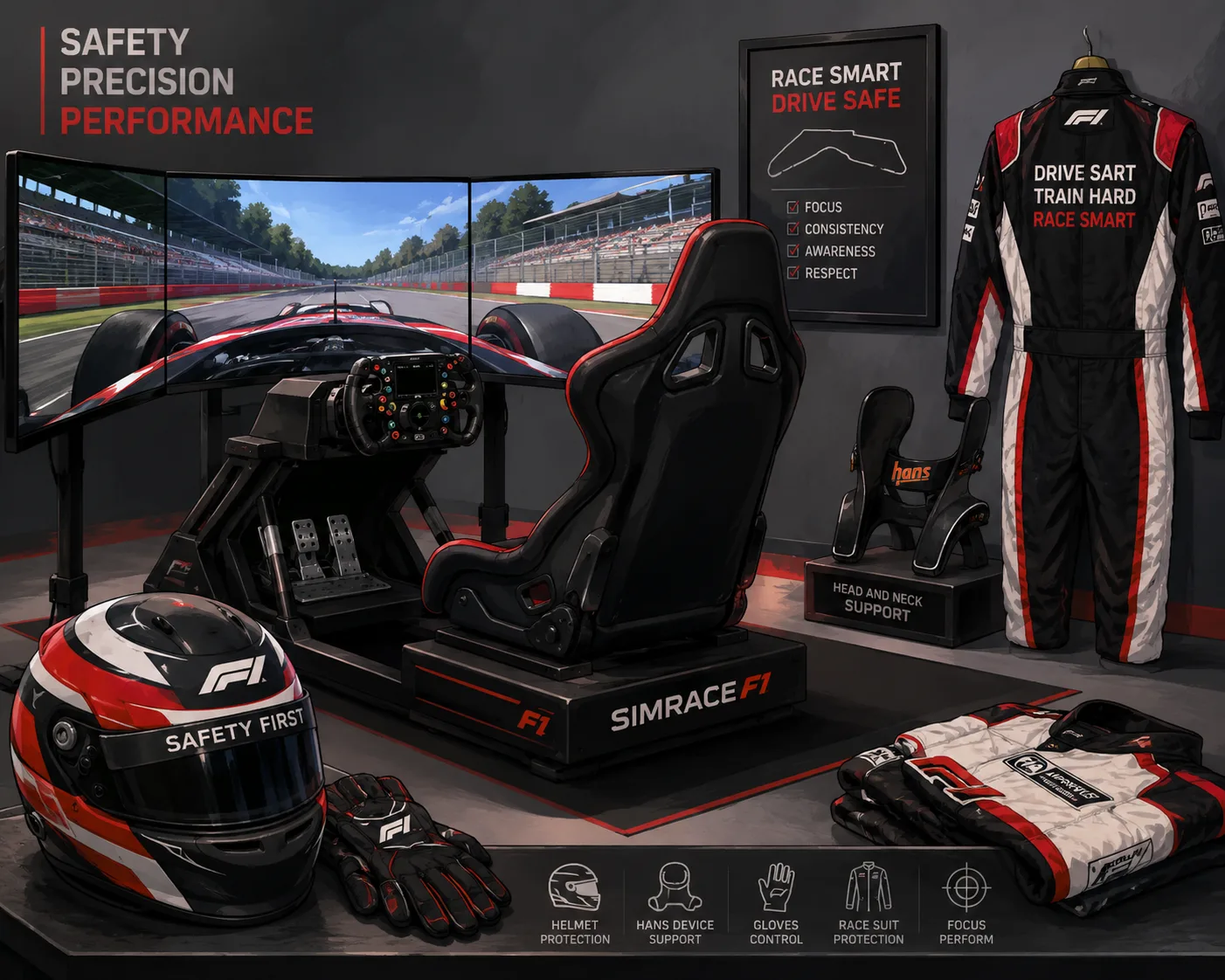
Drivers wear specialized helmets, HANS devices, fireproof suits, gloves, boots, and biometric sensors during races. Every piece of equipment undergoes strict FIA testing standards before approval.
Recent 2026 regulations have continued strengthening safety systems, including improved crash structures and stronger roll hoops capable of handling higher impact loads. Engineers constantly analyze accidents to improve survival protection without sacrificing performance.
While Formula 1 remains dangerous, modern safety innovations have transformed the sport compared to earlier eras. Drivers today benefit from some of the most advanced safety engineering in professional sports.
Why Simulators and Testing Matter
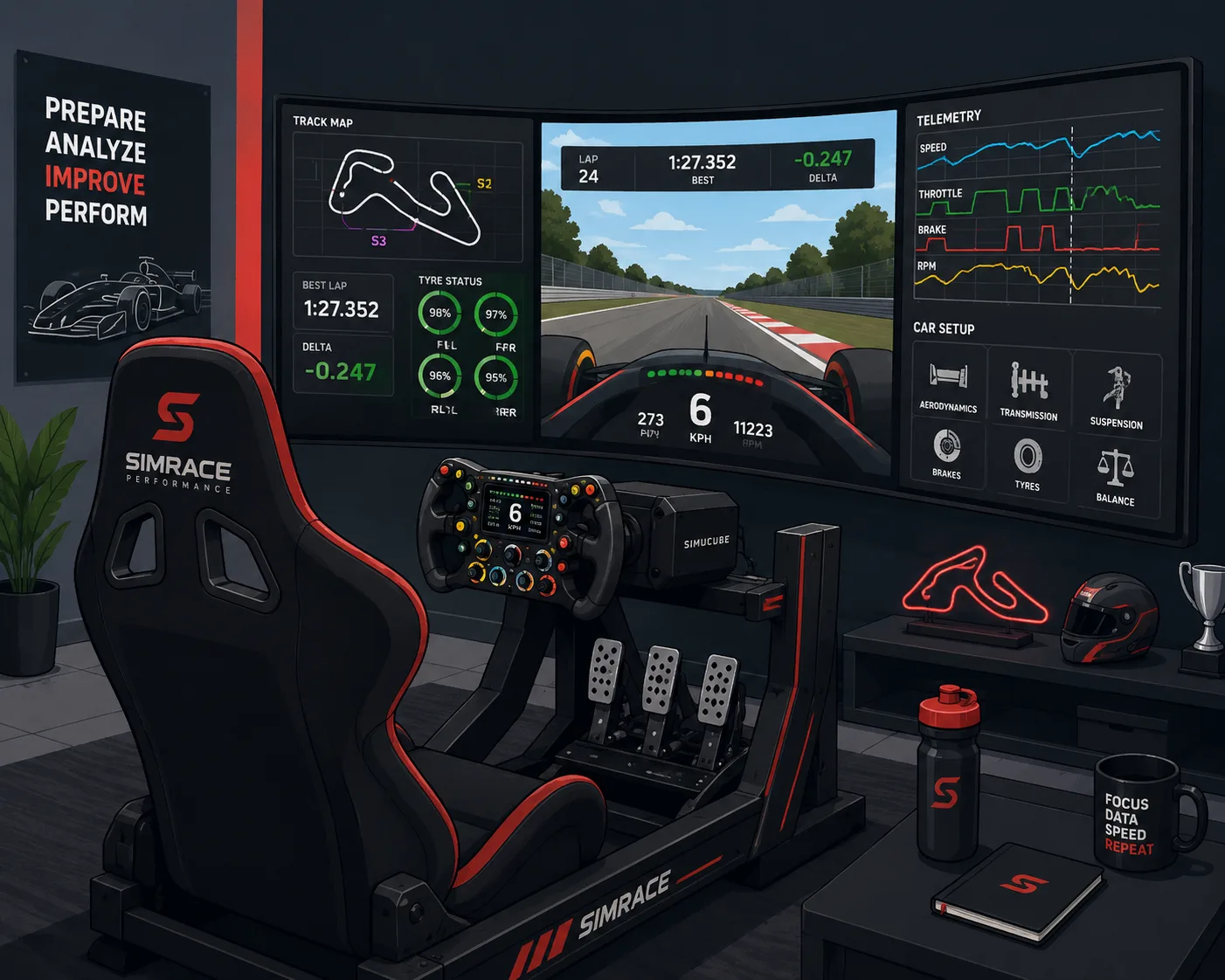
Before touching a real Formula 1 car, drivers spend enormous time in simulators. These advanced systems recreate circuits, cockpit controls, and vehicle behavior with remarkable accuracy. Drivers practice braking points, energy deployment, race starts, and wet-weather scenarios repeatedly.
Simulators also allow teams to test setups and strategies without risking expensive crashes. Engineers analyze driver feedback while collecting huge amounts of performance data.
Testing becomes especially important with evolving regulations and new technologies. Modern Formula 1 cars are so complex that preparation is essential before real track sessions. Drivers who arrive unprepared can quickly become overwhelmed by the car’s demands.
Ultimately, simulators reduce risk while accelerating learning. They help drivers build familiarity and confidence before facing the physical reality of a live Formula 1 car on track.
Conclusion
Driving a Formula 1 car is one of the most demanding experiences in motorsport and perhaps in all of professional sports. It requires far more than bravery or a love of speed. Drivers must combine elite physical conditioning, technical intelligence, razor-sharp reflexes, and emotional control while operating machines built at the edge of engineering possibility.
What makes Formula 1 so different from normal driving is the intensity of everything involved. The acceleration is brutal, the cornering forces are extreme, and the level of precision required is almost unimaginable. Drivers constantly manage tires, brakes, aerodynamics, hybrid systems, and strategy while enduring punishing physical stress inside the cockpit.
The path toward Formula racing is long and unforgiving, beginning with karting and progressing through years of development categories. Along the way, drivers learn how to balance aggression with precision and confidence with discipline.
For spectators, Formula 1 may look glamorous and effortless on television. Inside the cockpit, though, it is a relentless battle between human capability and mechanical performance. That tension is exactly what makes the sport so fascinating.
FAQs
1. Can an ordinary person drive an F1 car?
Technically yes, but it would be extremely difficult without specialized training. Most people would struggle with the braking force, reaction speed, cockpit controls, and physical demands almost immediately.
2. How fast can an F1 car go?
Modern Formula 1 cars can exceed 350 km/h depending on track layout and aerodynamic setup.
3. Why are Formula 1 steering wheels so complicated?
F1 steering wheels control numerous systems including brake balance, energy deployment, radio communication, and aerodynamic settings. Drivers constantly adjust these systems during races.
4. How physically demanding is Formula 1 racing?
Drivers experience intense G-forces, extreme heat, dehydration, and muscular fatigue during races. Many lose several kilograms of body weight over a race weekend.
5. How long does it take to become an F1 driver?
Most drivers spend more than 10 years progressing through karting and junior racing categories before reaching Formula 1.

Marco Vestri is a 29-year-old American content writer based in Spokane, Washington. He specializes in creating well-researched automotive maintenance guides, troubleshooting articles, and practical ownership advice for everyday drivers. His work emphasizes accuracy, clear explanations, and reliable sources, helping readers make informed decisions with confidence. As a regular contributor to carissues.wiki, Marco combines years of blogging experience with a passion for simplifying complex vehicle topics into useful, trustworthy content for a broad audience.