

If you have ever heard a mechanic say an engine is “running lean,” it might sound like technical jargon pulled straight out of a repair manual. In reality, the idea is surprisingly simple. A lean-running engine means the engine is getting too much air and not enough fuel during combustion. Think of it like trying to light a campfire with barely any wood but a huge gust of wind blowing through it. The balance is off, and the fire cannot burn correctly. In a vehicle, that imbalance affects performance, efficiency, drivability, and long-term engine health.
Modern vehicles constantly calculate the proper air-fuel mixture using sensors, fuel injectors, computers, and airflow systems. When one small part fails or even becomes slightly inaccurate, the entire balance shifts. This is why lean conditions are among the most common causes of check engine lights in modern cars and trucks. Diagnostic trouble codes like P0171 and P0174 are especially common because they indicate the fuel system is running too lean on one or both engine banks. According to multiple recent automotive diagnostic sources, vacuum leaks remain the number one reason these codes appear, followed closely by dirty MAF sensors and weak fuel delivery systems.
Understanding why an engine runs lean matters because ignoring the issue can eventually lead to serious engine damage. What begins as a small vacuum hose crack can later become burned valves, piston damage, or catalytic converter failure. Drivers often overlook the early symptoms because they seem minor at first. A slightly rough idle or occasional hesitation may not feel urgent. Yet under the hood, the engine management system could be struggling constantly to compensate for the imbalance. The good news is that lean conditions are often repairable once the root cause is identified properly.
What Does It Mean When an Engine Runs Lean?
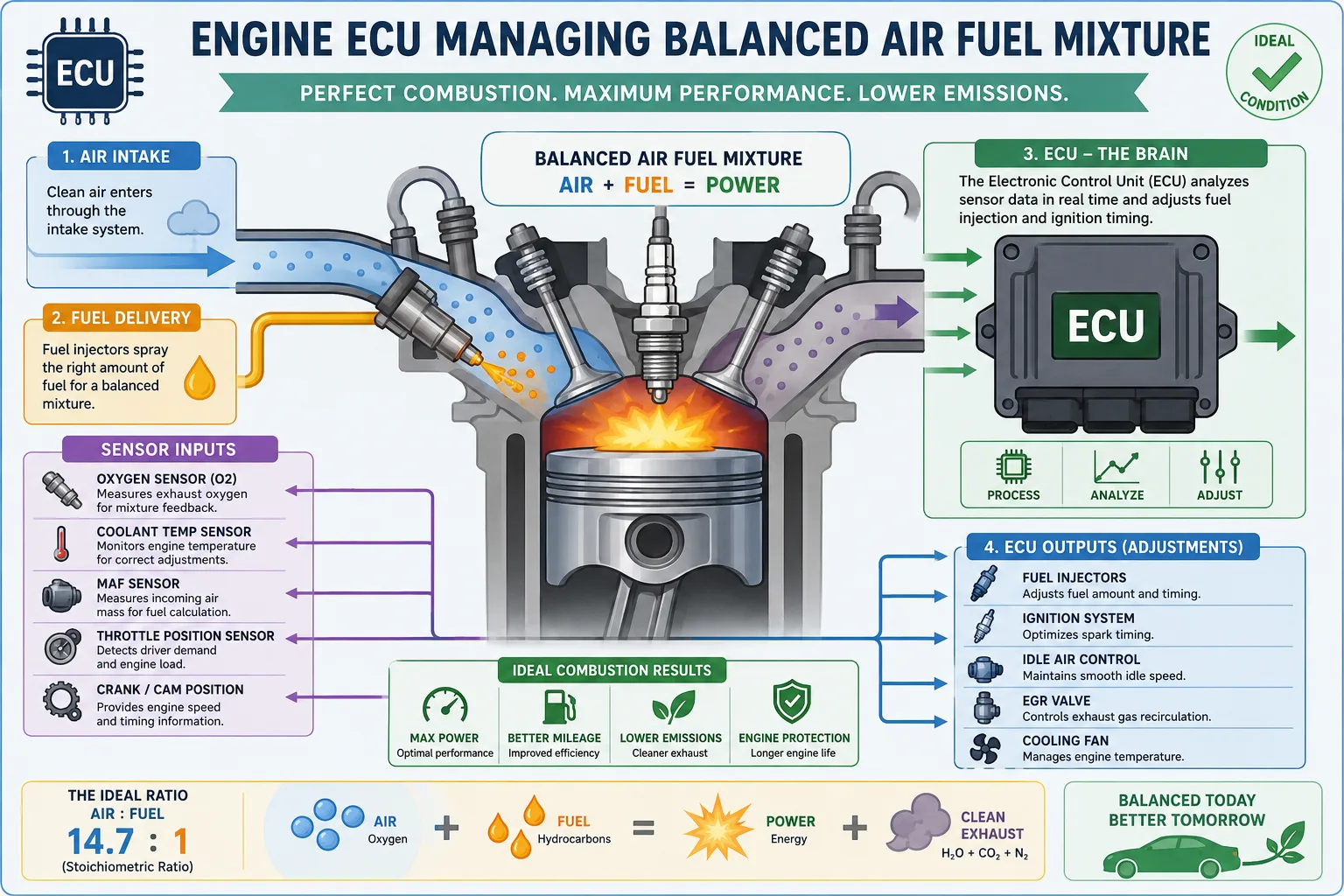
A gasoline engine needs a carefully controlled mixture of air and fuel to operate correctly. Under normal conditions, most engines aim for an air-fuel ratio close to 14.7 parts air to 1 part fuel. This is known as the stoichiometric ratio, where combustion is cleanest and most efficient. When the engine receives too much fuel, it runs rich. When it receives too much air or not enough fuel, it runs lean. That imbalance changes how combustion occurs inside the cylinders and directly impacts performance.
14.7:114.7:1
The Basic Science Behind Air and Fuel Mixture
Inside each cylinder, fuel mixes with incoming air before ignition. Spark plugs ignite that mixture, creating the controlled explosion that powers the engine. If there is not enough fuel in the mixture, combustion temperatures rise dramatically. The engine may still run, but it operates inefficiently and under greater stress. It is similar to a marathon runner trying to sprint while breathing through a straw. The system works harder while producing less reliable performance.
Modern vehicles rely on computers called ECUs or ECMs to constantly monitor this balance. Sensors track oxygen content in the exhaust, airflow entering the intake, throttle position, engine load, and fuel delivery. The ECU then adjusts injector timing and fuel trims to maintain balance. If the computer reaches the limit of its adjustment ability and still detects too much oxygen in the exhaust stream, it stores a lean-condition code such as P0171 or P0174. Recent diagnostic reports show fuel trims often exceed +20% or even +25% before these codes are triggered.
Ideal Air-Fuel Ratio Explained Simply
The easiest way to understand the ideal air-fuel ratio is to imagine baking bread. Too much flour and not enough water creates dry, crumbly dough. Too much water makes the mixture sloppy and unusable. Engines behave similarly. Too much fuel creates carbon buildup and poor fuel economy. Too much air creates overheating, knocking, and misfires.
Recent automotive diagnostics explain that lean conditions usually stem from one of two categories: either the engine is receiving excess unmetered air, or the fuel system is failing to provide enough fuel. That distinction is critical because it helps mechanics narrow down the real problem quickly. Sometimes the issue is as small as a cracked vacuum hose worth a few dollars. Other times it may involve weak fuel pressure, clogged injectors, or failing sensors that confuse the ECU.
Why Modern Engines Depend on Balanced Combustion
Modern engines are far more advanced than the carbureted engines of decades past. Today’s engines constantly adapt to temperature, altitude, throttle input, load, and fuel quality in real time. The ECU acts like the conductor of an orchestra, ensuring every system works in harmony. When one instrument plays out of tune, the whole performance suffers.
How the ECU Controls Fuel Delivery
The engine control unit gathers data from multiple sensors several times per second. The mass airflow sensor measures incoming air volume. Oxygen sensors monitor exhaust gases. Fuel injectors spray calculated fuel amounts into the intake or combustion chamber. Based on all that information, the ECU constantly adjusts fuel delivery to maintain the ideal combustion ratio.
One of the most important concepts here is fuel trim. Short-term fuel trim reacts instantly to changing conditions, while long-term fuel trim adapts over time. If the ECU repeatedly notices a lean condition, it keeps adding more fuel to compensate. When these corrections become excessive, lean trouble codes appear. Technicians often use these fuel trim readings to diagnose whether the issue comes from vacuum leaks, fuel starvation, or faulty sensors.
Why Fuel Trims Matter
Fuel trims are essentially the ECU’s way of saying, “Something isn’t right, so I’m trying to fix it.” Positive fuel trims mean the ECU is adding extra fuel because it senses a lean condition. Negative trims mean it is reducing fuel because the mixture is rich. Watching these values helps mechanics identify patterns that reveal the root problem.
For example, if fuel trims rise dramatically at idle but improve at higher RPMs, a vacuum leak is often the culprit. If trims worsen under acceleration or heavy load, fuel pressure issues become more likely. This type of diagnostic strategy prevents unnecessary parts replacement and saves drivers money. According to recent technician guides, many lean-condition repairs cost under a couple hundred dollars when diagnosed early, but repair costs rise sharply if the problem damages major engine components.
The Most Common Causes of a Lean Engine Condition
Lean conditions rarely happen randomly. In most cases, a specific system fails, leaks, clogs, or sends incorrect information to the ECU. Understanding the most common causes helps drivers recognize problems before they become expensive disasters.
Vacuum Leaks and Unmetered Air
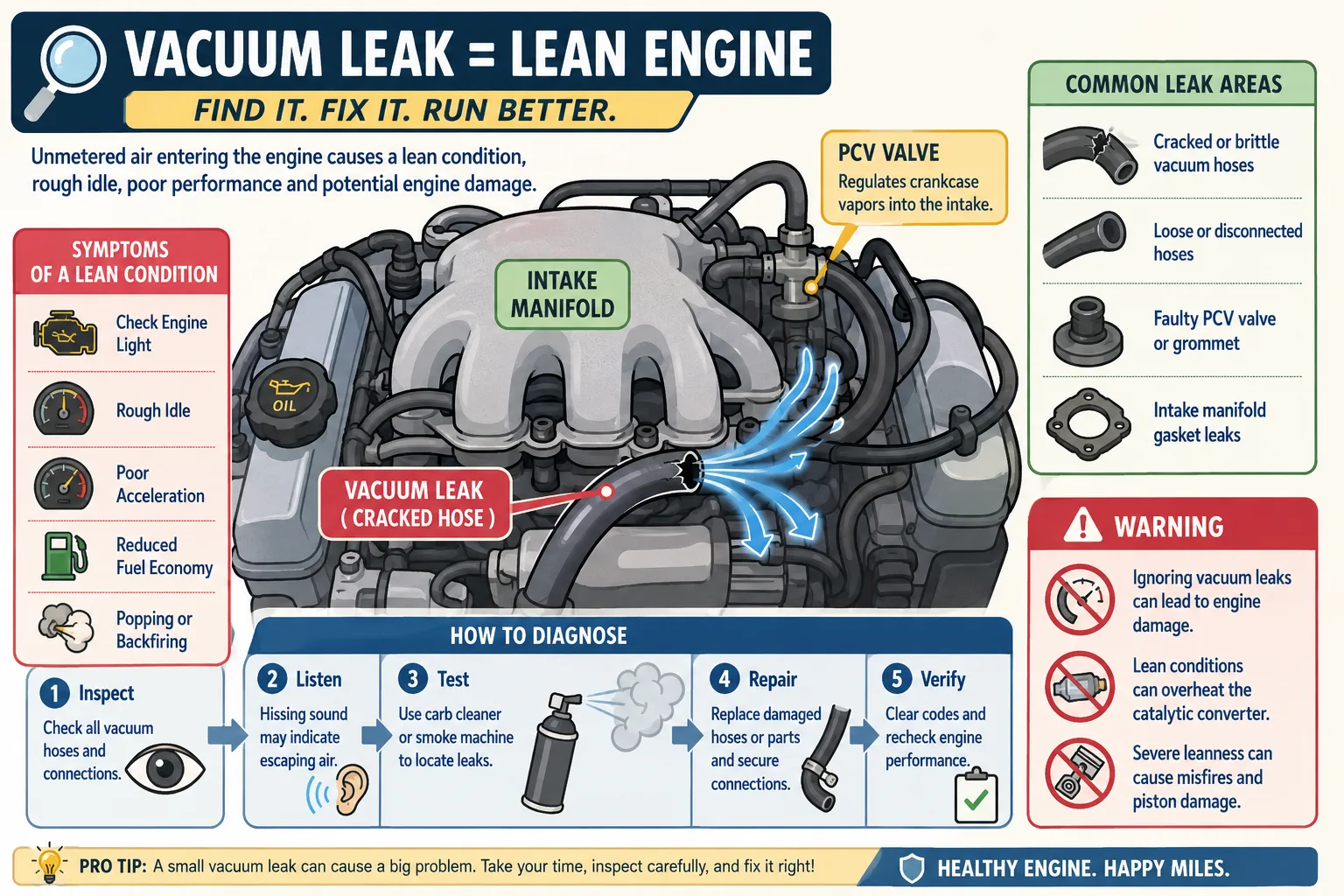
Vacuum leaks are consistently listed as the number one cause of lean engine conditions. A vacuum leak allows extra air to enter the engine without being measured by the airflow sensors. Since the ECU does not know that extra air exists, it injects too little fuel for the actual amount of oxygen entering the cylinders.
Cracked Hoses and Intake Gasket Problems
Rubber vacuum hoses age constantly due to heat cycles and engine vibrations. Over time, they become brittle, cracked, or disconnected. Intake manifold gaskets can also shrink or fail, especially on older engines. These tiny leaks may seem insignificant, but even a small crack can disrupt the engine’s fuel calculations enough to trigger lean codes.
Drivers often notice rough idle symptoms first because vacuum leaks affect idle conditions more dramatically. The engine may stumble, shake, or even stall when stopped at traffic lights. Some leaks create hissing noises under the hood. Mechanics commonly use smoke machines to force visible smoke through the intake system and pinpoint leak locations quickly.
PCV Valve and Brake Booster Leaks
The positive crankcase ventilation system, commonly called the PCV system, is another frequent trouble spot. A stuck-open PCV valve introduces excess air into the intake manifold, creating a lean condition. Brake booster vacuum leaks can create similar issues while also affecting brake pedal feel.
Many technicians report that PCV hoses and brake booster lines are overlooked during diagnosis because the symptoms mimic other issues. Recent repair discussions online show countless vehicle owners replacing oxygen sensors or fuel pumps unnecessarily before discovering a simple cracked hose was the true cause.
Explore Related: How Long to Wait to Wash Car After Ceramic Coating Application
Fuel Delivery Problems That Starve the Engine
Not every lean condition comes from extra air. Sometimes the engine simply cannot receive enough fuel to maintain balance. This type of problem usually becomes more noticeable during acceleration or heavy load conditions.
Weak Fuel Pumps and Dirty Fuel Filters
Fuel pumps gradually weaken with age. As pressure drops, injectors cannot deliver enough fuel into the combustion chambers. Dirty fuel filters create similar restrictions by limiting fuel flow. Under light driving, the engine may seem mostly normal. Under acceleration, though, fuel demand increases sharply, exposing the weakness.
Drivers often notice hesitation, sluggish acceleration, or sputtering under load. Fuel pressure testing is one of the most reliable ways to confirm these problems. Recent diagnostic guides emphasize that weak fuel pumps commonly cause fuel trims to spike under acceleration rather than at idle.
Clogged or Failing Fuel Injectors
Fuel injectors must spray a fine mist of fuel into the intake stream or combustion chamber. Deposits, contamination, or internal wear can disrupt that spray pattern. A partially clogged injector reduces fuel delivery, causing individual cylinders or entire engine banks to run lean.
In severe cases, clogged injectors can trigger misfires and rough acceleration. Some vehicles develop lean conditions only on one bank of cylinders because only certain injectors are affected. Professional injector cleaning or replacement often restores proper performance quickly.
Dirty or Faulty Airflow Sensors
Mass airflow sensors play a huge role in fuel calculations. If a MAF sensor underreports airflow, the ECU injects less fuel than necessary. Dirty sensors are especially common in vehicles using aftermarket oiled air filters because oil residue coats the sensor element.
A failing MAF sensor can create frustrating intermittent symptoms. The vehicle may run perfectly one day and poorly the next. Drivers frequently notice hesitation during acceleration, inconsistent idle quality, or poor throttle response. Cleaning the sensor sometimes solves the issue, though replacement may be necessary if the electronics fail.
Oxygen Sensor and Exhaust Leak Problems
Oxygen sensors monitor leftover oxygen in the exhaust stream. If these sensors provide inaccurate readings, the ECU may incorrectly adjust fuel delivery. Exhaust leaks before the upstream oxygen sensor can also pull outside air into the exhaust stream, tricking the sensor into reporting a lean condition even when the mixture is actually correct.
This creates confusion because the engine may not actually be lean at all. Technicians must carefully analyze fuel trims, exhaust conditions, and live sensor data before replacing parts. Swapping oxygen sensors without proper diagnosis often wastes money and fails to solve the real issue.
Symptoms Drivers Usually Notice First
Lean-running engines usually give warning signs before catastrophic damage occurs. The challenge is that many symptoms start subtly, making them easy to ignore.
Rough Idle, Hesitation, and Poor Acceleration
One of the first symptoms drivers notice is a rough or unstable idle. The engine may shake slightly while stopped or feel uneven during operation. Hesitation during acceleration is another classic symptom. Pressing the throttle may produce delayed response, stumbling, or sputtering.
Some drivers describe lean engines as feeling “lazy” or weak. The vehicle still moves, but acceleration lacks smoothness and power. In severe cases, engines may stall unexpectedly or struggle to start. Recent diagnostic reports also note that lean conditions can create engine knock or pinging during acceleration because higher combustion temperatures increase the risk of detonation.
Check Engine Lights and Lean Codes
The check engine light often appears alongside codes like P0171 or P0174. These codes indicate the ECU has reached the limit of its fuel adjustments while trying to compensate for a lean mixture. Vehicles with V6 or V8 engines may show separate codes for Bank 1 and Bank 2.
| Code | Meaning |
|---|---|
| P0171 | System Too Lean Bank 1 |
| P0174 | System Too Lean Bank 2 |
| P0170 | Fuel Trim Malfunction Bank 1 |
| P0173 | Fuel Trim Malfunction Bank 2 |
Drivers should avoid assuming the oxygen sensor itself is always the culprit. In many cases, the sensor is only reporting the imbalance accurately while another system causes the actual problem.
Why Running Lean Can Damage an Engine Over Time
Some drivers continue using vehicles with lean conditions for months because the car still “runs okay.” That gamble can become extremely expensive over time.
High Combustion Temperatures and Engine Stress
Lean combustion burns hotter than normal combustion. Excessive heat stresses pistons, valves, cylinder heads, and spark plugs. Over time, these temperatures can cause pre-ignition or detonation, both of which are harmful to internal engine components.
Imagine continuously revving an engine while starving it of proper lubrication. That ongoing stress eventually takes a toll. Lean conditions create a similar form of long-term strain. According to recent automotive repair sources, persistent lean operation can accelerate wear dramatically if left unresolved.
Recommended: How to Open the Engine Oil Cap Without Damaging It
Catalytic Converter and Valve Damage
Catalytic converters rely on balanced combustion to operate correctly. Excessive heat from lean combustion can overwork the converter and shorten its lifespan. Exhaust valves are especially vulnerable because they already endure extreme temperatures during normal operation.
Burned valves, cracked pistons, and damaged catalytic converters can transform a small repair into a major engine rebuild. What could have been solved with a $20 hose replacement may eventually require thousands of dollars in repairs.
How Mechanics Diagnose Lean Conditions
Proper diagnosis matters because lean conditions can originate from many different systems. Skilled technicians rely on data rather than guesswork.
Fuel Trim Readings and OBD-II Codes
Modern scan tools allow mechanics to monitor fuel trims in real time. These values reveal how aggressively the ECU is compensating for lean operation. Technicians compare short-term and long-term fuel trim behavior at idle, cruising speed, and acceleration to identify patterns.
For example:
- High trims at idle often suggest vacuum leaks.
- High trims under load often suggest fuel delivery problems.
- One-bank lean conditions may indicate injector or gasket issues.
- Both-bank lean conditions often point toward MAF sensors or major vacuum leaks.
This diagnostic process prevents unnecessary parts replacement and narrows repairs efficiently.
Smoke Testing and Fuel Pressure Testing
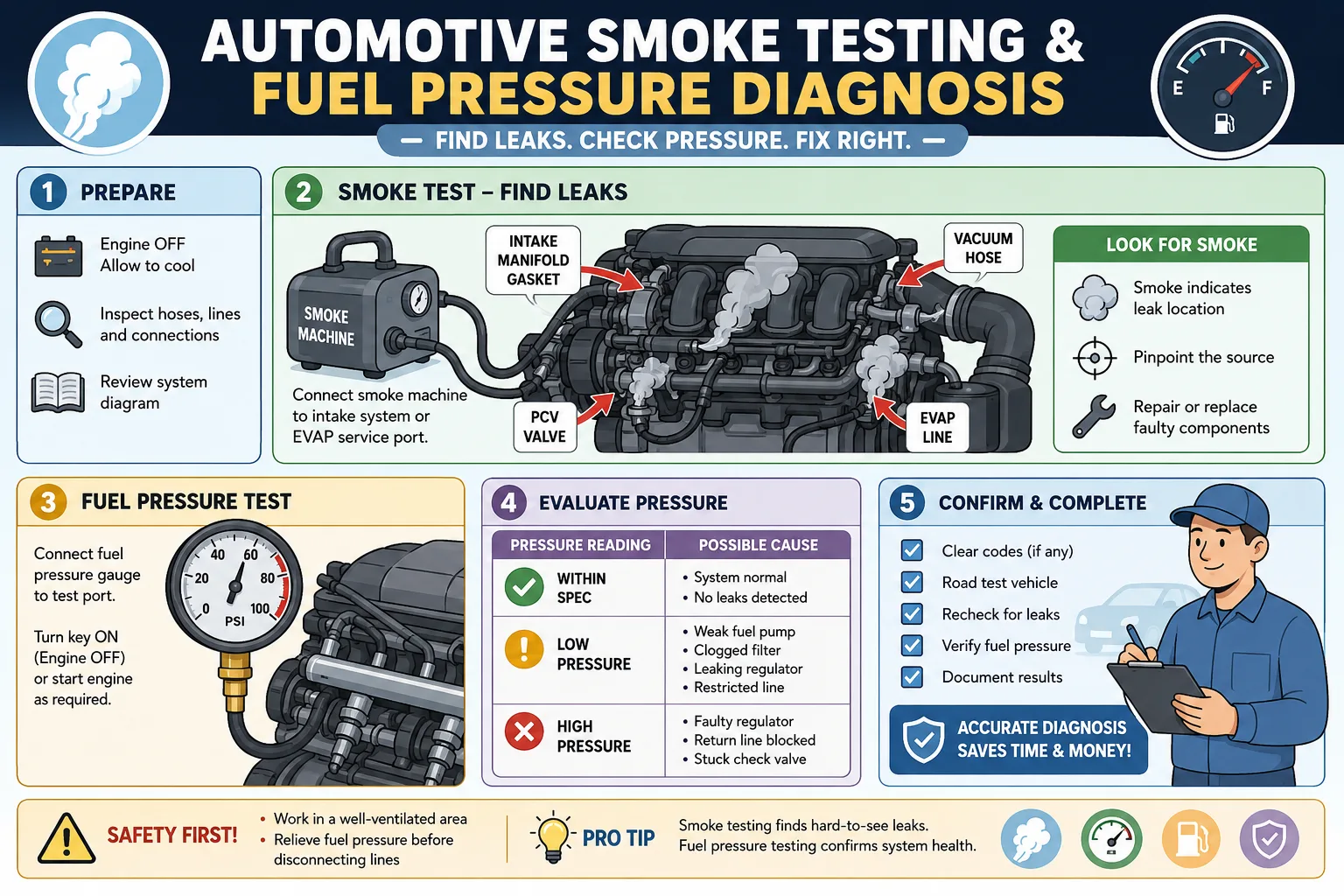
Smoke testing is one of the fastest ways to locate vacuum leaks. A smoke machine fills the intake system with visible vapor, revealing cracks, gasket leaks, or disconnected hoses instantly.
Fuel pressure testing measures whether the fuel pump and regulator can maintain proper pressure under load. Mechanics may also test injector balance, sensor readings, and exhaust integrity during diagnosis. Combining these tests creates a complete picture of what the engine is actually experiencing.
Best Fixes That Restore Proper Engine Balance
Repairing a lean-running engine depends entirely on the root cause. Fortunately, many fixes are straightforward once the problem is identified accurately.
Vacuum leaks are often solved by replacing cracked hoses, intake gaskets, or faulty PCV valves. Dirty MAF sensors may only require specialized sensor cleaner. Weak fuel pumps, clogged filters, or failing injectors usually need replacement or professional servicing. Exhaust leaks require sealing or replacing damaged components.
Drivers should avoid blindly replacing parts based on internet guesses. A proper diagnosis saves time, money, and frustration. Recent technician discussions repeatedly emphasize that accurate fuel trim analysis is the key to solving lean conditions efficiently.
Routine maintenance also plays a major role in prevention. Replacing air filters, using quality fuel, cleaning injectors periodically, and inspecting vacuum hoses can prevent many lean-condition problems before they appear.
Conclusion
An engine that runs lean is essentially struggling with an imbalance between air and fuel. That imbalance may come from vacuum leaks, weak fuel delivery, faulty sensors, clogged injectors, or exhaust leaks that confuse the ECU. While the symptoms often begin subtly, the long-term consequences can become severe if ignored.
Understanding the signs early makes a huge difference. Rough idle, hesitation, poor acceleration, and check engine lights are the engine’s way of asking for attention before serious damage occurs. Modern diagnostic tools allow mechanics to pinpoint lean conditions quickly using fuel trim data, smoke testing, and sensor analysis.
The encouraging part is that many lean-condition repairs are relatively affordable when caught early. A cracked hose or dirty sensor may seem small, but correcting those issues restores proper combustion, improves fuel economy, protects engine components, and keeps the vehicle running smoothly for years to come.
Latest Articles: How Much Air Should Be in a Spare Tire for Safe Driving
FAQs
What is the most common cause of an engine running lean?
Vacuum leaks are widely considered the most common cause of lean engine conditions. Cracked vacuum hoses, intake gasket leaks, and faulty PCV systems frequently allow unmetered air into the engine.
Can I still drive with a lean-running engine?
Short trips may still be possible, but driving long-term with a lean condition is risky. Lean combustion increases engine temperatures and can damage valves, pistons, and catalytic converters over time.
Does a bad oxygen sensor cause a lean condition?
Yes, a failing oxygen sensor can report incorrect readings and influence fuel delivery. However, oxygen sensors are often blamed incorrectly when the real problem is a vacuum leak or fuel system issue.
What does the P0171 code mean?
P0171 means the engine control module has detected a lean fuel condition on Bank 1. This typically indicates too much air or not enough fuel entering the combustion process.
How expensive is it to fix a lean condition?
Repair costs vary widely. Simple vacuum hose repairs may cost very little, while fuel pump or injector replacements can be more expensive. Early diagnosis usually prevents larger repair bills later.

Marco Vestri is a 29-year-old American content writer based in Spokane, Washington. He specializes in creating well-researched automotive maintenance guides, troubleshooting articles, and practical ownership advice for everyday drivers. His work emphasizes accuracy, clear explanations, and reliable sources, helping readers make informed decisions with confidence. As a regular contributor to carissues.wiki, Marco combines years of blogging experience with a passion for simplifying complex vehicle topics into useful, trustworthy content for a broad audience.