

Hybrid cars used to feel like futuristic machines reserved for tech enthusiasts and eco-conscious drivers. Today, they’re parked in suburban driveways, crowded city streets, and even taxi fleets around the world. As fuel prices continue to fluctuate and governments push cleaner transportation, hybrids have become a practical middle ground between traditional gasoline vehicles and fully electric cars. Yet one question still confuses many drivers: How exactly do you charge a hybrid car battery?
The answer depends on the type of hybrid you own. Some hybrids recharge automatically while driving and braking, while others need to be plugged into a charging station like an electric vehicle. This difference creates a surprising amount of confusion. Many people think every hybrid must be plugged in overnight. Others assume hybrid batteries magically recharge forever without any outside power. The truth sits somewhere in the middle, and understanding it can save drivers money, extend battery life, and improve vehicle performance.
Modern hybrid technology is smarter than most people realize. Systems inside these vehicles constantly decide when to use gasoline, electricity, or a combination of both. In many cases, the car itself handles most of the charging process behind the scenes. Features like regenerative braking capture energy that would normally disappear as heat and redirect it back into the battery. According to recent automotive research, regenerative braking systems can recover roughly 15% to 30% of energy normally lost during braking, especially during stop-and-go driving.
Understanding how hybrid charging works is a bit like learning how a smart power grid operates inside your vehicle. Once you understand the basics, the entire system becomes far less mysterious and much more impressive.
What Is a Hybrid Car Battery and How Does It Work?
A hybrid car battery is the heart of the vehicle’s electric system. Unlike a traditional gasoline car that relies solely on an internal combustion engine, a hybrid uses both an electric motor and a fuel-powered engine to move the car. The battery stores electrical energy that powers the electric motor, helping reduce fuel consumption and emissions. Think of the battery as a teammate working alongside the engine rather than replacing it entirely.
Inside most hybrid vehicles, the battery continuously charges and discharges depending on driving conditions. When the car slows down, brakes, or coasts downhill, energy is recovered and stored in the battery. When extra acceleration is needed, that stored electricity helps power the wheels. The result is improved fuel economy and smoother performance, especially in urban traffic where frequent stopping would normally waste fuel.
The Role of the Electric Motor and Gas Engine
The electric motor in a hybrid car does more than simply move the vehicle. It acts as an assistant to the gasoline engine, stepping in during low-speed driving, helping during acceleration, and reducing strain on the engine. This teamwork allows the gas engine to operate more efficiently because it doesn’t have to handle every driving condition alone.
Many hybrids also use highly efficient engine designs such as the Atkinson-cycle engine. Automotive discussions and engineering studies frequently note that these engines prioritize fuel efficiency over raw acceleration, while the electric motor fills in the performance gap. The system is almost like having two athletes in a relay race; one handles endurance while the other provides bursts of speed.
Types of Hybrid Vehicles on the Road Today
Hybrid vehicles generally fall into three categories:
| Hybrid Type | Charging Method | Electric Driving Capability |
|---|---|---|
| Mild Hybrid | Regenerative braking only | Very limited |
| Full Hybrid (Self-Charging) | Regenerative braking and engine charging | Short distances |
| Plug-In Hybrid (PHEV) | External charging plus regenerative braking | Longer electric-only range |
This distinction matters because each system behaves differently. A self-charging hybrid like the Toyota Prius handles charging automatically, while a plug-in hybrid such as the Toyota RAV4 Plug-in Hybrid benefits most when regularly plugged into a charger.
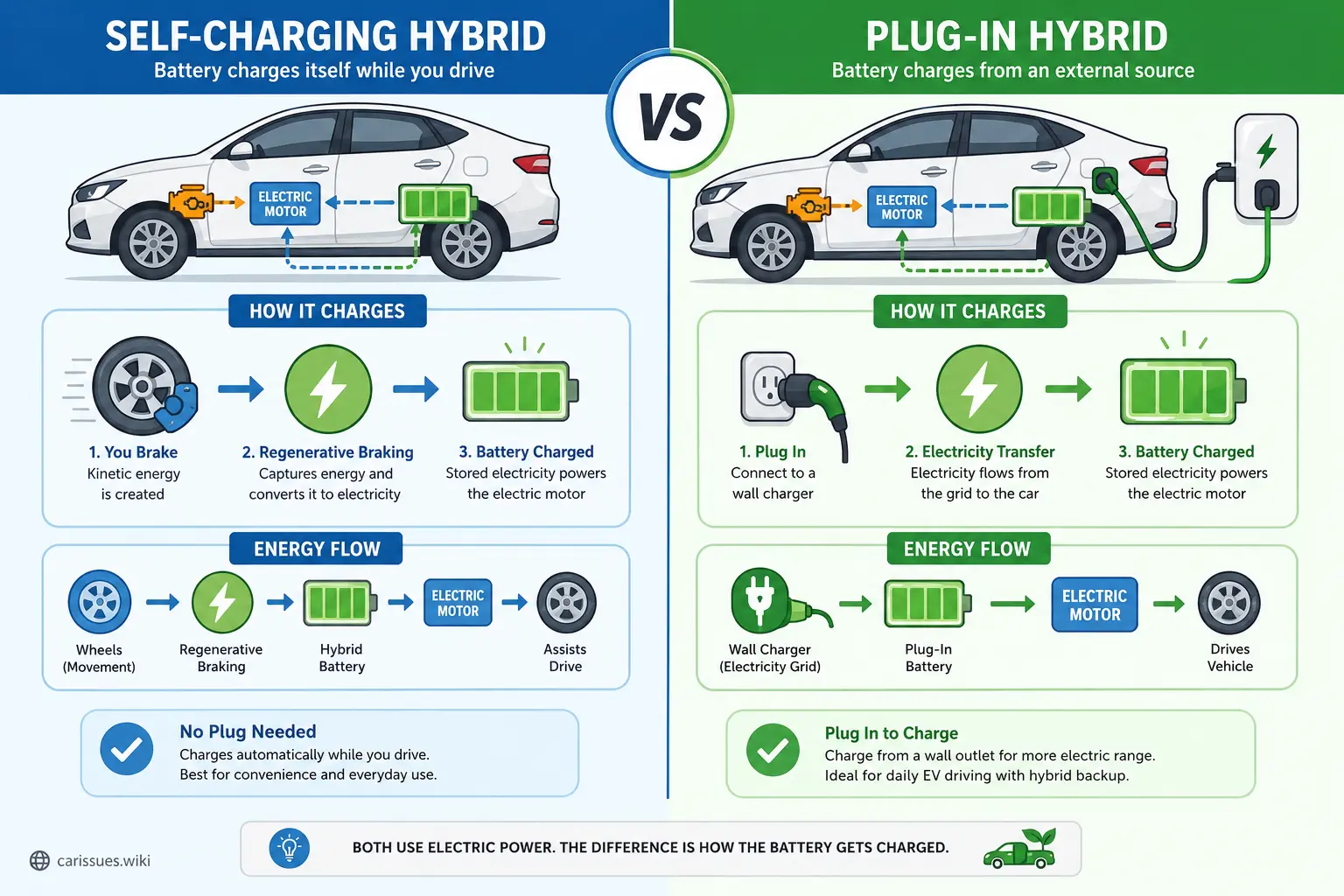
The Difference Between Self-Charging and Plug-In Hybrids
The phrase “self-charging hybrid” sounds almost magical. It gives the impression that the vehicle creates unlimited energy from nowhere. In reality, self-charging hybrids simply recover and reuse energy more efficiently than standard gasoline vehicles. Plug-in hybrids, on the other hand, operate more like electric vehicles with a gasoline backup system.
Understanding the difference is essential before buying or driving a hybrid. Choosing the wrong type for your driving habits could mean losing fuel savings or dealing with unnecessary charging routines.
How Self-Charging Hybrids Recharge Automatically
Self-charging hybrids do not require external charging cables. Instead, they recharge their batteries using regenerative braking and the gasoline engine. Every time the driver slows down or brakes, kinetic energy that would normally disappear as heat gets converted into electricity and stored in the battery.
<math xmlns="
That recovered energy powers the electric motor during low-speed driving or acceleration. This is why hybrids tend to perform exceptionally well in city traffic. Stoplights and congestion become opportunities to recover energy instead of wasting it.
Recent automotive analysis suggests that hybrid regenerative systems can improve efficiency by 5% to 25% in stop-and-go conditions. Drivers often notice another benefit too: brake pads last much longer because the regenerative system handles much of the slowing process.
How Plug-In Hybrid Batteries Are Charged
Plug-in hybrids, commonly called PHEVs, have larger batteries and can drive significantly farther using electricity alone. Unlike self-charging hybrids, they are designed to be plugged into an electrical outlet or charging station.
Most PHEVs provide around 20 to 50 miles of electric-only driving before switching to hybrid mode. Once the battery depletes, the car behaves much like a traditional hybrid. According to recent reports, many drivers misunderstand this feature and assume the gasoline engine will fully recharge the battery during driving. In reality, the vehicle mainly maintains battery levels rather than restoring a full electric charge.
This is a crucial distinction. A plug-in hybrid delivers maximum fuel savings only when drivers consistently charge it externally.
Which Hybrid Type Is Better for Daily Driving?
The answer depends entirely on lifestyle. Drivers with short daily commutes and home charging access often benefit most from plug-in hybrids because they can complete many trips using electricity alone. Meanwhile, drivers who lack charging access or frequently travel long distances may prefer self-charging hybrids for their simplicity.
Imagine two people: one commutes 15 miles daily in crowded city traffic and has a garage outlet. A plug-in hybrid could allow them to use almost no gasoline during the week. Another driver spends hours on highways and rarely parks near chargers. A self-charging hybrid may provide better convenience and nearly the same long-term savings.
How Regenerative Braking Helps Recharge the Battery
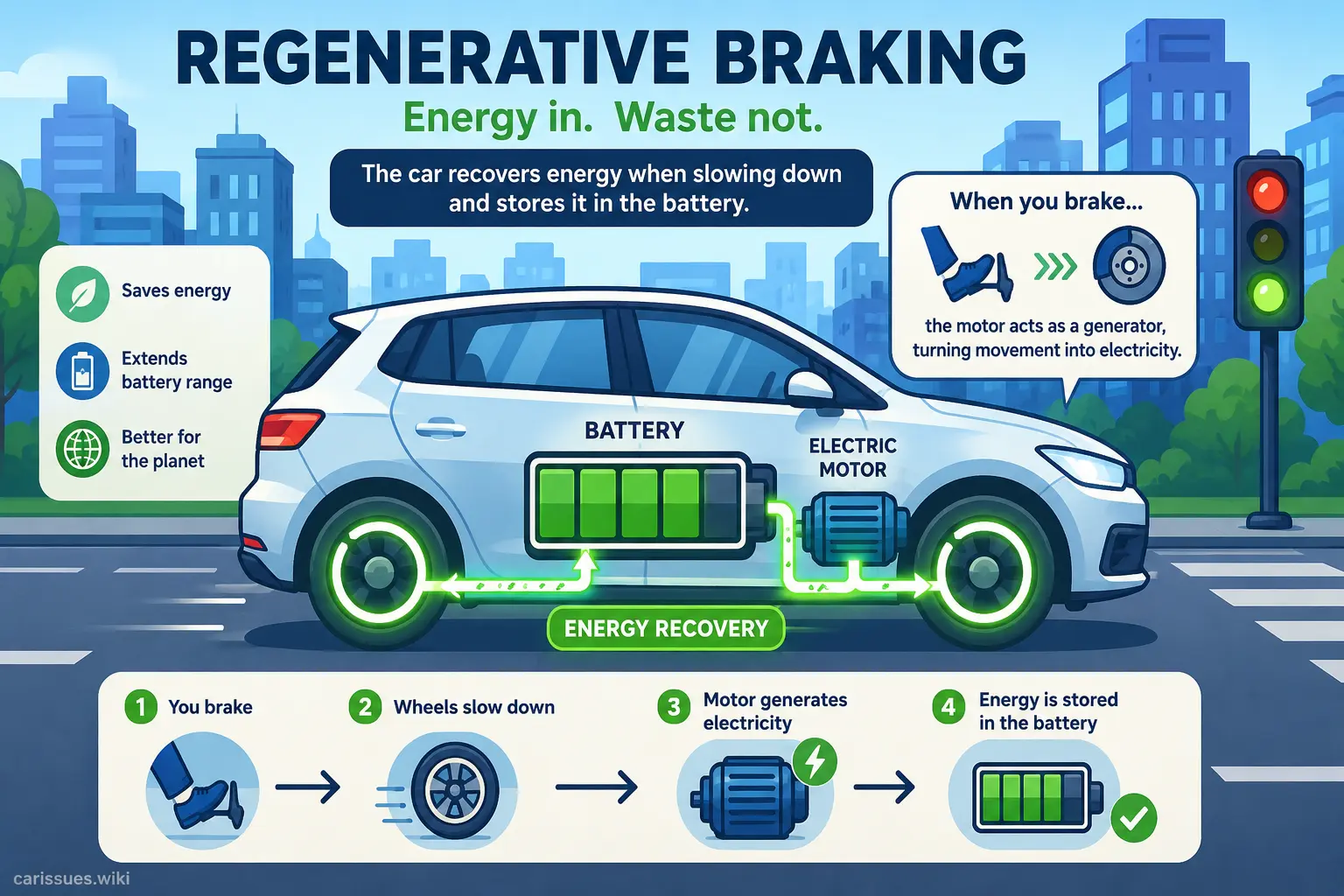
Regenerative braking is one of the smartest innovations in modern transportation. In a normal gasoline vehicle, braking wastes kinetic energy as heat. Hybrid systems flip that idea upside down by transforming slowing motion into reusable electricity.
The process feels almost invisible to drivers, but it’s constantly happening beneath the surface. Every stoplight, downhill road, and traffic jam becomes a chance to recharge the battery.
What Happens During Regenerative Braking
When the driver lifts off the accelerator or presses the brake pedal, the electric motor reverses its role. Instead of consuming electricity to move the wheels, it acts like a generator producing electricity. That electricity flows back into the battery for future use.
<math xmlns="
Recent research found that hybrids and EVs may recover roughly 15% to 30% of braking energy, depending on driving style and terrain. Another study examining plug-in hybrid braking systems found friction brakes were needed only a small percentage of the time under certain conditions.
That’s a remarkable engineering achievement. Instead of throwing away energy, hybrids recycle it repeatedly.
Why City Driving Improves Hybrid Efficiency
Hybrid cars shine brightest in urban environments. Frequent stops allow the battery to recharge more often, while low-speed driving lets the electric motor take over for short distances. Highway driving, by contrast, offers fewer braking opportunities and therefore less regenerative energy recovery.
This explains why many taxi fleets and ride-share drivers favor hybrids. Some hybrid vehicles reportedly exceed 100,000 miles on original brake components because regenerative braking handles much of the workload.
Driving a hybrid in heavy traffic is a bit like collecting rainwater during a storm. The more stopping and slowing that happens, the more energy the car captures and stores.
Charging Methods Used for Plug-In Hybrid Models
Plug-in hybrids give drivers more flexibility because they can recharge from external power sources. Charging options vary from simple wall outlets to advanced public fast chargers.
Understanding these methods helps drivers choose the most convenient and cost-effective approach for daily use.
Standard Home Charging
Most plug-in hybrid owners charge at home using a regular Level 1 household outlet or a faster Level 2 charger. Level 1 charging is slower but requires no special equipment. Overnight charging usually provides enough power for daily commuting.
Level 2 charging uses a dedicated 240-volt system similar to what powers household appliances like dryers. This can significantly reduce charging time and improve convenience.
Home charging is often the cheapest option because electricity rates during overnight hours may be lower. For many households, plugging in a PHEV becomes as routine as charging a smartphone before bed.
Public Charging Stations
Public charging stations have expanded rapidly across cities, highways, office complexes, and shopping centers. These stations allow drivers to recharge while running errands or during longer trips.
Apps connected to charging networks help drivers locate nearby stations, monitor charging progress, and estimate costs. Public charging is especially useful for apartment residents or people without private parking access.
The growth of public infrastructure has also reduced “range anxiety” among hybrid and electric vehicle owners. Drivers now have far more charging opportunities than they did just a few years ago.
Fast Charging in Modern Plug-In Hybrids
Most plug-in hybrids traditionally used slower AC charging systems, but newer models are beginning to adopt DC fast charging technology. For example, recent reports revealed that the 2026 Toyota RAV4 Plug-in Hybrid supports DC fast charging capable of charging from 10% to 80% in roughly 35 minutes.
This development is significant because it narrows the convenience gap between plug-in hybrids and full electric vehicles. Fast charging gives drivers greater flexibility during road trips and reduces downtime during busy schedules.
What Affects Charging Speed and Efficiency
Charging speed isn’t determined by a single factor. Multiple conditions influence how quickly and efficiently a hybrid battery charges.
Battery Size and Temperature
Larger batteries naturally take longer to charge than smaller ones. Temperature also plays a major role. Cold weather slows charging efficiency because battery chemistry becomes less active in low temperatures. Excessive heat can also stress the battery and reduce long-term performance.
Battery management systems constantly monitor temperature to protect the cells. Think of these systems as climate control for the battery pack, ensuring it stays within an optimal operating range.
Charging Equipment and Power Output
The charger itself influences charging speed. A standard wall outlet delivers less power than a dedicated Level 2 charger, while DC fast chargers provide dramatically higher charging rates.
<math xmlns="
Even the vehicle’s onboard charging system limits how much power it can accept. Using a high-powered charger won’t always speed things up if the car’s hardware has lower limits.
Driving Habits and Terrain
Aggressive acceleration, steep hills, and high-speed driving consume more energy and reduce efficiency. Smooth driving and gradual braking maximize regenerative energy recovery.
Urban drivers often experience better hybrid efficiency than highway commuters because city traffic creates more opportunities for regenerative braking. Terrain matters too. Long downhill stretches can recharge batteries significantly, while constant uphill climbs drain them faster.
Common Misunderstandings About Hybrid Batteries
Hybrid technology has improved rapidly, but myths still circulate online and in casual conversations. These misunderstandings often discourage buyers who would otherwise benefit from owning a hybrid.
Do Hybrid Batteries Need Daily Charging?
Self-charging hybrids do not require plugging in at all. Plug-in hybrids benefit from regular charging, but they can still operate without being plugged in. According to recent automotive reports, if a PHEV is never charged externally, it simply behaves like a regular hybrid with extra battery weight.
The car won’t suddenly stop functioning. It just won’t deliver the full efficiency and electric-driving advantages designed into the system.
Can a Hybrid Run Without Its Battery?
A failing hybrid battery can severely affect vehicle performance, but hybrids are designed with sophisticated safety systems. In many cases, the vehicle may still operate temporarily using the gasoline engine, although efficiency and power will suffer.
This misconception likely comes from confusing hybrids with traditional cars. A hybrid’s battery is deeply integrated into the vehicle’s operation, so it’s not simply an optional accessory.
Are Hybrid Batteries Expensive to Replace?
Battery replacement costs used to be extremely high, but prices have fallen significantly over time. Many hybrid batteries also last far longer than people expect. It’s now common for hybrids to exceed 150,000 miles before needing major battery work.
Manufacturers typically provide lengthy battery warranties, often covering eight years or more. Advances in battery chemistry and thermal management continue improving long-term reliability.
Warning Signs the Battery May Need Attention
Hybrid batteries usually degrade gradually rather than failing suddenly. Recognizing early warning signs can prevent expensive repairs and maintain efficiency.
Reduced Fuel Economy and Electric Range
One of the first symptoms of battery wear is declining fuel economy. Plug-in hybrids may also show shorter electric-only driving ranges.
Drivers may notice the gasoline engine turning on more frequently or the battery draining unusually quickly. These subtle changes often appear months before major issues develop.
Dashboard Warning Lights and Performance Changes
Modern hybrids continuously monitor battery health. Warning lights related to the hybrid system should never be ignored. Other symptoms include sluggish acceleration, inconsistent charging behavior, or unusual cooling fan noise.
The vehicle’s computer acts almost like a doctor monitoring vital signs. When something falls outside normal operating conditions, the system alerts the driver before severe damage occurs.
Best Practices for Extending Battery Life
Hybrid batteries are durable, but smart habits can extend their lifespan significantly.
Smart Charging Habits
Avoid keeping plug-in hybrids at extremely high or low charge levels for extended periods. Moderate charging patterns help reduce long-term battery stress.
Frequent short charging sessions are often healthier than repeatedly draining the battery completely. Manufacturers design systems to protect batteries automatically, but driver behavior still matters.
Maintenance Tips for Long-Term Reliability
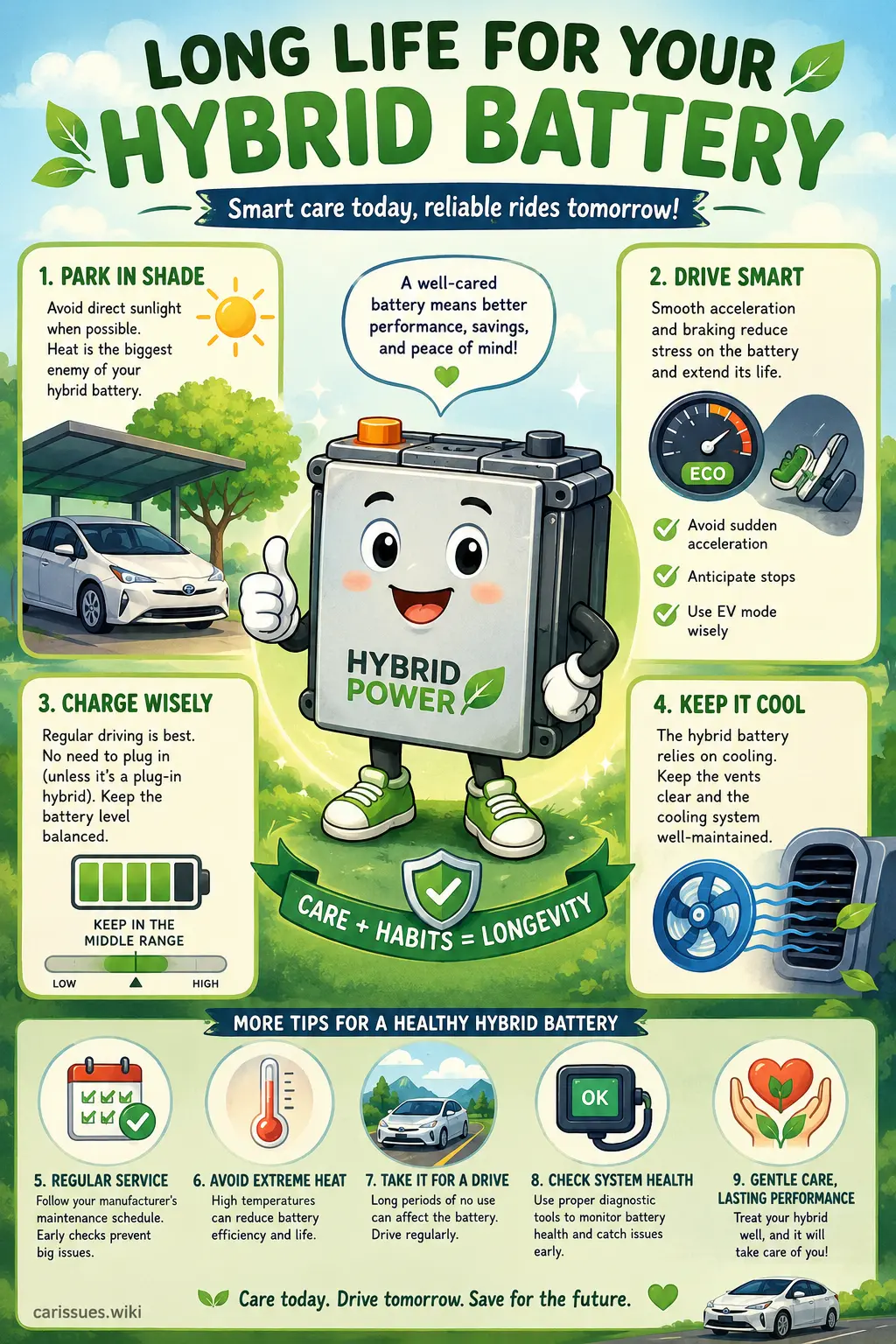
Keeping cooling systems clean and functioning properly is essential because heat is one of the biggest threats to battery longevity. Regular maintenance checks help identify issues before they become serious.
Parking in shaded areas during hot weather and avoiding prolonged exposure to extreme temperatures can also help preserve battery health. Gentle driving habits improve not only efficiency but also long-term durability.
What Happens When a Hybrid Battery Ages?
Battery aging is inevitable, just like wear on tires or brake components. Over time, the battery gradually loses some of its ability to store energy. This process happens slowly and usually doesn’t make the vehicle unusable overnight.
As hybrid batteries age, drivers may notice shorter electric driving ranges, more frequent engine use, and slightly reduced efficiency. Fortunately, modern battery management systems are designed to slow this degradation. Many hybrids remain highly functional for well over a decade.
Battery aging resembles the gradual decline of a smartphone battery. The device still works, but it may not hold a charge as long as it once did. The difference is that automotive batteries are engineered with far more robust cooling systems, safety controls, and durability standards.
Research into battery technology continues advancing rapidly. Engineers are developing smarter charging algorithms, improved thermal systems, and more durable cell chemistry to extend battery lifespan even further. Emerging studies involving AI-assisted battery monitoring systems aim to improve charging predictions and battery health management with remarkable accuracy.
For most drivers, hybrid battery aging is less dramatic than internet rumors suggest. With proper maintenance and reasonable driving habits, modern hybrid batteries can provide reliable service for many years.
Conclusion
Charging a hybrid car battery is far less complicated once you understand the difference between self-charging hybrids and plug-in hybrids. Self-charging hybrids rely on regenerative braking and engine-assisted charging to keep the battery topped up automatically, while plug-in hybrids add external charging for extended electric driving.
Regenerative braking remains one of the most fascinating aspects of hybrid technology. Instead of wasting energy during braking, hybrids recycle it and reuse it to improve fuel economy, reduce brake wear, and enhance efficiency. Drivers who understand how this system works can maximize the benefits through smoother driving habits and smart charging routines.
Plug-in hybrids offer tremendous flexibility for drivers who can charge regularly, especially those with short daily commutes. Self-charging hybrids, meanwhile, provide convenience and efficiency without requiring charging stations or home equipment. Both systems represent important steps toward cleaner and more efficient transportation.
Hybrid batteries are also far more durable than many people assume. While aging eventually affects performance, modern systems are designed for longevity, reliability, and intelligent energy management. With proper care, a hybrid battery can continue performing efficiently for many years while helping drivers save money at the pump and reduce emissions along the way.
FAQs
1. Do all hybrid cars need to be plugged in?
No. Self-charging hybrids recharge automatically using regenerative braking and the gasoline engine. Only plug-in hybrids require external charging for maximum efficiency.
2. How long does a plug-in hybrid take to charge?
Charging time depends on battery size and charger type. A standard household outlet may take several hours, while Level 2 chargers are significantly faster. Some newer PHEVs even support DC fast charging.
3. Does regenerative braking fully charge a hybrid battery?
Usually not. Regenerative braking helps maintain and partially recharge the battery, but it generally doesn’t restore a full charge in plug-in hybrids.
4. How long do hybrid batteries last?
Most hybrid batteries last between 8 and 15 years, with many vehicles exceeding 150,000 miles before major battery issues appear.
5. Is it expensive to replace a hybrid battery?
Costs vary depending on the vehicle model, but battery replacement prices have dropped significantly over the years. Many manufacturers also provide long battery warranties.