

When your car suddenly refuses to start, panic tends to hit fast. You turn the key, hear a weak click, maybe see dim dashboard lights, and instantly wonder what expensive repair bill is coming next. Most of the time, the problem points to one of two critical electrical components: the battery or the alternator. The tricky part? Their symptoms overlap so much that many drivers replace the wrong part first and waste money unnecessarily.
Recent automotive troubleshooting data from and shows that battery and charging system failures remain among the most common causes of roadside assistance calls. Batteries typically last around 3 to 5 years, while alternators often survive 7 to 10 years depending on driving conditions and maintenance.
So how do you tell which one is actually failing?
The answer lies in understanding how both components work together, recognizing the clues your vehicle gives you, and performing a few simple tests before replacing anything. Think of your battery as the heart that starts the system and the alternator as the lungs constantly feeding energy back into it. If either one struggles, the whole electrical system begins to behave strangely.
Before diving into diagnostics, it helps to understand what these components actually do.
Understanding the Difference Between the Battery and Alternator
What the Car Battery Actually Does
Your car battery has one main job: providing the massive burst of electrical power needed to start the engine. The second you turn the key or push the start button, the battery sends electricity to the starter motor, ignition system, fuel injectors, and onboard electronics. Without enough stored voltage, your vehicle simply cannot crank the engine properly.
Think of the battery like a sprinter. It delivers a quick explosion of energy, then steps back once the engine comes alive. After startup, the battery becomes more of a reserve power source while the alternator takes over daily electrical duties. That includes supporting headlights, radio systems, sensors, power windows, infotainment systems, and climate controls.
Modern vehicles depend heavily on electronics, which means batteries today work harder than ever before. Heated seats, giant touchscreens, advanced driver assistance systems, and wireless charging all put additional stress on the electrical system. Even when the engine is off, many vehicles still draw small amounts of power to maintain computer memory and security systems.
According to and , most car batteries last approximately three to five years under normal conditions. Heat, short driving trips, and frequent draining can shorten that lifespan dramatically.
The Role of the Alternator in Vehicle Charging
Once the engine starts, the alternator becomes the star player. The alternator converts mechanical energy from the engine into electricity and continuously recharges the battery while powering the vehicle’s electronics. Without it, the battery would quickly drain and the engine would eventually stall.
Imagine trying to fill a swimming pool using only buckets instead of a hose. That’s essentially what happens when the alternator fails. The battery keeps supplying electricity, but no fresh power comes back into the system. Eventually, everything dies.
Most healthy alternators produce between 13.5 and 14.5 volts while the engine runs. If voltage falls below that range, the battery may not recharge correctly. If voltage rises too high, the alternator may overcharge the battery and damage sensitive electronics.
Alternators usually last longer than batteries because they aren’t constantly discharging and recharging internally. Still, heat, worn bearings, damaged belts, or faulty voltage regulators can eventually cause failure. Symptoms often appear gradually at first. Maybe your headlights flicker slightly. Maybe your radio cuts out occasionally. Those subtle warnings are your car whispering before it starts screaming.
Why Their Symptoms Often Feel Identical
How One Failed Part Can Affect the Other
One reason diagnosing electrical issues becomes so frustrating is because the battery and alternator are deeply connected. When one fails, it often stresses the other component too.
A failing alternator can slowly kill a healthy battery by undercharging it repeatedly. Batteries are designed to remain fully charged most of the time. When they stay partially depleted day after day, internal damage develops. Sulfation builds up inside the battery plates, reducing capacity and shortening lifespan.
The reverse can also happen. A severely worn battery forces the alternator to work overtime trying to recharge it constantly. That extra strain can overheat the alternator and damage internal components like the voltage regulator or diodes. Several mechanics discussing real-world cases on Reddit noted that replacing only one component sometimes led to repeated failures because the second damaged part was left untreated.
This creates a vicious cycle. Drivers replace the battery, the car works briefly, then the alternator fails. Or they replace the alternator while the weak battery keeps draining the system. That’s why proper diagnosis matters more than guessing.
Why Drivers Commonly Misdiagnose the Problem
Most people assume a dead car means a dead battery. That’s understandable because batteries are more familiar and fail more often. But alternator symptoms frequently disguise themselves as battery problems.
Here’s where things get confusing:
| Symptom | Possible Battery Issue | Possible Alternator Issue |
|---|---|---|
| Car won’t start | Yes | Yes |
| Dim headlights | Yes | Yes |
| Battery warning light | Sometimes | Often |
| Needs jump-start | Yes | Yes |
| Engine stalls while driving | Rarely | Frequently |
| Electrical flickering | Sometimes | Common |
| Slow cranking | Common | Possible |
That overlap causes many DIY mechanics to swap parts blindly. Automotive experts from warn that both components can produce nearly identical symptoms, especially during early stages of failure.
The real key is paying attention to when the symptoms appear. Does the problem happen mainly during startup? Or does it continue while driving? That distinction often reveals the true culprit.
Clues the Engine Gives During Startup Problems
Clicking Sounds and Slow Cranking
One of the clearest signs of a weak battery is slow engine cranking. You turn the key and hear the engine struggle with a sluggish “rurr… rurr… rurr” sound instead of a confident startup. That hesitation means the battery lacks sufficient power to spin the starter motor properly.
Rapid clicking noises also usually point toward battery trouble. The starter relay keeps trying to engage, but voltage drops too low to complete the process. It’s like trying to lift a heavy weight after an exhausting workout; the effort starts but cannot finish.
Cold weather often amplifies this problem. Batteries lose efficiency in lower temperatures because chemical reactions slow down. A battery already near the end of its life may completely fail during winter even if it seemed acceptable days earlier.
If jump-starting immediately fixes the issue and the car continues running normally afterward, the battery is usually the primary suspect. But if the problem keeps returning after short drives, the alternator may not be recharging the battery fully.
When the Engine Starts but Dies Quickly
This symptom screams alternator trouble.
If your car starts after a jump but stalls within minutes, the alternator likely isn’t generating enough electricity to keep the ignition and fuel systems operating. AAA technicians specifically highlight this as one of the strongest alternator warning signs.
Think about what happens after a jump-start. The booster cables temporarily provide enough power to get the engine running. Once disconnected, the alternator should immediately take over electrical responsibilities. If it fails, the car quickly burns through the little remaining battery charge and shuts down.
Drivers sometimes mistake this for a “bad new battery” because replacing the battery temporarily improves performance. But the fresh battery eventually drains again because the charging system never replenishes it.
A failing alternator may also cause random engine stalls while driving. Since modern engines depend heavily on electronics, low system voltage can interrupt ignition timing, fuel delivery, and sensor communication. The result feels chaotic and unpredictable.
Dashboard Warning Signs That Point to Charging Issues
Understanding the Battery Warning Light
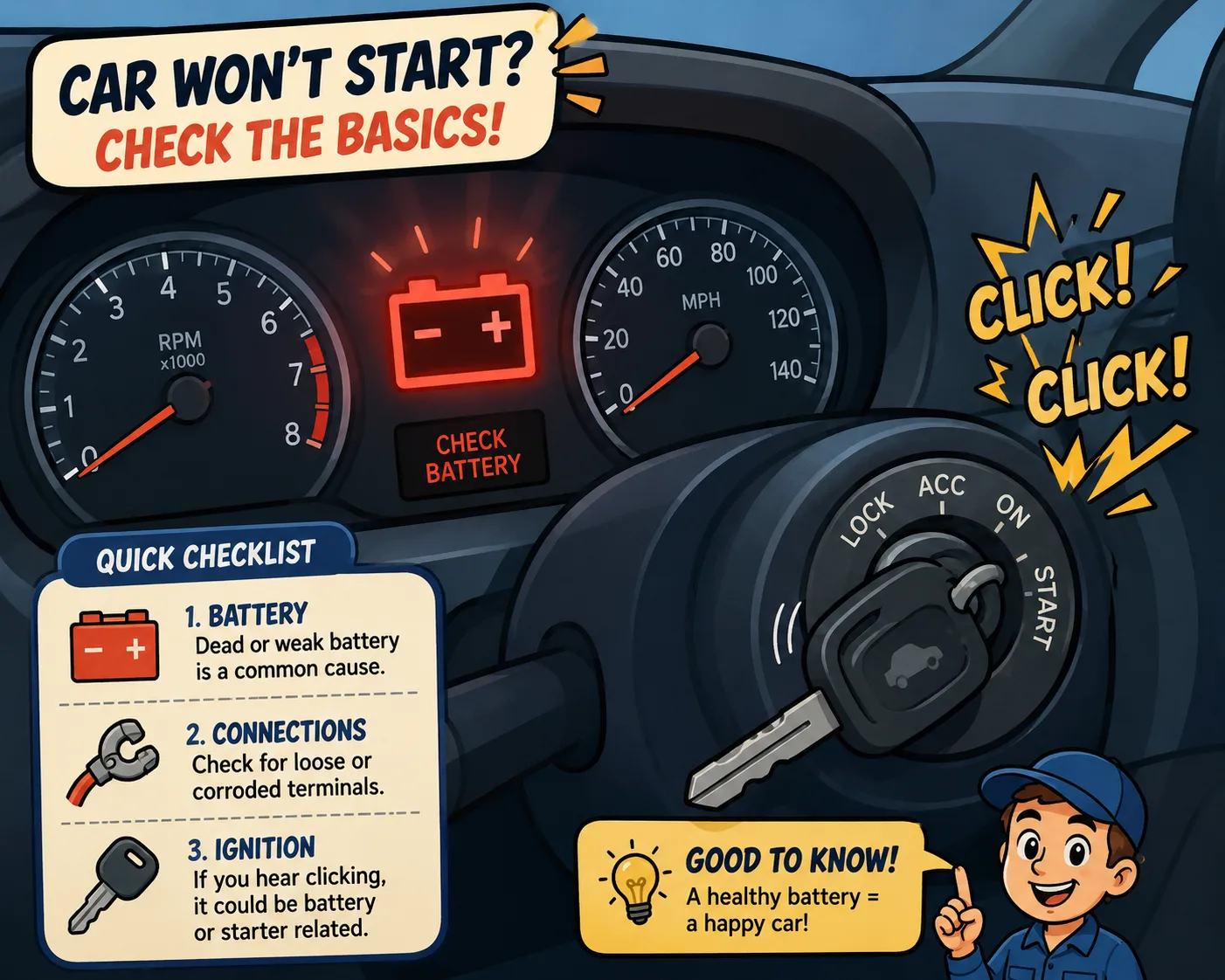
Many drivers misunderstand the battery dashboard light. They assume it automatically means the battery itself is dead. In reality, the warning often indicates a broader charging system problem involving the alternator.
The battery icon illuminates when the system detects abnormal voltage. That could mean the alternator isn’t charging enough, the voltage regulator is malfunctioning, or the battery itself is failing.
If the light appears briefly during startup, that’s normal. But if it stays illuminated while driving, your vehicle is warning you that charging problems exist right now.
Ignoring that light can leave you stranded quickly. Once the alternator stops supplying adequate power, the car begins draining the battery continuously. Depending on electrical load, you might only have minutes before the engine dies entirely.
Flickering Dash Lights and Electronic Errors
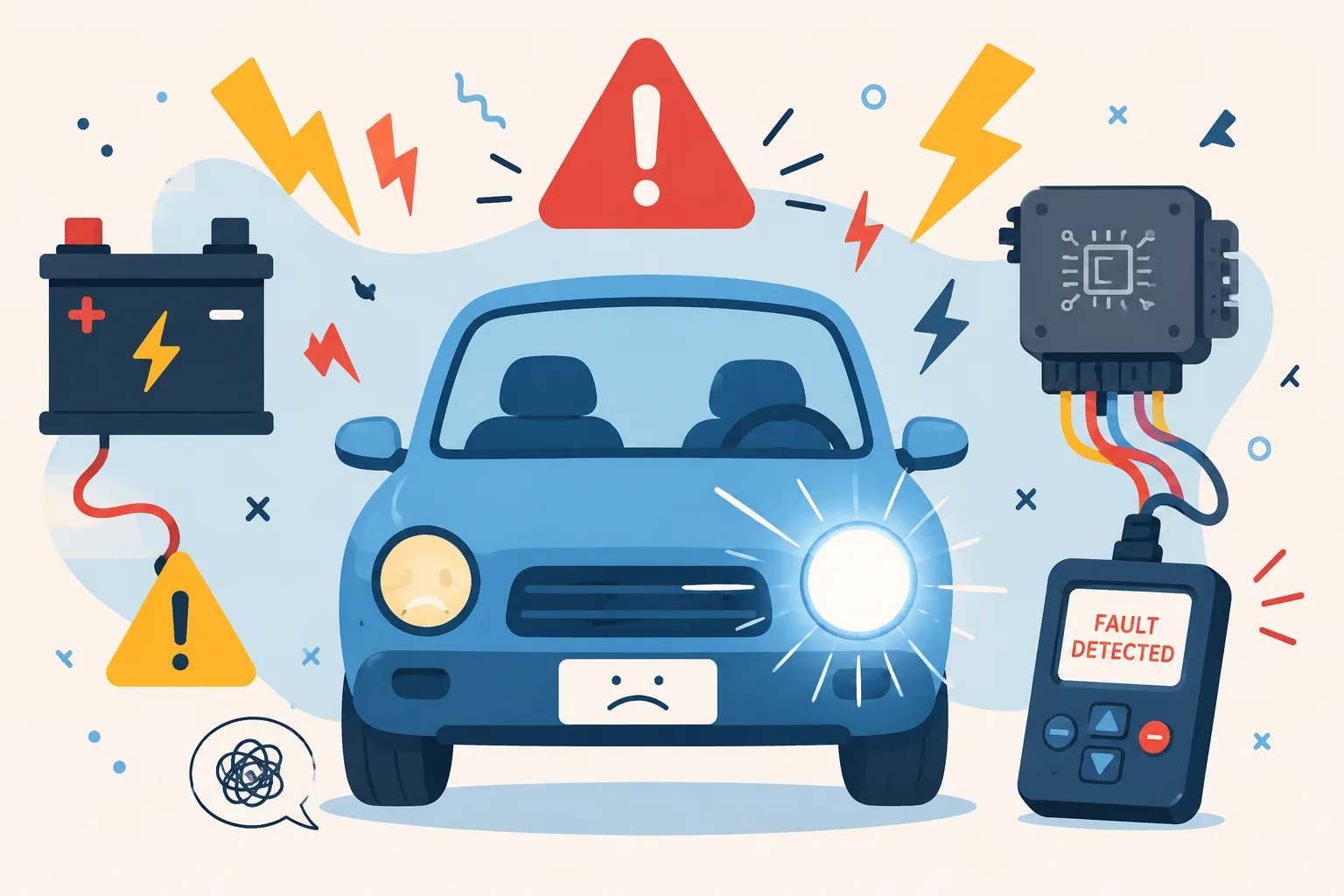
Electrical gremlins often appear before total failure. Maybe your dashboard flickers randomly. Maybe your touchscreen freezes. Maybe power windows move slower than usual. These small annoyances frequently signal inconsistent voltage delivery from the alternator.
AAA and AutoZone both report that fluctuating brightness in headlights and interior lights commonly indicates charging system instability.
Overcharging can create weird symptoms too. A malfunctioning voltage regulator may send excessive voltage through the system, causing lights to become unusually bright. Some drivers even notice a burning smell from overheated wiring or electronics.
Modern cars are extremely sensitive to voltage fluctuations. Tiny inconsistencies can confuse onboard computers, triggering random warning messages or sensor errors that seem unrelated at first glance.
What Happens to Lights and Electronics During Failure
Dim Headlights and Weak Accessories
Your headlights can act like a built-in diagnostic tool. If they dim noticeably while idling and brighten when revving the engine, the alternator may struggle to maintain output at lower RPMs.
This happens because alternators generate more electricity as engine speed increases. A worn alternator may barely keep up at idle but improve slightly at higher RPMs.
Other electronics reveal clues too:
- Power windows move slowly
- Radio cuts in and out
- Heated seats weaken
- Air conditioning blower loses strength
- Dashboard screens flicker
These symptoms usually worsen gradually rather than appearing suddenly. That slow decline tricks drivers into adapting unconsciously until the failure becomes impossible to ignore.
Electrical Surges and Overcharging Symptoms
Not every alternator failure causes weak power. Some failures create too much power instead.
A faulty voltage regulator can push excessive voltage into the system, damaging bulbs, electronics, and even the battery itself. Drivers may notice:
| Overcharging Symptom | What It Means |
|---|---|
| Extremely bright headlights | Voltage too high |
| Burning smell | Overheated wiring |
| Bulging battery case | Battery overheating |
| Frequent bulb failures | Electrical surges |
| Electronics behaving erratically | Voltage instability |
AAA experts note that swollen batteries often result from overcharging. Heat buildup inside the battery causes gases to expand, deforming the case.
That’s why replacing only the battery without fixing the alternator can destroy the new battery surprisingly fast.
Testing Voltage to Narrow Down the Cause
Checking Battery Voltage With the Engine Off
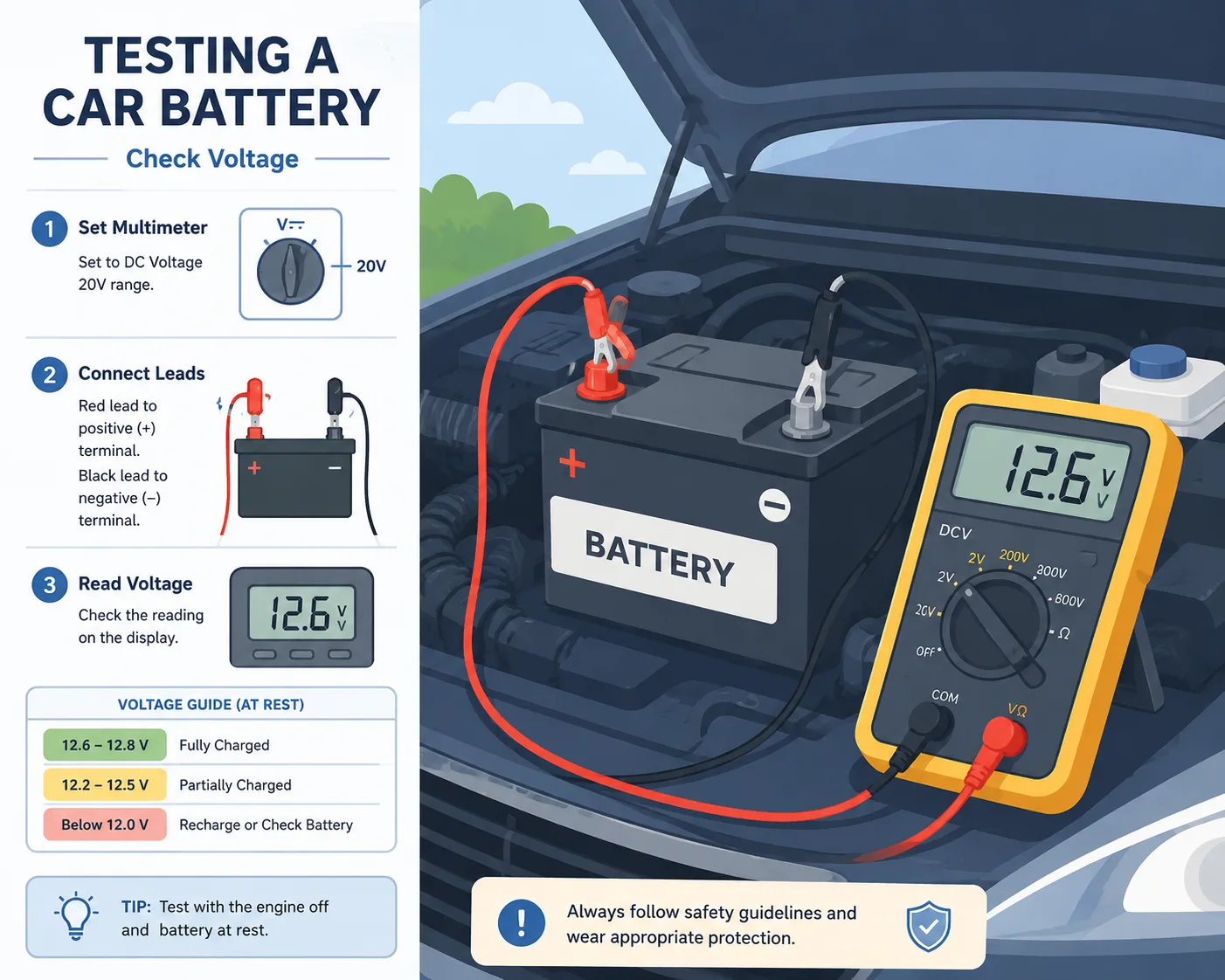
One of the simplest diagnostic tools is a digital multimeter. Even basic inexpensive models can reveal valuable information.
With the engine off, a healthy fully charged battery should read around:
<math xmlns=”12.6 volts12.6text{ volts}
If voltage falls below 12.4 volts, the battery may be weak or partially discharged. Around 12.0 volts usually indicates severe depletion.
Here’s a quick reference:
| Battery Voltage | Condition |
|---|---|
| 12.6V | Fully charged |
| 12.4V | Slightly weak |
| 12.2V | Half charged |
| 12.0V or less | Severely discharged |
Voltage alone doesn’t guarantee battery health, though. Some failing batteries still show decent voltage but collapse under load. That’s why professional load testing matters.
Testing Alternator Output With the Engine Running
Now start the engine and measure voltage again.
A healthy charging system generally produces:
<math xmlns=”13.5V≤V≤14.5V13.5text{V} leq V leq 14.5text{V}
If voltage remains near the battery’s resting voltage, the alternator probably isn’t charging correctly. If voltage exceeds about 14.7 volts, the alternator may be overcharging.
Turn on headlights, air conditioning, and other accessories during testing. A healthy alternator should maintain stable voltage under electrical load.
This simple test often narrows diagnosis dramatically before spending money on parts.
A Closer Look at Battery Age and Condition
Corrosion, Swelling, and Leaks
Visual inspection matters more than many drivers realize.
Corrosion around battery terminals creates resistance that blocks efficient power flow. White, green, or blue buildup around connections often indicates leaking acid and poor conductivity.
Loose battery terminals can mimic serious electrical failures too. Some Reddit users described situations where simple connection problems caused repeated no-start conditions despite healthy batteries and alternators.
A swollen battery case is another serious warning sign. Heat or overcharging causes internal gas buildup, deforming the casing. Once that happens, replacement becomes necessary immediately.
Rotten egg smells also indicate leaking sulfuric acid or overheating. That smell should never be ignored because damaged batteries can become hazardous.
How Weather and Driving Habits Affect Battery Life
Driving habits heavily influence battery lifespan.
Short trips prevent the alternator from fully recharging the battery. Every startup consumes a large amount of energy, and repeated short drives slowly drain reserve capacity over time.
Hot climates can be even worse than cold ones. Extreme heat accelerates internal battery fluid evaporation and plate corrosion. In places with intense summer temperatures, batteries often fail sooner than expected.
AAA explains that frequent jump-starts usually indicate a battery nearing the end of its useful life. If your battery is already four or five years old, replacement often makes more financial sense than repeated troubleshooting.
Situations Where Both Components Could Be Failing
How a Bad Alternator Damages a Battery
A weak alternator slowly starves the battery. Undercharging prevents the battery from maintaining full chemical capacity, which shortens lifespan dramatically.
Over time, the battery becomes permanently weakened and unable to hold adequate charge. Even after installing a new alternator, the damaged battery may continue causing problems.
This is why many technicians test both components together instead of assuming only one failed.
Why Replacing Only One Part Sometimes Fails
Here’s a common scenario:
- Alternator begins failing
- Battery repeatedly drains
- Battery becomes damaged
- Driver replaces only battery
- New battery dies quickly
- Driver finally discovers alternator issue
The reverse can happen too. A severely damaged battery overloads the alternator until it overheats and fails.
Mechanics frequently recommend evaluating the entire charging system rather than treating parts individually. It’s a bit like replacing one worn tire while ignoring alignment problems; the root cause eventually ruins the new component too.
Simple Checks Before Replacing Expensive Parts
Inspecting Belts, Terminals, and Connections
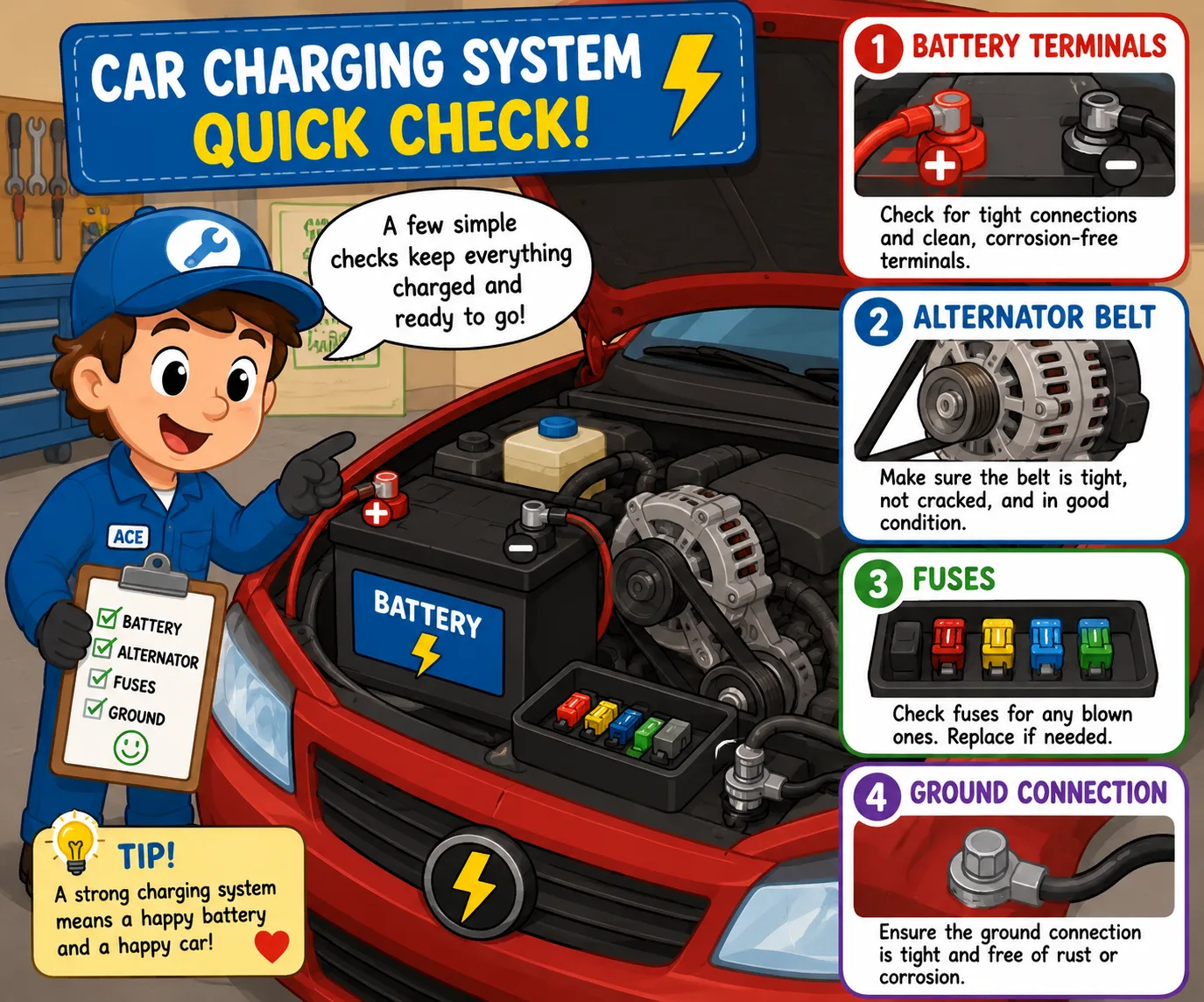
Before buying parts, perform a few simple inspections:
| Check | Why It Matters |
|---|---|
| Battery terminals | Loose or corroded connections block power |
| Alternator belt | Slipping belts reduce charging |
| Ground connections | Poor grounds create voltage problems |
| Fuse condition | Blown charging fuses stop alternator output |
| Battery case | Cracks or swelling indicate failure |
Sometimes the fix is surprisingly simple. A loose terminal or worn serpentine belt can imitate major component failure.
When to Seek Professional Diagnostic Testing
If symptoms remain unclear, professional testing is worth the cost. Most auto parts stores offer free battery and alternator testing using specialized equipment.
These tests measure:
- Battery load capacity
- Alternator output
- Charging system stability
- Voltage regulator performance
- Diode ripple issues
Advanced diagnostics can also uncover hidden electrical drains that kill batteries overnight.
The important thing is avoiding guesswork. Randomly replacing parts becomes expensive quickly, especially on modern vehicles with smart charging systems and sensitive electronics.
Conclusion
Figuring out whether your vehicle has a bad battery or a failing alternator doesn’t require psychic powers; just careful observation and a few smart tests. The battery handles the heavy lifting during startup, while the alternator keeps the electrical system alive afterward. When either component struggles, your car usually provides warning signs long before complete failure happens.
Slow cranking, clicking noises, and repeated jump-starts often point toward battery trouble. Dim headlights while driving, flickering electronics, and engines that stall shortly after startup usually indicate alternator problems. Voltage testing offers one of the fastest ways to narrow down the true cause before spending money on repairs.
The biggest mistake drivers make is assuming only one component matters. Batteries and alternators depend on each other constantly, and failure in one can easily damage the other. That’s why complete charging system inspections matter so much.
Pay attention to the clues your car gives you. Sometimes the difference between a quick repair and a roadside breakdown comes down to noticing a flickering dashboard light a few days earlier.
FAQs
1. Can a bad alternator ruin a new battery?
Yes. A failing alternator may undercharge or overcharge the battery, both of which can shorten battery life significantly. Installing a new battery without fixing the alternator often leads to repeated failures.
2. How long can I drive with a bad alternator?
Usually not very long. Once the alternator stops charging, the vehicle relies entirely on battery power. Depending on electrical demand, the engine may stall within minutes or hours.
3. Will a car start with a bad alternator?
Sometimes. If the battery still has enough stored charge, the car may start temporarily. But the battery will quickly drain because the alternator is not replenishing power.
4. What voltage should a healthy alternator produce?
Most healthy alternators produce between 13.5 and 14.5 volts while the engine runs. Anything significantly outside that range may indicate charging system problems.
5. Is it better to replace the battery and alternator together?
Not always, but if one component has heavily stressed the other, replacing both can prevent repeated breakdowns. Testing both parts before repairs is usually the smartest approach.

Marco Vestri is a 29-year-old American content writer based in Spokane, Washington. He specializes in creating well-researched automotive maintenance guides, troubleshooting articles, and practical ownership advice for everyday drivers. His work emphasizes accuracy, clear explanations, and reliable sources, helping readers make informed decisions with confidence. As a regular contributor to carissues.wiki, Marco combines years of blogging experience with a passion for simplifying complex vehicle topics into useful, trustworthy content for a broad audience.